
Dr. Baxmann MSc PhD
Evidence in Orthodontics
Dr. Dr. Baxmann explains in his typical clear and no-bullshit way must-read articles in orthodontics. He highlights clinical implications for your integration into daily practice and explains the strength and weaknesses of the presented research. Let´s bring Science back to Orthodontics!
Podcast'in sitesini ziyaret etmeyi ve yapımcısını desteklemeyi unutma: leanorthodontics.com
Yazar
Dr. Baxmann MSc PhD
Kategori
Podcast web sitesi
Son bölüm
7 Eyl 2026
Nereden dinlenir?
Uygulamada podcast'ler Replaio Radio Çok yakındaPodcast'ler çok yakında uygulamaya geliyor. Şimdi yükle ve podcast'lere yepyeni bir bakışı ilk gören sen ol
 Ücretsiz yükle
Android 5 Mn+ indirme · 4,8 puan
iOS yakında
Ücretsiz yükle
Android 5 Mn+ indirme · 4,8 puan
iOS yakında
Bölümler
27- Early Class III Treatment - Which Technique Wins 21.05.2026 2:52
Comparison of Early Class 3 Correction Techniques: - Methods Studied: Reverse twin block vs. protraction face mask. - Sample: 32 children, about 9 years old. - Findings: Both improved anterior crossbite. | Face mask: Skeletal advancement with maxilla (SNA ↑ 2°, ANB ↑ 4°). | Reverse twin block: Dental compensation (upper incisors tipped forward, lowers tipped back). - Mandibular Plane Angle: Opened...
26- A New Way to Protract the Maxilla in Cleft Patients 18.05.2026 5:38
New Approach for Cleft Patients: ALT-REMEC - Uses weekly cycles of rapid expansion & constriction. - Based on a 2005 study by Eric Liu & Wenqing Cai. - Improves maxillary protraction in cleft patients. Key Findings: - ALT-REMEC shows double the forward movement of the maxilla. - Nearly triple skeletal advancement compared to traditional methods. - Reduced dependence on patient compliance & stable...
25- Autogenous Tooth Transplantation Explained 14.05.2026 3:35
Key Highlights on Autogenous Tooth Transplantation: - Natural teeth can be transplanted to different spots in the mouth. - Success rate: ~94% overall; nearly 97% for immature teeth. - Biological factors are crucial for success, such as respecting biology and minimizing extraoral time. - Premolars and anterior teeth fare better in transplants. - Clinical diversity and underreporting mean results sh...
24- Total Arch Distalization with IZC Miniscrews 11.05.2026 3:04
Explore the use of infrasagomatic crest miniscrews for class II malocclusion treatment: - Technique: Total arch maxillary distalization without extractions - Study: 25 adolescents, ICC miniscrews placed between upper molars - Results: Molars moved 4mm distally, Incisors retracted 5mm, Overjet and overbite reduced - Benefits: Comparable to palatal plates without surgery - Considerations: Case selec...
23- Six Keys to Managing Mixed Dentition Successfully - Part 2 07.05.2026 2:58
Explore the keys to managing malocclusion in mixed dentition, focusing on: - Preserving leeway space: Maintain space by retaining second primary molars, using a lingual arch when necessary. - Palpating unerupted canines: Essential between ages 10-12 to guide development and address discrepancies early. - Judicious extractions: Extract primary teeth only when they block eruption, ensuring balance t...
22- Six Keys to Managing Mixed Dentition Successfully 04.05.2026 3:46
Learn how to manage malocclusion in the mixed dentition stage with these key steps: - Interceptive Orthodontics: Focus on timing interventions correctly. - Correct Cross-Bites Early: Use simple appliances for quick corrections. - Recognize Pathology: Diagnose and address anomalies like delayed eruption early. - Discourage Habits: Address behavioral habits impacting occlusion development. Remember:...
21- Managing Unerupted Maxillary Central Incisors 30.04.2026 2:59
Discover how orthodontists address the challenge of unerupted maxillary central incisors, featuring: - Reasons for non-eruption, including supernumerary teeth and dilacerations. - Diagnosis tips: look for eruption delay and use radiographs. - Treatment steps: removal of obstructions, surgical techniques, and appliance use. - Importance of early diagnosis and conservative treatment to minimize psyc...
20- Does Premolar Extraction Affect the Airway The Evidence 27.04.2026 2:38
Discover what a new systematic review and meta-analysis reveals about the impact of premolar extractions on the airway in orthodontics: - No significant reduction in airway volume. - Slight increase in airway area in some cases, but clinically irrelevant. - Retroactive studies show no measurable harm to airway dimensions. Conclusion: Extractions, when indicated, are safe for the airway. Focus on o...
19- Why Miniscrews Fail - Complications in Miniscrew Treatment 23.04.2026 3:53
Orthodontic Miniscrew Risks & Complications: - Insertion Risks: Root trauma, slippage, nerve injury. - Placement Guidelines: Safe zones include the upper jaw between the second premolar and first molar. - Complications: Subcutaneous emphysema from air-water syringe use near pilot holes. - Failure Factors: 10-30% failure rate; stability linked to bone density. Best in D1/D2 regions. - Soft Tissue I...
18- How to Distalize Maxillary Molars Effectively 20.04.2026 4:07
Explore efficient methods for distalizing maxillary molars in orthodontics: - Techniques: Conventional appliances, skeletal anchorage systems. - Key Points: Works best in mild cases (e.g., class E2 molar relationships, moderate overjet). - Challenges: Minimal real, stable movement; anchorage loss; molar tipping. - Evidence: Only 2-2.5 mm of distal movement is typical. - Retention: Critical to avoi...
17- How AI Is Changing the Way Dentists Communicate with Patients 16.04.2026 3:07
Explore how AI is revolutionizing dental care: - Improved Communication: AI tools like chatbots and digital education make dental communication clearer and more engaging. - Personalized Education: Tailored patient education using machine learning and natural language processing. - Tele-dentistry: Platforms like Dentulu and SmileSnap enhance remote diagnosis and education. - Engagement Matters: Gam...
16- 3D Printed Facemasks — The New Era of Class III Treatment 13.04.2026 2:57
Discover how 3D printing is transforming orthodontics in this concise study summary: - Researchers tested a 3D printed customized face mask for treating class 3 malocclusion in children. - Comparison: 3D face mask vs. conventional petit type face mask. - Study Details: 34 children, ages 7-12, followed over 9 months. 3D printing is enhancing patient comfort in orthodontic treatments, marking an imp...
15- European Orthodontic Congress - Findings Facts vs Figures 09.04.2026 3:08
In this episode: - Analysis of poster abstracts from the European Orthodontic Congress. - Focus on whether conclusions are based on clinical relevance or statistical significance. - Concerns raised about over-reliance on p-values and lack of reporting on effect sizes and confidence intervals. - Call for clearer guidelines and collaboration between clinicians to ensure meaningful research. Statisti...
14- Can Your Phone Replace a DSLR in Dentistry 06.04.2026 3:08
Explore whether smartphones can replace DSLRs for dental photos: - Research by Kiran Deepnandra et al. compared smartphones and DSLRs. - Findings: DSLRs offer superior image quality and accuracy; Samsung S23 Ultra smartphone performed well. - Ease of use: Both devices similar, but DSLRs allow consistent framing. - Color accuracy: Poor across both tools, with only 20% correct shades. - Recommendati...
13- Functional Therapy That Fixes Condylar Asymmetry 02.04.2026 2:44
Learn how early treatment of unilateral posterior crossbite can: - Improve condyliosymmetry in children. - Enhance jaw joint balance. - Influence facial growth and symmetry. - Change mandible rotation from clockwise to counterclockwise. - Guide mandibular growth, not just align teeth. Study Highlights: - 52 children with mixed dentition were treated. - Condyliosymmetry improved from 10% to 6% asym...
12- Why 3D Scans May Revolutionize Treatment Planning 30.03.2026 3:29
Explore if 3D scans, like CBCT, enhance treatment plans for impacted canines: - A study by Aarhus University checked if CBCT changes plans compared to 2D x-rays. - Results showed that plans changed in about one-third of the cases post-CBCT. - Most changes involved traction direction, not extraction decisions. - CBCT detected root resorption more frequently than 2D x-rays, but it rarely influenced...
11- Which RME Type Wins in the Long Run A 5-Year Comparison 26.03.2026 2:58
Comparison: - Analyzed tooth-borne vs. tooth-borne-borne RME appliances - Conducted via a randomized controlled trial with a five-year follow-up Outcome: - Both appliances stable long-term - Minimal clinical differences despite measurable variation Recommendation: - Standard tooth-borne expanders sufficient for young patients - Hybrid design may aid older adolescents or cases with higher skeletal...
10- New Trial Compares Open and Closed Techniques in Orthodontics 23.03.2026 4:02
Study Overview: - Multi-center randomized control trial from Sweden. - Compared open vs. closed surgical techniques for palatally displaced canines. - Included 120 patients aged 9 to 16. Key Findings: - Eruption Speed: Open group's canines erupted about 3 months faster, though total treatment time was identical for both at around 26 months. - Patient Comfort: Closed technique reported more pain an...
9- Efficacy of Miniscrew-Assisted Rapid Palatal Expansion 20.03.2026 3:15
Explore the efficacy of Miniscule-Assisted Rapid Palatal Expansion (MARPE) in older patients: - Evaluated via a systematic review and meta-analysis. - 92% success rate in mid-palatal suture opening without surgery. - Average skeletal change: 2.3 mm, total dental expansion: 6.5 mm. - Includes limitations: high risk of bias, lack of randomized trials. - Side effects: molar tipping, buccal bone thinn...
8- How Imaging Is Redefining Orthodontic Expansion Planning 16.03.2026 3:12
Topic: Palatal Suture Maturation Classification and CBCT Imaging Key Points: - Study Focus: Evaluation of the palatal suture maturation classification through CBCT in orthodontics. - Main Findings: - High intra-examiner agreement, poor inter-examiner agreement. - Limited predictive power for skeletal or dental outcomes. - Recommendations: Caution in using this system for treatment decisions; rely...
7- Why Dentists Prefer Certain Orthodontists 12.03.2026 3:00
Explore the factors influencing dental referrals as general dentists decide which orthodontists to recommend. Key points include: - Treatment Quality & Patient Satisfaction: Valued equally by dentists. - Referral Criteria: Based predominantly on treatment results over cost, location, or reputation. - Important Features: Canine guidance, class I molar relationships, and patient profile. - Trust & C...
6- How Bisphosphonates Affect Tooth Movement 09.03.2026 2:48
Discover the impact of bisphosphonate therapy on orthodontic treatment: - Bisphosphonates: Used for osteoporosis and cancers, inhibit osteoclasts, slowing bone resorption and tooth movement. - Research Findings: Tooth movement is slower, space closure may be incomplete, and root parallelism compromised. - Patient Risks: High-risk cancer patients may develop osteonecrosis of the jaw; low-risk osteo...
5- How Extrusion Arches Affect Open Bite Correction 05.03.2026 3:13
- Analysis from Alexandria University on closing anterior open bites using extrusion arches in adults. - 23 adult women with moderate open bites were treated. - Results showed overbite improvement and stable closure within 4 months. - Upper and lower incisors extruded and uprighted; molars slightly intruded and tipped mesially. - Highlighted limitations: all-female subjects, no control group, shor...
4- Use of the Clark Twin Block functional appliance with and without upper labial bow 02.03.2026 2:27
Conclusions: - Children with class 2 division 1 malocclusion treated with plaques twin-block show: - No significant differences in maxillary incisor retroponation. - No significant skeletal change. - No significant difference in overjet reduction rate. - An upper labial bow can be excluded without negative effects. --- Take Your Practice to the Next Level! Feeling overwhelmed trying to figure out...
3- Esthetic perception of changes in facial profile resulting from orthodontic treatment with extraction of premolars 26.02.2026 2:47
Our systematic review reveals: - No significant differences in aesthetic outcomes between orthodontic treatments with or without premolar extraction. - Premolar extractions benefit those with: - Greater lip protrusion - More convex facial morphologies - Shorter treatment duration without extractions. - Cephalometric parameter LIE aids decision-making in borderline cases. --- Take Your Practice to...
Benzer podcast'ler



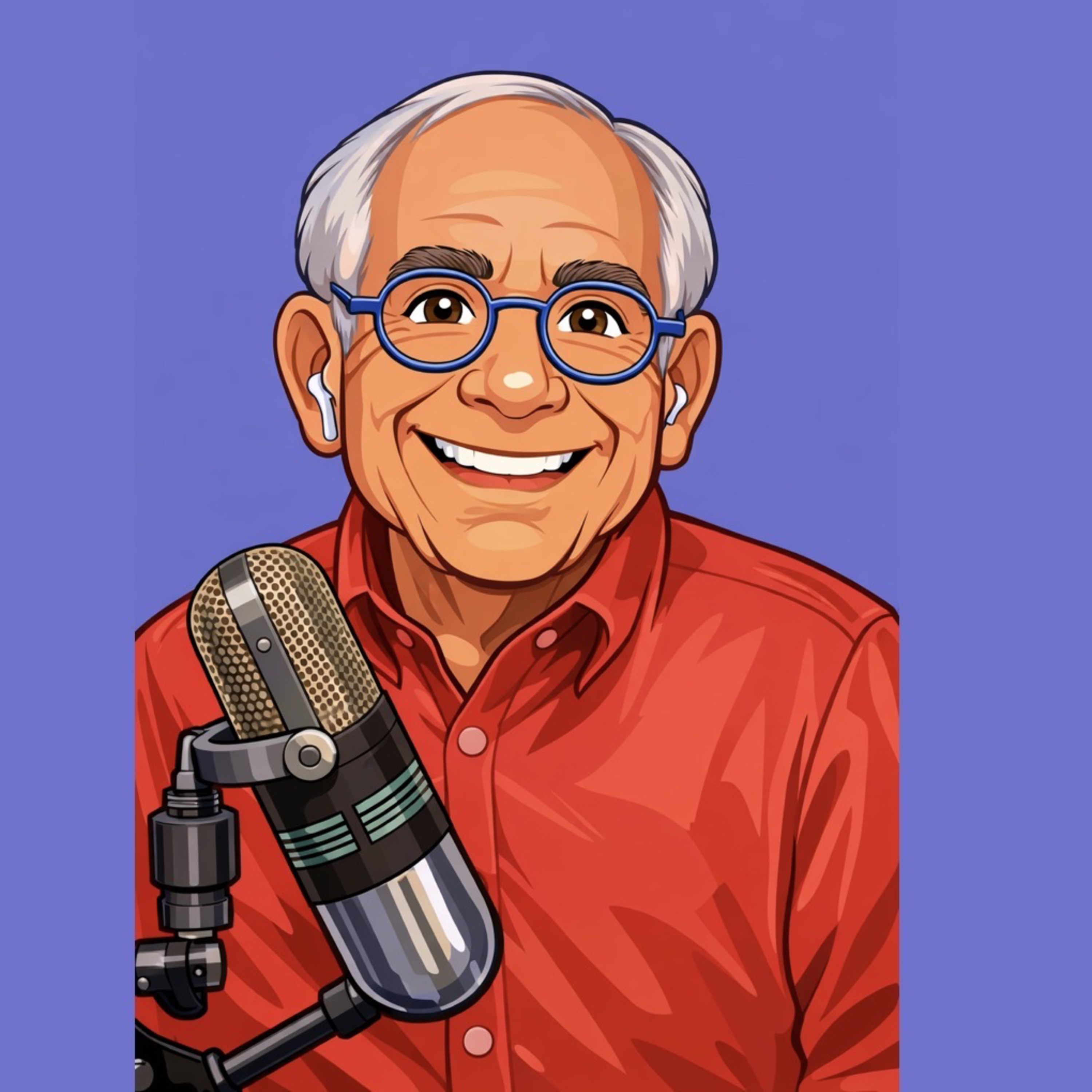




Evidence in Orthodontics podcast'ini Replaio'da dinle
Radyo ve podcast'ler tek uygulamada - ücretsiz, kayıt gerektirmez. Bugün yükle ve lansmanı kaçırma
Replaio bir podcast yayıncısı değildir; program adları, kapak görselleri ve ses içerikleri yazarlarına aittir ve herkese açık RSS beslemeleri aracılığıyla dağıtılır
