
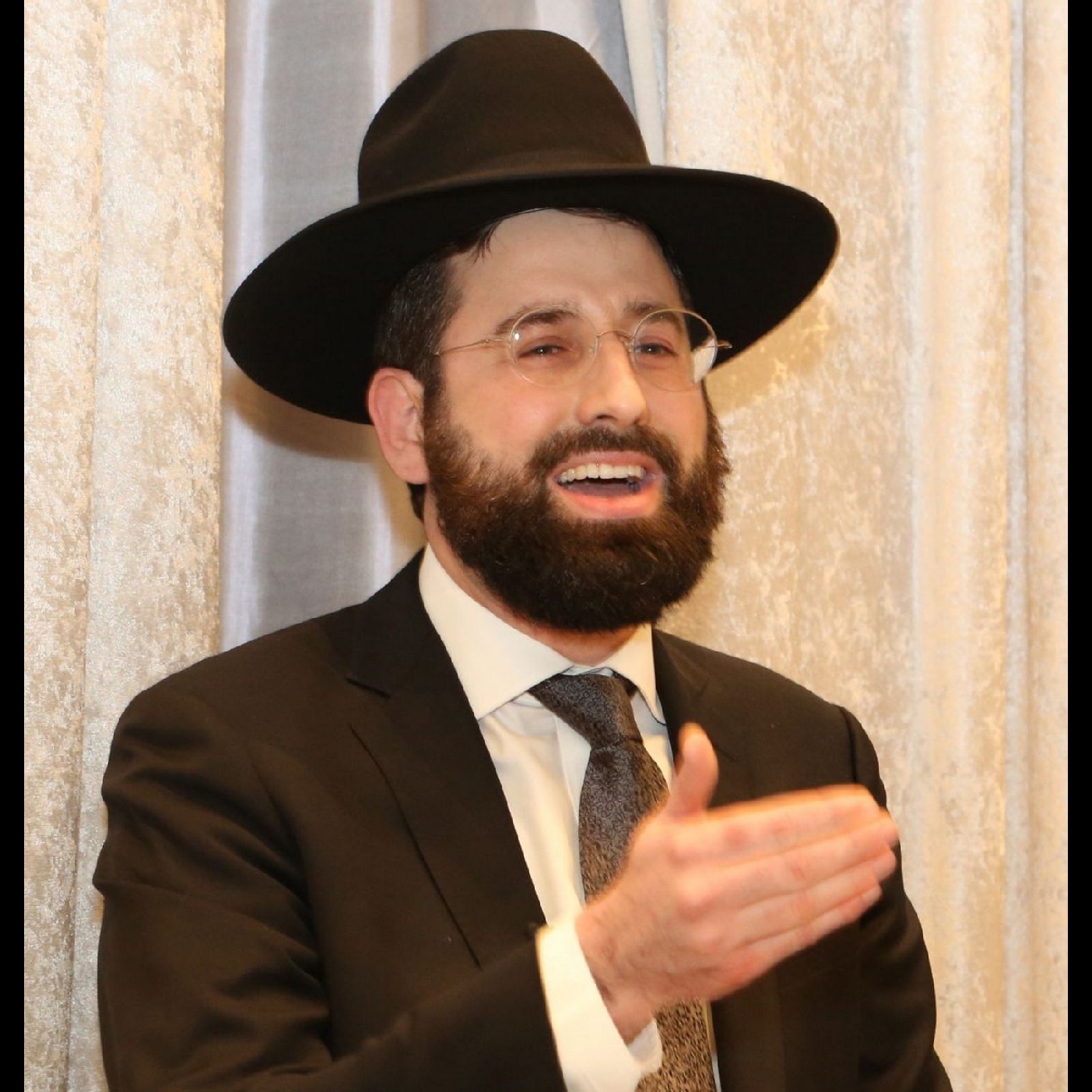
Yardaena Osband & Anne Gordon
Talking Talmud
Learning the daf? We have something for you to think about. Not learning the daf? We have something for you to think about! (Along with a taste of the daf...)Join the conversation with us!
Var kan du lyssna?
Poddar i appen Replaio Radio Kommer snartPoddar kommer snart till appen. Installera nu och bli först med att uppleva ett helt nytt sätt att lyssna på poddar
 Installera gratis
Android nästan 10 mn nedladdningar · betyg 4,8
iOS snart
Avsnitt
Hullin 11: Majority Rules 11.05.2026 13:59
A quantifiable majority determines the outcome of an unknown, as per the biblical verse: "Follow the majority." But with an unquantifiable majority - what is the source for the principle to apply in those cases as well? Note that the Gemara supports this principle with 9 examples -- that is, 9 sources as possibilities from which it is understood or derived. Note also that checking the re...
Hullin 10: The Possibly Non-Kosher Shechitah of 13 Animals 10.05.2026 21:01
Given that the knife for shechitah cannot be notched, there was an event when a knife was discovered to be notched after it was used to slaughter 13 animals. But if he only discovered that to be the case after the last animal's shechitah, then maybe it became notched along the process and the first animal(s) were not a problem. The big - and perhaps indeterminable - question is when did the knife...
Hullin 9: Presumptions, Prohibitions, and Danger 09.05.2026 16:19
A Torah scholar must learn 3 skills: writing, kosher slaughtering, and circumcision. And 3 additional things are subject to dispute - whether they are skills that are required or commonplace: tying the knot of tefillin, the blessing for the wedding, and tying tzitzit. Also, standards of presumption regarding an animal: while it's alive, the presumption is that it's not going to be kosher....
Hullin 8: Kosher Shechitah 08.05.2026 18:29
If you heat a knife to white-hot, the shechitah done with that knife is kosher, because it was already sharp enough before it was hot. The concern is whether the slaughtering was done with the knife's blade or if it was done via the heat and a burn. The Gemara contrasts the issues that pertain here to the details of tzara'at, which has a long-standing tradition "halakhah le-Moshe mi-S...
Hullin 7: A Righteous Donkey (and Animals of the Righteous) 07.05.2026 27:36
Does produce from Beit She'an need tithing? How is this even a question - Beit She'an is clearly part of the land of Israel. Note the Gemara's initial focus on how a sage isn't going to change his mind -- with various interpretations of the Hebrew term used here to note that he won't be dissuaded. Back to Beit She'an - it all goes to the human consecration (and re-consecrat...
Hullin 6: Who Is an Ignoramus? One Who Does Not Know Much 06.05.2026 17:23
A story involving R. Asi and R. Zeira about eggs that were cooked on wine - did that combination carry a risk of "demai" (possibly untithed produce)? Where even R. Asi wasn't thinking about this concern - and how God prevents error by those who are righteous. Which leads us into the ongoing discussion of mixtures or combinations. Also, what about the concern of the population of thos...
Hullin 5: God Is Looking Out for You (Or: Elijah and the Ravens) 05.05.2026 19:00
On the way Yehoshafat stuck by Achav, even when it came to the reliability of his shechitah, despite Achav being guilty of worshipping idols. Note the relationship between the king of Yehudah and the king of Yisrael, despite the divine among the tribes. Plus, the ravens who brought Eliyahu (Elijah) the Prophet his daily bread and meat... ostensibly from Achav's slaughterhouse (so how can Eliya...
Hullin 4: Can We Trust Jezebel's Kashrut? 04.05.2026 18:25
If one finds a string of birds in the possession of a Kuti, there are various ways of increasing rigor to test whether the Kuti had done the slaughtering properly, each of which concludes with determining whether the Kuti himself would eat from his shechitah. That is, where they accepted the halakhic requirements, they were incredibly careful -- and if they didn't accept the requirement to beg...
Hullin 3: Kosher Slaughter - What's Ideal? What Works Anyway? 03.05.2026 23:42
More on the contradiction in the first mishnah of the tractate, with attempts to determine what caveat works for the distinction between the ideal circumstances for kosher slaughtering as compared to after the fact. With a spotlight on the case of the "Kutim" (Samaritans) whose shechitah was accepted if overseen by an observant Jew. [Who's Who: Kutim/Samaritans] The question is what...
Hullin 2: Everyone Can Shecht, Except for Those Who Should Not 01.05.2026 14:04
An introduction to Hullin, including the meaning of the term and the likely original title of the tractate. Also, details of how to manage ritual slaughter (for any kind of slaughter, including non-consecrated meat). And the first mishnah! Everyone is eligible to do this slaughtering -- except for the usual 3 (deaf-mute, cognitively impaired, or a minor). Though, if they did it, and under supervis...
Menahot 110: Is Torah Study More Valuable Than Temple Sacrifice? 01.05.2026 18:17
The Gemara picks up on yesterday's mention of King Hizkiyahu, one of the few truly righteous kings of Israel, and how he not only was a good example among Israel, but also for the neighboring nations. Plus, the Mediterranean region from Tyre to Carthage (likely) were said to have known God, though the rest of the world may not have. Also, the recognition of Torah study as of supreme value, esp...
Menahot 109: The Temple of Onias 30.04.2026 25:14
A new mishnah! One who makes a vow to bring an offering must do so in the Temple in Jerusalem (as compared to local personal offerings)... and also as compared to the replica of the Temple in Egypt: Beit Honio (or the Temple of Onias). And Honio was the descendent of Simon HaTzadik. [Who's Who: Simon HaTzadik] [What's What: The Temple of Onias] The historical context is essential here, in...
Menahot 108: Keeping Track of What You've Vowed to Sacrifice 29.04.2026 20:26
More on the collection horns - and why there were 6 of them. Plus, the case of an animal that has been dedicated as an offering and then it becomes blemished before it is sacrificed - perhaps he could replace the 1 animal with 2 others (and what if then those 2 are blemished too?). Could a different kind of animal be swapped? Of course, each unusual case is a matter of dispute. With a deep dive in...
Menahot 107: The 6 Horns for Collecting Donations 28.04.2026 20:33
2 mishnayot! 1 - A wine libation may be brought on its own, but what about oil? And what if one makes a vow to do so in an unspecified amount? Or if one isn't sure what the vow was? What are the minimum amounts that would cover the vow? Also, consideration is paid to which days have the most required offerings brought. And what really happened -- in contrast to a boundary-pushing question? 2 -...
Menahot 106: More Covering of Forgotten Vows 27.04.2026 20:20
A debate between Rabbi Yehudah HaNasi and the Rabbis - based on how many offerings must be brought to cover all bases to fulfill a vow when the details of that vow have been forgotten. What is the status of all the offerings that aren't fulfilling that vow? Also, one who takes a vow to bring wood for the altar - is that to burn the other offerings or is it an offering itself? The Gemara seems...
Menahot 105: To Cover All Your Bases 26.04.2026 22:31
Chapter 13! With the new mishnah, and a focus on oaths regarding grain-offerings. What happens when one takes an oath, but isn't sure what amount he'd specified in his oath. That is, how to cover the oath by a "maximum" of the grain-offering (or all of them, as the case may be). Also, who taught that one might need to bring all of them? The Gemara approaches this question by a pr...
Menahot 104: Wine and Oil, Redux 24.04.2026 14:57
Another 2 mishnayot! 1 - Making donations of libations to the Temple must be made in the specific amount of the offerings themselves, rather than being too much or too little for the one given libation. Which gives rise to the question whether libations need to be in fixed amounts or not. And that answer is elusive. 2 - With regard to bringing oil as its own offering - that doesn't really work...
Menahot 103: Casual Speech, Casual Measures (Not Recommended) 24.04.2026 19:14
2 mishnayot! 1 - If one makes a vow to bring a voluntary grain-offering, but the phrasing makes it an invalid vow in some way or other, then the vow is incumbent upon the person who misphrased it. Which seems stringent, rather than looking for an opening to let the oath-taker out of the oath. With a dispute as to how this works between Beit Hillel and Beit Shammai - namely, why the oath is still i...
Menahot 102: Consecration, Impurity, and Unfulfilled Vows 23.04.2026 16:03
On consecrated items and ritually impure items -- and how they are not treated the same in halakhah with regard to their prohibited use and their respective liabilities. Plus, the specific properties of food in its capacity to be rendered impure. Plus, the timing of the sprinkling of the blood of an animal sacrifice. Also, the wording of a vow to bring a grain-offering will have significant impact...
Menahot 101: Redeeming the Impure and the Pure 22.04.2026 13:28
Chapter 12! With a new mishnah - redeeming the sanctity of grain offerings and libations, especially when the item has become impure. But what happens if the item is pure? Plus, complex Gemara on the impurity and redemption of these items, with various opinions on when precisely the redemption can be implemented, with a focus on the monetary sanctity.
Menahot 100: The Impact of Shabbat on the Breads 21.04.2026 22:10
2 mishnayot to finish chapter 11! What if the items from the table were moved on the wrong day (that is, the shewbread and the frankincense)? What happens if they remain present past the time of Shabbat when they are supposed to be removed correctly? Plus, a dispute over premature offerings -- and what is considered a "premature" offering (including thinking it was daytime when it was st...
Menahot 99: On Honoring Torah and the Influence of the Sages' Own Experiences 20.04.2026 21:08
More on King Solomon's 10 tables, and how the kohanim put the shewbread on Moses' table and not Solomon's (or was it one table at a time, including Solomon's tables?). Also, the concept of increasing in holiness and never diminishing it - as familiar from Chanukah, and applied here. Plus, not mocking one who has forgotten his Torah, but treating such a person with respect -- and a...
Menahot 98: When King Solomon Furnished the Temple 19.04.2026 18:21
More on the set-up of the Temple, including a larger "amah," that was the one of Shushan, and also a smaller measure, which was most significant for the craftsman building the Temple. With an open discussion about representation of the foreign king in the Temple, which seems difficult. Could it be metaphorical? Maybe, but it sounds more literal. Also, healing trees. Plus, presenting the...
Menahot 97: What's a Cubit? An Imprecise Mishnah 18.04.2026 13:40
All of the mention of "amot," the measure of a forearm, that are mentioned in the Temple are "medium-sized" cubits -- which was 5 or 6 handbreadths, depending on what was being measured. Also, the application of those amot of different lengths, as concluded from the description of the Temple's measurements in Ezekiel.
Menahot 96: All the Technical Details You Ever Wanted about the Shewbread 17.04.2026 20:24
Opening with a very (very!) long mishnah on the 12 loaves of the shewbread, including their process and their location and their shaping and their measurements and their placement. Also, how some of that processing overrode Shabbat rules, and some did not. Rabbi Akiva's general principle here is that if something can be done before Shabbat, it will not override the laws of Shabbat, but if it c...
Liknande poddar







Lyssna på podden Talking Talmud i Replaio
Radio och poddar i en och samma app - gratis och utan konto. Installera redan idag och missa inte premiären
Replaio är ingen poddutgivare; programnamn, omslag och ljud tillhör sina upphovspersoner och distribueras via offentliga RSS-flöden
