jaywen
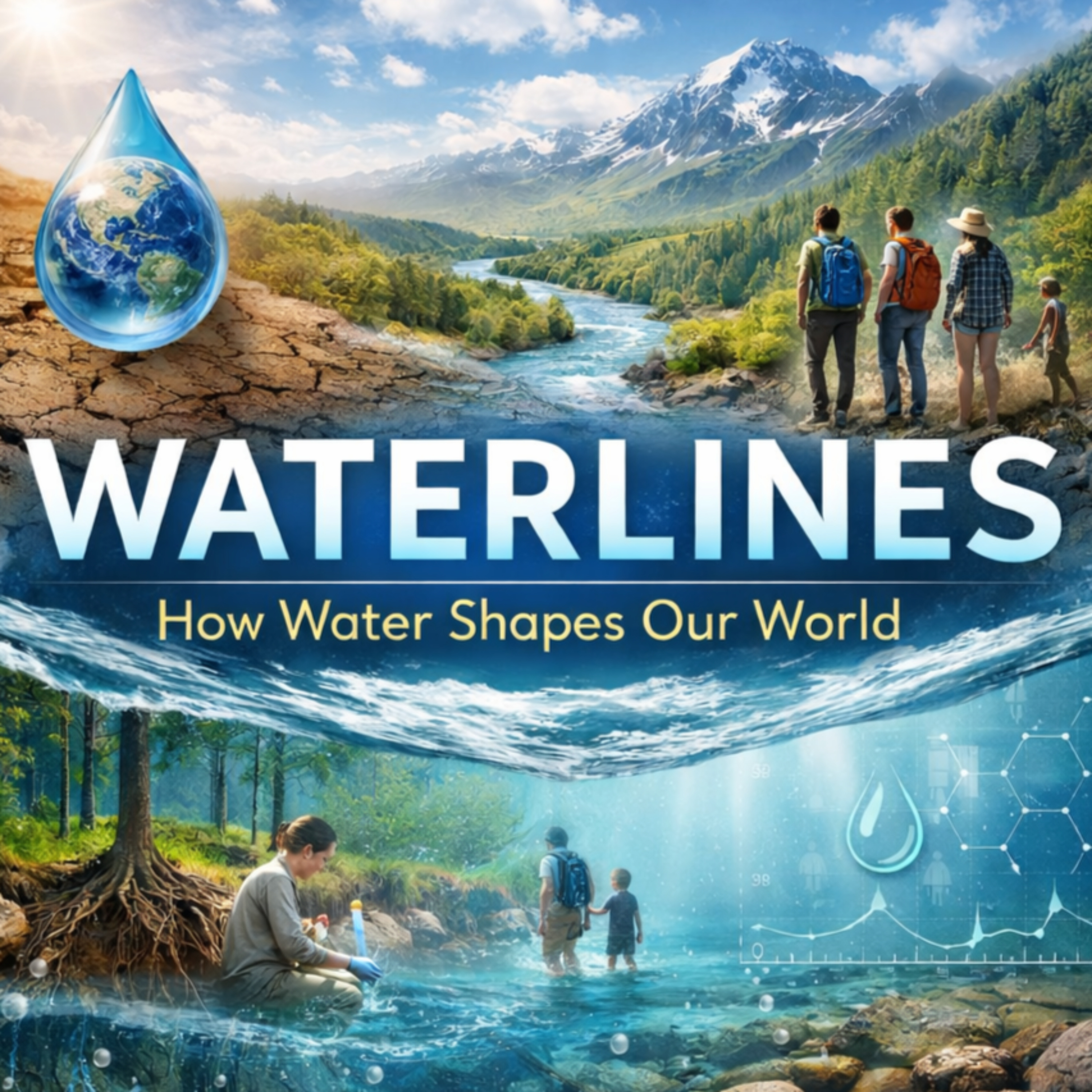
Waterlines: How Water Shapes Our World
✦ Waterlines: How Water Shapes Our World ✦ explores the hidden role of water in shaping our planet, ecosystems, and daily lives. Each episode turns advanced water science into engaging, everyday conversationsDesigned for curious listeners — no scientific background required — the show features researchers, field stories, and real-world challenges that reveal why water matters more than we think. Whether you’re interested in the environment, climate, or how science connects to society, Waterlines helps you see the world through the lens of water.
Where to listen?
Podcasts in the app Replaio Radio Coming soonPodcasts are coming to the app soon. Install now and be the first to see a whole new take on podcasts
 Install for free
Android 5M+ downloads · 4.8 rating
iOS soon
Install for free
Android 5M+ downloads · 4.8 rating
iOS soon
Episodes
When Methane Finds a Water Well: Tracking Gas Leaks in Shale Country 27.05.2026 12:02
When people turn on a kitchen tap, they are trusting a hidden system of rock, fractures, wells, microbes, and chemistry. This episode matters because methane in groundwater is not only a household safety concern; it is also a clue to how energy development, geology, and water protection intersect. We visit Sugar Run in Pennsylvania, where researchers studied bubbling seeps, private wells, stream w...
When Gas Wells Leak: How Scientists Trace Methane in Drinking Water 27.05.2026 11:57
A glass of well water can look perfectly clear and still carry a hidden question: where did that gas bubble come from? This episode matters beyond one paper because millions of people rely on private wells, and energy development, rural water safety, climate concerns, and public trust often meet at the kitchen tap. We follow scientists as they sort out methane migration near shale-gas sites using...
When Water Data Is Scarce: Teaching AI to Listen to Science 27.05.2026 10:49
Many of the water decisions that matter most—tracking contamination in seawater, understanding how rocks and soils release chemicals, or predicting a river’s response after a storm—happen with fewer measurements than anyone would like. This episode looks at a machine-learning idea built for that reality: instead of asking AI to learn everything from scratch, start with the scientific rule we alrea...
Helium in the Well Water: Tracing Hidden Groundwater Beneath Michigan 27.05.2026 11:09
Groundwater can look still from the surface, but deep below our feet it may be slowly moving, mixing, and carrying clues from rocks, ancient climate, and even Earth’s interior. This episode matters because communities depend on shallow aquifers for water, while society also asks the subsurface to store waste, energy, and carbon. A study from the Michigan Basin shows how tiny amounts of helium diss...
Why Water Data Needs a Cleanup Before It Can Tell Us What’s in Our Streams 27.05.2026 11:30
Before a community can ask whether a stream is changing, whether mining or drilling left a signal, or whether a restoration project is working, someone has to make thousands of water measurements speak the same language. This episode looks at a deceptively simple problem: water quality data may be online, but that does not mean they are ready to use. Different databases can call nitrate by differe...
Methane in the Creek: How Streams Can Reveal Hidden Gas Leaks 27.05.2026 11:37
A small creek can carry clues about big questions: energy, climate, drinking water, abandoned mines, old wells, and how communities notice changes in places they know well. In this episode, Waterlines follows researchers and volunteers across the northern Appalachian Basin as they use stream water to look for methane, a powerful greenhouse gas that can also change water chemistry underground. The...
The Glacier Water Hidden in Michigan’s Shale Gas 27.05.2026 11:04
A gas well can feel far removed from everyday water concerns, but this episode shows why the water trapped deep underground matters for climate history, energy choices, and groundwater protection. In Michigan’s Antrim Shale, scientists used tiny traces of noble gases—helium, neon, argon, krypton, and xenon—as time stamps and travel tags. Those gases reveal that ancient brines from deeper rocks mix...
The Forgotten Wells Beneath Our Water, Climate, and Clean Energy Future 27.05.2026 11:44
Old oil and gas wells can sit quietly in farm fields, forests, neighborhoods, and under future energy projects. Some are forgotten, some are leaking, and many are close to the groundwater people drink. This episode matters because it connects a hidden piece of industrial history to everyday water safety, climate pollution, public spending, and the choices communities face as the United States move...
When Methane Shows Up in Well Water: Reading the Chemistry Clues 27.05.2026 11:14
Methane in a home water well can be frightening, confusing, and politically charged—especially in regions where natural gas drilling, old oil wells, coal mining, and naturally gassy rocks all overlap. This episode matters because communities need ways to ask a practical question: is methane in groundwater long-standing and natural, or is it a fresh arrival that may point to a leaking well or anoth...
Penguin Clues in Antarctic Mud: How Guano, Water, and Nitrogen Reveal Past Colonies 27.05.2026 12:12
Antarctica can look empty, but its ponds, pebbles, and mud can hold a living history of birds, climate, nutrients, and water. This episode follows scientists into the Ross Sea region, where old Adélie penguin colonies left chemical traces in sediments. The surprise is that a routine lab step, washing samples with acid, may reveal how strongly penguins shaped a place. We unpack nitrogen isotopes wi...
Can a Stream Spill Hide in Plain Sight? Mapping Water Clues Near Shale Gas Wells 27.05.2026 11:11
When something spills near a stream, the question people care about is simple: did it reach the water? The answer is rarely simple. Creeks twist through hills, sampling stations are scattered, and public reports may arrive long before any chemistry data can confirm what happened. This episode follows researchers who built GeoNet, a geospatial tool that treats streams like connected neighborhoods a...
Fracking, Drinking Water, and the Data People Need to Trust 27.05.2026 11:24
When people worry about the water from their tap or the creek behind their house, the question is not only “what does the science say?” It is also “who has the data, who gets to see it, and who is trusted to explain it?” This episode looks at fracking in Pennsylvania’s Marcellus Shale through that everyday problem: how communities, scientists, regulators, companies, and volunteers can argue less p...
The Hidden Water Library: Why Sharing Chemistry Data Matters 27.05.2026 11:12
Every water sample tells a small story: what flowed through a farm field, a mine, a city pipe, a forest soil, or a fractured rock underground. But if those stories stay trapped in notebooks, spreadsheets, or journal supplements, communities lose a powerful tool for spotting pollution, tracking climate-linked change, and understanding Earth’s life-support systems. In this episode, Waterlines follow...
Tiny Tracers Under the South China Sea: How Noble Gases Reveal Water, Faults, and Gas 27.05.2026 11:43
Offshore gas fields can feel far away from daily life, but the same underground plumbing that moves methane also moves salty water, heat, carbon dioxide, and clues about leakage. This episode follows scientists into the Yinggehai Basin, west of Hainan Island, where tiny amounts of helium and argon act like durable luggage tags on deep fluids. Because these noble gases barely react with anything, t...
Old Wells, Road Salt, and Drinking Water: A Pennsylvania Groundwater Detective Story 27.05.2026 11:03
Groundwater problems rarely arrive with a label saying where they came from. For families on private wells, a change in taste, saltiness, metals, or methane can raise urgent questions: Is it nearby drilling? Old oil and gas wells? Road salt? Natural geology? This episode follows scientists trying to answer those questions in two Pennsylvania landscapes with very different energy histories. One cou...
What 11,000 Wells Reveal About Fracking, Methane, and Rural Drinking Water 27.05.2026 10:59
Private wells are everyday lifelines: a kitchen tap, a stock tank, a shower before work. In shale country, those taps also sit above old rocks, natural gas pockets, fault lines, roads, farms, and modern drilling. This episode looks at what happens when scientists bring together more than 11,000 groundwater samples from Bradford County, Pennsylvania, to ask a plain but difficult question: is water...
Hot Springs, Helium, and a Moving Plateau: What Water Reveals Beneath Tibet 27.05.2026 11:59
Hot springs can feel like surface comforts, but the bubbles rising through them may carry messages from far below our feet. In this episode, we follow water and gas samples from the southeastern edge of the Tibetan Plateau, where researchers used helium isotopes in geothermal springs to ask a big question: is the plateau’s deep crust slowly flowing outward, like warm taffy under a hard shell? The...
Why U.S. Rivers Are Getting Saltier, and Why Their Chemistry Is More Complicated Than Road Salt 27.05.2026 11:57
Fresh water is not just wet; it carries a chemical memory of roads, cities, rocks, soils, and weather. This episode matters because the salts and alkaline compounds moving through rivers can affect drinking water, stream life, bridges and pipes, and even how scientists think about carbon moving from land to ocean. We unpack a national-scale study that used machine learning to ask a practical quest...
When Satellites Meet Stream Boots: A Friendly Guide to Trusting Big Water Data 27.05.2026 10:33
Water decisions now lean on a flood of information: rain gauges, satellites, stream sensors, soil-moisture maps, and climate models. That can help us see droughts, floods, and groundwater risks far beyond any single field site, but only if the analysis is careful enough to trust. This episode unpacks a practical framework called GRRIEn analysis, which helps Earth scientists turn huge global Earth...
How Old Is the Water Under Quebec’s Eskers? 27.05.2026 12:01
A glass of clear groundwater can look timeless, but its age matters for people deciding how much to pump, where to place roads and gravel pits, and how to protect drinking water from spills. This episode visits the Amos region of northwestern Quebec, where long ridges of sand and gravel left by melting ice, called eskers, store unusually clean water. Scientists used tiny traces of helium and triti...
When Gas Finds Water: Tracking Methane Through Streams, Wells, and Rock in Pennsylvania 27.05.2026 12:02
Methane leaks are often discussed as an air and climate problem. This episode asks a more local, watery question: if gas escapes underground, where does it actually go, and how would people notice? We follow three well-studied cases in Pennsylvania’s Marcellus Shale region, where scientists pieced together clues from drinking-water wells, bubbling streams, methane in the air, rock layers, and the...
Reading Snow with Thermometers: A New Way to Track Winter Water 27.05.2026 11:33
Snow is more than winter scenery. It is a slow-release water reservoir, a blanket over soils and tree roots, and a clue to flood risk when warm spells or rain-on-snow events arrive. This episode follows researchers in New York’s Adirondack Mountains who asked a practical question: can simple temperature sensors, paired with machine learning, tell us how deep the snow is when no one is there to mea...
When Mountains Squeeze Stone: Tiny Shale Pores, Ancient Seas, and Today’s Energy Choices 27.05.2026 11:42
Why this matters beyond one shale formation: the rocks beneath our feet are not still. They remember ancient seas, mountain-building pressure, buried heat, and the movement of fluids through spaces smaller than a speck of dust. This episode follows a study from China’s Yangtze Block that asks a deceptively simple question: what happens to the tiny pores in organic-rich shale when the rock is folde...
How Rain Draws Hidden Lines in Soil — and What AI Can Learn From Them 27.05.2026 10:57
Every rainstorm does more than wet the ground. Drop by drop, water slips through soil, dissolves minerals, carries elements away, and quietly helps build the landscapes, ecosystems, and carbon cycles we depend on. This episode follows a study that asks a practical question for modern Earth science: can artificial intelligence learn from both field data and physical chemistry to predict where those...
When Methane Shows Up in Well Water: How Scientists Read Groundwater Clues 27.05.2026 11:51
A glass of well water can look perfectly clear and still carry a hidden question: where did its methane come from? In gas-producing regions, that question matters for household safety, public trust, drilling decisions, and the basic right to understand what is happening underground. This episode follows researchers who asked whether everyday water chemistry—salts, iron, sulfate, pH, and other fami...
Similar podcasts







Listen to the Waterlines: How Water Shapes Our World podcast in Replaio
Radio and podcasts in one app - free, with no sign-up. Install today and do not miss the launch
Replaio is not a podcast publisher; show names, artwork and audio belong to their authors and are distributed through public RSS feeds.