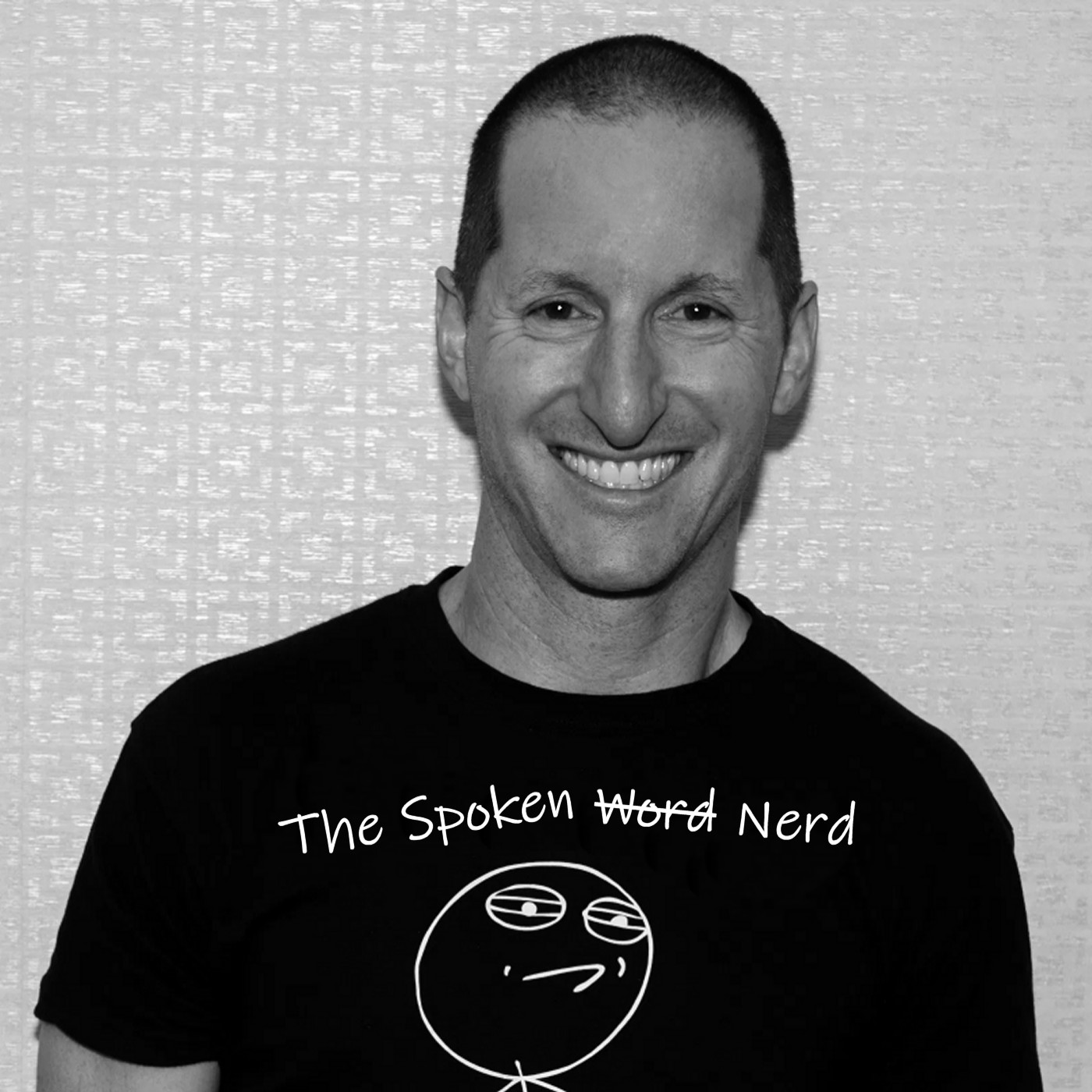
Connor McDonald
The Spoken Nerd
Musings on technology from long time database professional. Some times we can’t dedicate 100% of our attention to blog posts, or videos, or webinars, so whether you are working, or just working out. you can enjoy these podcasts alongside the daily grind
Author
Connor McDonald
Category
Podcast website
Latest episode
May 22, 2024
Where to listen?
Podcasts in the app Replaio Radio Coming soonPodcasts are coming to the app soon. Install now and be the first to see a whole new take on podcasts
 Install for free
Android almost 10M downloads · 4.8 rating
iOS soon
Install for free
Android almost 10M downloads · 4.8 rating
iOS soon
Episodes
The Oracle Optimizer - A conversation with Nigel Bayliss - Part 1 25.01.2022 24:13
No topic quite gets emotions rolling as much as the Oracle Query Optimizer. The fact that a piece of software can determine the best way to run the myriad of potential SQL statements, no matter how poorly they sometimes might be written, never ceases to amaze me. But conversely, the moment the optimizer does not meet our expectations, we're quick to throw our toys out of the pram and rain down on...
Why every DBA should learn APEX 06.01.2022 22:51
The very name of the product - Application Express (APEX) - suggests that this is a tool solely for building applications, and thus it should belong solely in the realm of developers. But that is underselling the ability of APEX to be a perfect use case for a different IT demographic - the Database Administrator. In this episode I present my reasons for APEX is a vital part of the DBA toolkit, and...
A conversation with Tim Hall (oracle-base) - Part 3 01.11.2021 24:22
Chances are, if you have Googled for help on an Oracle problem, you have ended up on a concise yet precise solution to your problem at oracle-base.com. The site has been running for over 20 years and gets millions of hits from the Oracle community. In this episode I wrap up the three-part chat with Tim by focussing on the latest release of the database 21c and its free companion, 21c Express Edit...
A conversation with Tim Hall (oracle-base) - Part 2 25.10.2021 29:13
Chances are, if you have Googled for help on an Oracle problem, you have ended up on a concise yet precise solution to your problem at oracle-base.com. The site has been running for over 20 years and gets millions of hits from the Oracle community. In part 2 of this three-part series, I dive into how Tim got the oracle-base.com site started and how both of us have been trying our hand at YouTube...
A conversation with Tim Hall (oracle-base) - Part 1 19.10.2021 32:40
Chances are, if you have Googled for help on an Oracle problem, you have ended up on a concise yet precise solution to your problem at oracle-base.com. The site has been running for over 20 years and gets millions of hits from the Oracle community. In this three-part series, I catch up with the owner of the site, and good mate, Tim Hall to talk tech, blogging, video and everything else that grabb...
Back to basics: The most important skill for any tech professional 05.09.2021 30:16
If you're an Oracle developer, what is the most important skill you need? Is it database modelling? Is it SQL coding? Its none of these. I believe the core of being a successful modern developer is something far far simpler. Most of us get into the IT field because we like solving problems, so the most difficult challenge for many of us when we hit a problem that we cannot solve is being able to r...
Testing: The importance of trying to break stuff 04.08.2021 29:04
With the modern trend of automated testing, it is often easy to fall into the trap of relying solely on automation, especially when emotionally as developers we hard-wired to a bias of success. If you write working code, you are valued by your team. Your remuneration and career progression are often linked to working code. Thus as motivated as we want to be about finding bugs in our code with tho...
Back to basics: Stop doing SQL tuning! 05.07.2021 27:39
SQL Tuning - It is probably the biggest topic in database technology, and it is little surprise why. There is nothing sexier than diving into the heart of the application code, making a few changes and then basking in the admiration of your colleagues as you have once again saved the day! But that very allure of getting our ego stroked can mean that you have lost sight of where you are supposed to...
Back to basics: The structure of an index 27.05.2021 22:36
Pick up a reference book and there will most likely be an index at the back to help you locate particularly topics. Are database indexes the same? The goal of indexes in the database is allow rapid lookup of a known value in a table. But how do they achieve this? The secret lies on the structure used by indexes to ensure that finding a value even in billions of rows can be virtually instantaneous....
Every index is a bug 13.04.2021 28:18
Every database has indexes...but should they? In this episode, lets consider a different proposition. What if the indexes you have on your database are a mistake...A bug... An implementation error. Give me 30 minutes to convince you of a whole new mindset when it comes to indexes on your database. Enjoy! Catch me on Twitter at https://twitter.com/connor_mc_d if you have questions.
Back to basics: Once around the block! A look at block internals 10.03.2021 37:15
Can it be done? Can you delve into the hex dumps, the byte headers, the acronyms all wrapped up in the magic that is an Oracle Database block with no slides, no code, no demos and no visuals? Who knows, but I'll give it my best shot! Don't panic, this is not an episode about digging into internals just for the sake of digging. I'll take a look at the main components of a database block, why they e...
Back to basics: The very clever history of the ROWID 15.02.2021 24:59
The ROWID underpins many forms of data access within the Oracle Database. If you're a newcomer to Oracle, querying the rowid from a table returns a cryptic string such as "AAAhDyABAAABd0SAAA". But head back into the earlier versions of the database, and querying the rowid would return a completely different format like "0005DD12.0000.0040". In this episode, I'll cover what the rowid is, why the fo...
Back to basics: The evolution of tablespaces 05.02.2021 23:40
A tablespace is just a logical grouping of files in your Oracle database. But behind that simple definition sits a remarkable evolution of how tablespaces are defined and managed internally. This episode covers the early days of tablespaces and the pitfalls with managing their space utilisation from within the data dictionary. Then we'll move into the changes and improvements that with Oracle 8i a...
How does SELECT * FROM TABLE find its data? Back to basics with datafiles, segments and extents 16.01.2021 32:50
The beauty of databases is they we just throw SQL at it, and it handles all the heavy lifting of working out where your data is, and how best to find it. But even for the novice, it is useful to know the fundamental mechanisms in which data is stored. In this episode, I cover datafiles, segments, extents and how your queries translate to the data physically stored on disk. Finally I'll go through...
"Start the database!" is an incorrect phrase. Back to basics with databases and instances 16.01.2021 29:10
On StackOverflow, I chanced upon a beginner being trolled as they struggled to get going with Oracle. "Duh! Just start the database" someone said dismissively. I called out the rudeness by replying: "You don't start a database, you start an instance". So lets go back to basics, and describe Oracle in its most fundamental terms: What is a database? What is an instance? And why its important to unde...
Introducing: The Spoken Nerd with Connor McDonald 16.01.2021 1:00
The Spoken Nerd is all about database tech from Connor McDonald - a database tech who has spent 20+ years working with database tech! Ever being frustrated as a child with the limits of 1 KB of RAM in his Sinclair ZX80 computer, Connor has loved the challenges that come with storing data. When the infamous Y2K did not end the world as people thought, he started presenting at conferences and now in...
Similar podcasts







Listen to the The Spoken Nerd podcast in Replaio
Radio and podcasts in one app - free, with no sign-up. Install today and do not miss the launch
Replaio is not a podcast publisher; show names, artwork and audio belong to their authors and are distributed through public RSS feeds.