Joe Antognini
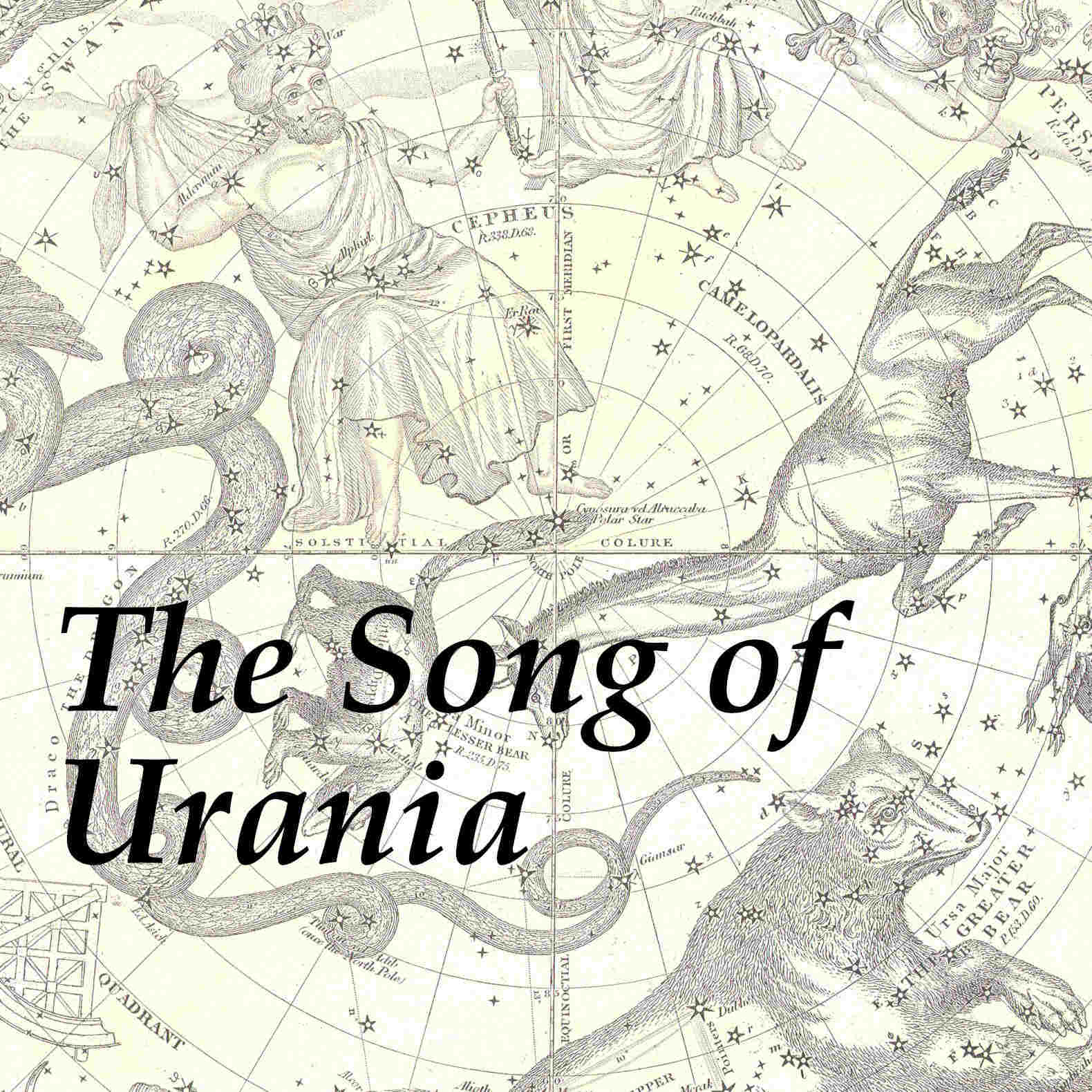
The Song of Urania
A history of astronomy, from antiquity to the present.
Where to listen?
Podcasts in the app Replaio Radio Coming soonPodcasts are coming to the app soon. Install now and be the first to see a whole new take on podcasts
 Install for free
Android 5M+ downloads · 4.8 rating
iOS soon
Install for free
Android 5M+ downloads · 4.8 rating
iOS soon
Episodes
Episode 22: The Antikythera Mechanism & Friends 10.10.2022 56:52
In the year 1900 a team of sea sponge divers stumbled upon a shipwreck from the late Hellenistic Era. Among the statues, coins, and jewellery, the salvage crew pulled out a small box covered in moss. Initially ignored, the contents of this box proved to be the most sophisticated mechanical device that survives from the ancient world. The Antikythera mechanism computed all the known motions of the...
Episode 21: Hipparchus the GOAT 12.09.2022 1:09:53
After briefly examining the astronomy of Timocharis and Aristyllus, who developed the first known stellar catalog, we turn our attention to Hipparchus, who I claim was the greatest astronomer of ancient times. Hipparchus made major developments in virtually every area of astronomy known to him. His measurement of the lengths of the year and month were of unprecedented accuracy, he measured the dis...
Episode 20: The Theory of Epicycles & Deferents 13.08.2022 47:28
In the Hellenistic Era the astronomer Apollonius of Perga (maybe) developed the model of epicycles and deferents that was to dominate Western astronomy for more than 1500 years. Around the same time, Eratosthenes, who was the head librarian at the Library of Alexandria, developed a novel technique to measure the circumference of the Earth and arrived at a suspiciously accurate result.
Episode 19: The Forerunners of Copernicus 13.07.2022 1:05:52
At the dawn of the Hellenistic Age, two Greek astronomers developed radical new cosmologies. Heraclides of Pontica proposed that the Earth rotated on its axis and that Mercury and Venus revolved around the Sun instead of the Earth. Aristarchus of Samos went further and proposed that all the planets, including the Earth, revolved around the Sun. In addition, Aristarchus made the first quantitative...
Episode 18: Aristotle, Plato's Other Student 15.06.2022 1:17:58
Two of Plato's students were notable astronomers. We looked at one of them, Eudoxus, in the last two episodes. In this episode we turn to Plato's other student, Aristotle. Aristotle embellished Eudoxus's model of planetary motion, but also developed a comprehensive physics and cosmology that ultimately became the standard model of the universe during the High Middle Ages.
Episode 17: The Attic Calendar and its Discontents 17.05.2022 59:38
We turn back the clock and see how a variety of Greek astronomers over the centuries contributed to the Greek calendar, and how Greek politicians ignored their developments. Then we see how the discovery that the seasons are not of equal lengths posed a problem for Eudoxus's theory of planetary motion.
Episode 16: The Homocentric Spheres of Eudoxus 18.04.2022 1:00:43
In working on the problem of doubling the cube, Plato's friend Archytas devised an ingenious solution that involved a three dimensional curve determined by the intersection of a torus with a cylinder. Archytas's student Eudoxus then seems to have been inspired by this solution to develop the first serious model of planetary motions in ancient Greece, his theory of homocentric spheres.
Episode 15: On Plato's Broad Shoulders 22.03.2022 1:09:05
Before leaving the world of the Pre-Socratics, we look briefly at the astronomy of Oenopides, which had a more observational character than many of his contemporaries. Then we turn to Plato, the first of the great astronomers in the Socratic tradition, whose astronomy synthesized the best ideas of his predecessors.
Episode 14: The Atomic Philosophers 17.02.2022 52:52
Two philosophers, Leucippus and Democritus, attempted to synthesize the monist theories of the earlier natural philosophers with the pluralist theories of Empedocles and Anaxagoras. To do this, they proposed a revolutionary idea — that all matter is made of atoms.
Episode 13: Ex Uno, Plura 20.01.2022 52:05
As we transition from the Archaic Period of Greece to the Classical Period, two philosophers, Empedocles and Anaxagoras, rebel against the prevailing dogma of monism and present a new idea — that matter consists of mixtures of multiple fundamental elements. Thanks to William Little of Ohio State for help with the Latin to get the opposite of "E pluribus unum" for the title. If you would like...
Episode 12: The Eleatic School & the Way of Truthiness 21.12.2021 1:03:42
After the Median invasion, the Ionian philosopher Xenophanes, a student of the Anaximander, was forced to flee to Elea in Magna Graecia and brought the philosophy of the Ionians to the Eleans. His student, Parmenides, then founded the Eleatic School, which was skeptical of the senses, and argued that despite its appearance to the contrary, the Earth was round. Parmenides's student, Zeno, in turn d...
Episode 11: The So-Called Pythagoreans 24.11.2021 1:19:43
We turn to the enigmatic, charismatic philosopher Pythagoras and the following that he inspired. Though Pythagoras is today associated with the Pythagorean theorem, he developed a school whose secrets were jealously guarded. The Pythagoreans studied astronomy, mathematics, and music, but also developed a unique philosophy centering around numbers that heavily influenced Plato.
Episode 10: The Ionian School 20.10.2021 52:49
Miletus became a wealthy Greek city during the Archaic Period and developed a thriving intellectual culture which included many of the most important pre-Socratic astronomers. We looked at Thales in the last episode and now we try to understand the astronomy of other members of the Ionian School — Anaximander, Anaximenes, and Heraclitus. What did their astronomy have in common with each othe...
Episode 9: Thales, through a Glass Darkly 22.09.2021 1:01:04
Thales was the first of the Greek astronomers and became known as one of the Seven Sages of Greece. Over the centuries many astronomical discoveries were attributed to him, but what was the reality and what was the hyperbole?
Episode 8: The Bards Sing of the Skies 23.08.2021 50:31
We outline the early development of Greek civilization after the Late Bronze Age Collapse and how the unique geography of Greece influenced its culture, and ultimately, its astronomy. Then we explore the cosmology, cosmogony, and astronomy of the earliest Greeks based on the works of Homer and Hesiod.
Episode 7: Greek Tales of Ancient Nights & Days 24.07.2021 53:12
As we start to examine the astronomy of Ancient Greece we hear of the myth cycles of Theseus and Perseus, episodes from both of which appear in the night sky. These myth cycles help us to understand the conception the ancient Greeks had to the civilizations that came before them, the Minoans and the Mycenaeans and prepare us for the early cosmology of ancient Greece.
Episode 6: System of a B 25.06.2021 39:39
We dive into the most sophisticated model of planetary and lunar motions that the Babylonians developed: System A and System B and see how the Babylonians used this method to predict eclipses, the length of months, and even measure the precession of the perihelion.
Episode 5: A System of Weights & Measures 27.05.2021 42:45
We look at how the Babylonians represented information in their astronomical tablets by examining their number system and the unit system. Then we dive into the Babylonian discovery of the Saros cycle, which was a deep regularity in the pattern of lunar eclipses.
Episode 4: The Astronomical Diaries 27.04.2021 51:59
We step back and look at Babylon's broader political history and see how Babylonian astronomy changes during the rise of the Neo-Babylonian Empire and the Persian Conquest. Then we look at some of the types of astronomical records the Babylonians produced, particularly the Astronomical Diaries, the longest continuous research program of any society in history.
Episode 3: When the Moon Disappears 28.03.2021 42:28
We look at how the Babylonians associated the heavens with their gods and how Mesopotamian astrology developed after the Assyrian conquest. We hear some examples of astrological omens and see how Babylonians handled the most malevolent of omens, the lunar eclipse.
Episode 2: The Stars over Babylon 28.02.2021 45:34
What are the earliest records of constellations? How did the ancient Babylonians keep track of their progress through the year? And how do we know what we know about Babylonia?
Episode 1: The Heavens & History 29.01.2021 30:32
How should we approach the history of astronomy?  How have the questions that astronomers have asked changed through the ages?  We look at some of these questions and sketch out the broad arc of this field from antiquity to the present day.
Similar podcasts







Listen to the The Song of Urania podcast in Replaio
Radio and podcasts in one app - free, with no sign-up. Install today and do not miss the launch
Replaio is not a podcast publisher; show names, artwork and audio belong to their authors and are distributed through public RSS feeds.