The Shakedown Archives
The Shakedown Archives
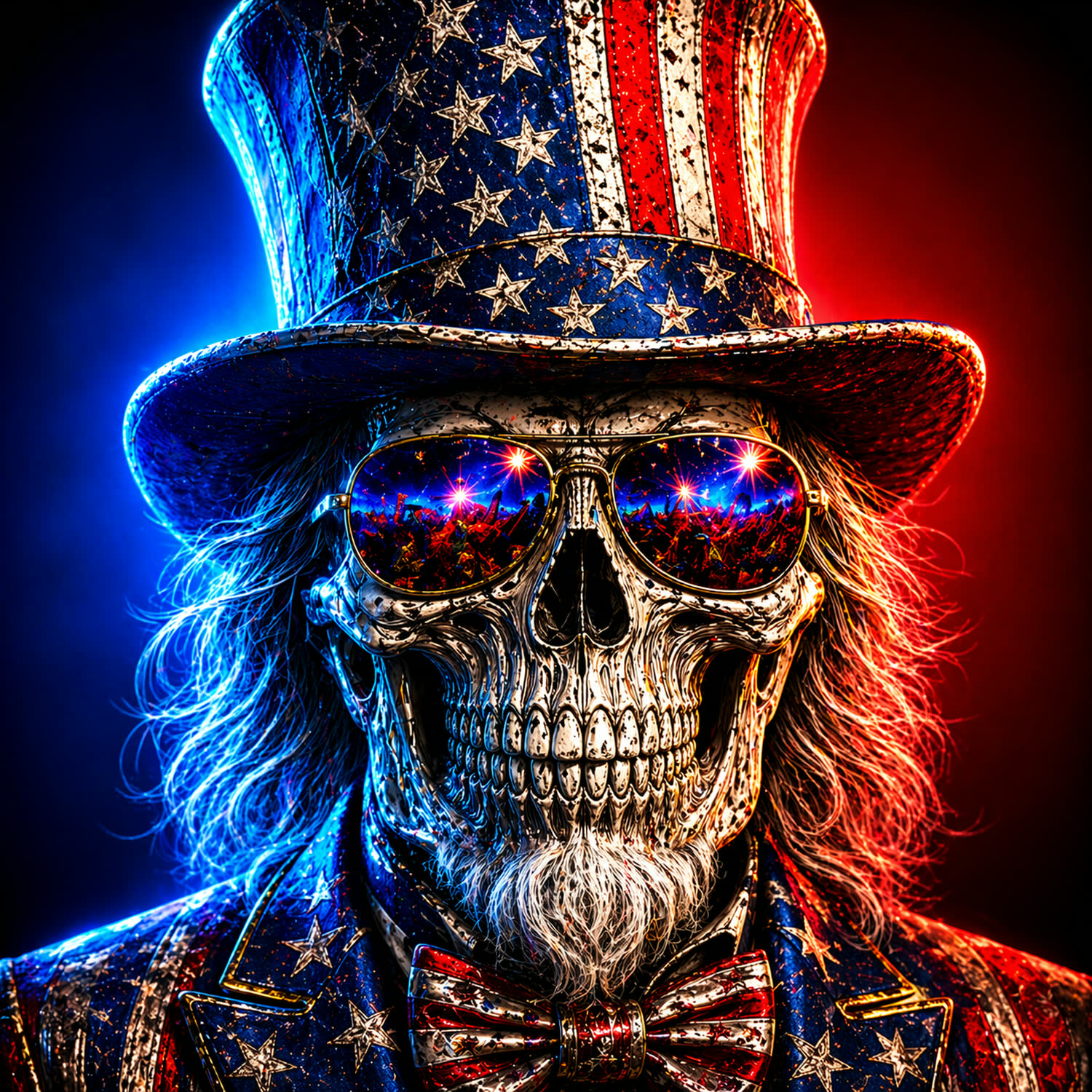
The Shakedown Archives is a forensic documentary podcast about the Grateful Dead - the band, the scene, and the fifty-year tape culture that kept it alive. Every episode reconstructs a single story from the record: a song, a night, a turning point, a person. No myth-making, no jam-band cliches - just the documented history, sourced and told straight, from the Acid Tests to the last note at Soldier Field. Companion video on Spotify and YouTube; deep-dive data at theshakedownarchives.com.
Be sure to visit the podcast's website and support the creator: www.theshakedownarchives.com
Author
The Shakedown Archives
Category
Podcast website
Latest episode
Jul 9, 2026
Where to listen?
Podcasts in the app Replaio Radio Coming soonPodcasts are coming to the app soon. Install now and be the first to see a whole new take on podcasts
 Install for free
Android almost 10M downloads · 4.8 rating
iOS soon
Install for free
Android almost 10M downloads · 4.8 rating
iOS soon
Episodes
Dead and Company Sphere Some Hated It I Went Anyway 04.05.2026 17:02
Dead & Company's Sphere residency ran 48 shows and grossed $131 million. Some Deadheads still refuse to call it a Grateful Dead show. They're not wrong. This is a documentary argument about what the Sphere actually was — and why the fight between the people who went and the people who refused is really about two different ways of loving a band that retired its name 30 years ago . Bob Weir died Jan...
The MOTOWN Obsession Jerry Garcia Hid in Plain Sight 27.04.2026 12:06
Jerry Garcia made the Grateful Dead study a Junior Walker B-side like a jazz chart. Looking back, he said it plain: "we studied that motherfucker." The song was "Cleo's Back" — a 1965 Motown instrumental by Junior Walker and the All Stars — and once you hear it, you can't unhear it in the Dead's catalog. This is the Detroit soul story nobody tells about the Grateful Dead. The band wears acid rock...
Grateful Deads First Tape Is a Myth 13.04.2026 12:23
The Grateful Dead's oldest live tape—January 8, 1966, the Fillmore Acid Test—has been cited for decades as the origin recording. Forensic evidence says most of it came from LA. A researcher named Archduke on the Lossless Legs forum did what nobody in the Deadhead community had bothered to do: frame-by-frame comparison of the KZ Productions Acid Test video against photographs, newspaper coverage fr...
The Grateful Deads Most Debated 20 Minutes 10.04.2026 10:33
Drums and Space divided Grateful Dead audiences for nearly two decades. Half the arena headed for the bathroom. The other half wouldn't leave for anything. Starting in the spring of 1978, Mickey Hart and Bill Kreutzmann turned the middle of every second set into something no other rock band attempted — an extended percussion and electronic improvisation with no key center, no recurring patterns, a...
The 5000 Check That Put Lithuania on the Map 06.04.2026 13:33
In 1992, the Grateful Dead wrote a $5,000 check through the Rex Foundation that set off a chain reaction — tie-dye shirts, a slam-dunking skeleton, and a bronze medal at the Barcelona Olympics for a country that almost couldn't afford to compete. This is the full story of how the Grateful Dead's decentralized network replaced missing state infrastructure for the newly independent Lithuania — not t...
From a Princeton Basement to 70000 at Soldier Field 18.03.2026 13:36
Trey Anastasio went to Princeton Day School. John Popper and Chris Barron were at Princeton High. Same town, same decade — and in 1990 alone, there were eight Popper-Phish collaborations at a single club in lower Manhattan. For 30 years, the Grateful Dead proved that improvisational music could sustain a $285 million touring economy. They played 2,350 shows. Fans taped 2,200 of them. And along the...
His Father Swore on a Bible Then Robbed the Grateful Dead 13.03.2026 13:06
In February 1971, Mickey Hart's father — a self-proclaimed reverend who'd sworn on a Bible — stole $155,000 from the Grateful Dead and disappeared. Mickey left the band weeks later. What should've destroyed them became the year that built everything that came next. This documentary argues that 1971 was the most misunderstood year in Grateful Dead history. After Lenny Hart's embezzlement, the band...
Why The Dead Took 7 Years To Rise Again 11.03.2026 14:10
The Other Ones played two tours. Someone was always missing....until two nights when it all came together. Bill Kreutzmann wasn't there in 1998. Phil Lesh was gone in 2000. For four years, the surviving core members of the Grateful Dead played under the same name but could never share the same stage. Bob Weir and Phil Lesh "fought like cats and dogs." Mickey Hart said something about Phil's liver...
Warren Haynes Had to be Jerry Garcia and Duane Allman In the Same Year 27.02.2026 13:16
In 2004, Warren Haynes played 80+ shows across The Dead and the Allman Brothers—learning 150 songs while both bands told him: don't imitate the legend before you. Warren Haynes joined the Allman Brothers Band in March 1989 as a temporary reunion hire. He stayed twenty-five years. Along the way, both Gregg Allman and Dickey Betts told him the same thing Phil Lesh would later say about Jerry Garcia'...
The Most Important Venue In a Post Jerry World 25.02.2026 15:18
Phil Lesh spent 30 years in a band that never stayed still — then tried to give that culture a permanent address. Terrapin Crossroads lasted nine years, produced extraordinary music, and proved something nobody expected. After Jerry Garcia's death in 1995, the surviving members of the Grateful Dead spent years searching for what came next — The Other Ones, Furthur, Dead & Company. Phil Lesh took a...
How Woodstocks Worst Set Created the Grateful Deads Empire 20.02.2026 15:54
The Grateful Dead played their worst set at Woodstock 1969. Bob Weir got shocked so hard it knocked him back 8 feet. They refused the film, refused the soundtrack — and built an empire doing the opposite of what Woodstock was selling. While The Who, Jimi Hendrix, and Santana used Woodstock to become legends, the Dead walked away — refused the film, refused the soundtrack, refused the mythology mac...
How the Grateful Dead Made Bill Walton an NBA Champion 16.02.2026 11:24
Bill Walton saw the Grateful Dead over a thousand times. The first was Mother's Day 1967 — he was fifteen, broke, no ticket, already six foot eight. He never left. This is the story of how the Grateful Dead made Bill Walton the basketball player he was and saved his life when his body destroyed everything he'd built. From UCLA's Pauley Pavilion — where the Dead set up gear on the same floor Walton...
The Night That Changed The Grateful Dead Forever 12.02.2026 10:52
The Grateful Dead built a touring operation on trust instead of enforcement — and on July 2, 1995, at Deer Creek Music Center in Indiana, that system broke. Thousands of ticketless fans tore down the fences. The Dead canceled their next show. Then they did something no major touring act had ever done — they wrote an open letter asking Deadheads to police their own community. That letter only makes...
Dan Healy Changed the Deads Sound Then Turned Tapers Into a System 06.02.2026 12:07
By the early 1980s, tapers were treated as a liability: labels saw piracy, and crews saw chaos at the soundboard. Dan Healy had a different problem—how to control the mix without trying to control the crowd. This Grateful Dead documentary follows how Healy changed the band’s sound and, almost by necessity, changed the rules of recording. He helped modernize front-of-house mixing so he could hear w...
The Crowd Culture That Drives The Grateful Dead and Phish 02.02.2026 22:06
The Grateful Dead and Phish didn't just create music—they revolutionized the entire concept of live performance by turning audiences into co-creators of the musical experience. While most people focus on the rivalry between Deadheads and Phish fans, the real story lies in how both bands discovered the secret to participatory music-making that transforms concerts from passive consumption into activ...
The Folk And Jug Band Origins Behind The Grateful Dead 26.01.2026 9:20
Everyone thinks the Grateful Dead were born as a psychedelic jam band. Acid Tests, tie-dye, endless guitar solos. That image is familiar — and incomplete. Before the jams, they were folk musicians. Jug bands, bluegrass, traditional songs, and an obsession with listening closely to one another. Those early folk values shaped how the band thought about music long before they played to massive crowds...
How Janis Joplin Lit Up the Grateful Dead 24.01.2026 14:52
Note the prior version of this video had some copywright issues. This version has been remastered to present a complete story Discover the legendary friendship between Janis Joplin and Ron "Pigpen" McKernan that defined the San Francisco sound. From their whiskey-fueled nights in Haight-Ashbury to the stage of the Fillmore West, this is the untold story of two blues icons who changed rock history....
Why The Grateful Dead Will Never Die 20.01.2026 24:38
The Grateful Dead have always been more than a band. They were a culture — built on change, collaboration, and the belief that the music should be shared, not protected. This video looks at how that culture formed in the past, how it has continued to function in the present, and why it was never designed to stop with any one person, era, or lineup. From the earliest days of the Grateful Dead, chan...
The Mistake That Killed Jimi Hendrix and Saved the Grateful Dead 16.01.2026 17:50
In 1967, Jimi Hendrix and the Grateful Dead stood on the same stage at the Monterey Pop Festival. Within three years, Hendrix was dead. The Grateful Dead would keep touring for nearly three decades. That difference wasn’t about talent. It was about design. This video examines how two legendary acts were built around radically different systems. Hendrix was optimized for peak brilliance—spectacle,...
The Song That Taught the Dead How to Jam Anything 09.01.2026 13:06
“Dancin in the Streets” wasn’t important because it was a great jam. It was important because it changed how the Grateful Dead understood songs. By the late 1960s, the Dead were already improvising. But that improvisation lived in places where it was expected—blues rave-ups, loose R&B numbers, or originals like Dark Star that were designed to stay open. “Dancing in the Street” posed a harder probl...
The Jerry Garcia And Duane Allman Paradox 05.01.2026 12:48
On October 28, 2014, the Allman Brothers’ final concert at the Beacon Theatre deliberately ran past midnight so it would conclude on the 43rd anniversary of Duane Allman’s death. The decision was deeply intentional. It reflected a band whose identity had always been closely tied to its founder. Duane helped shape the group around two lead guitars and two drummers, with the music often organized ar...
Why the Grateful Deads Early Studio Albums Failed and Live Music Won 28.12.2025 10:49
Critics and even the band themselves thought the Grateful Dead were terrible in the studio. Their early albums were rushed, expensive, confusing—and nothing like the concerts that made them famous. Their 1967 debut was recorded in just four nights, with songs trimmed to fit radio expectations. Phil Lesh later dismissed it as “a turd.” Instead of retreating, the band turned the studio into a labora...
Why Altamont Changed the Grateful Dead Forever 17.12.2025 11:23
On December 6, 1969, the Grateful Dead helped put together a free concert that ended up closing the book on the 1960s. What was supposed to feel like another Woodstock instead became the moment when the Free Festival/Free Love era finally ran out of road. The Rolling Stones wanted to finish their U.S. tour with a free show, and they turned to the Dead because this was their world. Sam Cutler was s...
How Not Fade Away Became the Deads Most Powerful Promise 12.12.2025 12:26
“Not Fade Away” began as a Buddy Holly B-side, but when the Grateful Dead adopted it they rewrote its core message—changing “my love will not fade away” to “our love will not fade away.” That single shift turned a simple rock-and-roll cover into a communal ritual that lasted more than 25 years. First performed at the Fillmore West on February 19, 1969, it quickly became a staple of Dead shows, ult...
The Merl Saunders and Jerry Garcia Story Two Legends One Unforgettable Sound 30.11.2025 15:00
Jerry Garcia’s fluid guitar voice didn’t appear out of nowhere; it was shaped in a huge way by keyboardist Merl Saunders. From 1970–1975, the two played more than 250 shows together with players like John Kahn, Bill Vitt, and Ron Tutt. Their first jams at The Matrix in San Francisco pushed Jerry far outside the folk-rock patterns he was used to. Merl opened his ears to jazz, taught him how to play...
Similar podcasts

Listen to the The Shakedown Archives podcast in Replaio
Radio and podcasts in one app - free, with no sign-up. Install today and do not miss the launch
Replaio is not a podcast publisher; show names, artwork and audio belong to their authors and are distributed through public RSS feeds.