James Fodor
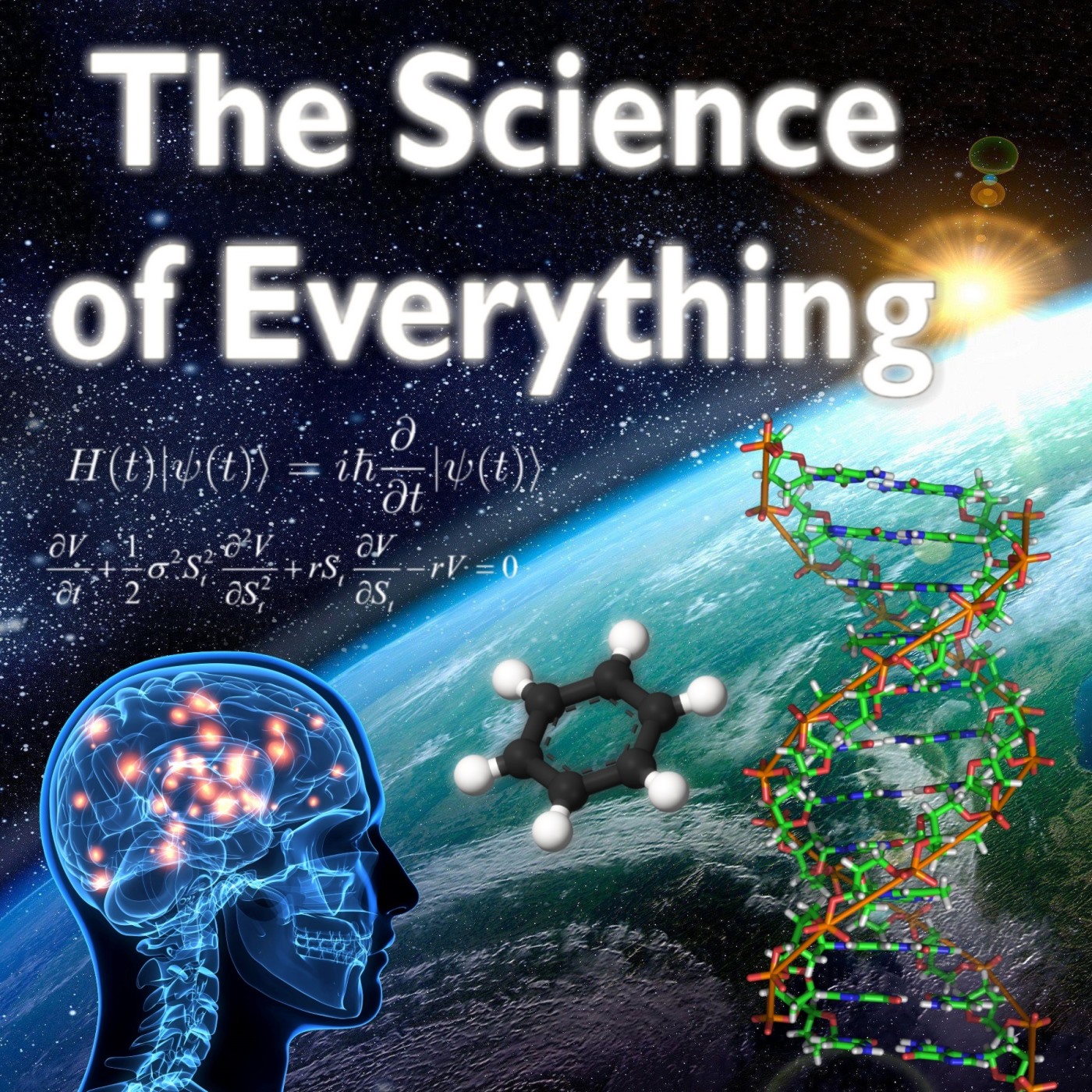
The Science of Everything Podcast
In this podcast I discuss a variety of topics in both the natural and social sciences, exploring the many fascinating insights that the scientific method yields about the world around us.
Where to listen?
Podcasts in the app Replaio Radio Coming soonPodcasts are coming to the app soon. Install now and be the first to see a whole new take on podcasts
 Install for free
Android 5M+ downloads · 4.8 rating
iOS soon
Install for free
Android 5M+ downloads · 4.8 rating
iOS soon
Episodes
Episode 96: How Computers Work Part VI - High Level Programming and Software 02.03.2018 44:51
In the final episode of our series on computers, I give an introduction to high-level programming languages, how they relate to assembly language and machine code, and how the compiler converts high level programs into a form that can be executed by the processor. I then outline some of the key components to high-level programming, such as data structures, control structures, and algorithms, befor...
Episode 95: How Computers Work Part V - Assembly Language and the Operating System 13.02.2018 1:11:03
In this the fifth episode of the series 'how computers work', I begin with a summary of some of the major methods of improving the performance of the central processing unit, including pipelining, cache memory, branch prediction, and parallel processing. Following a brief introduction to assembly langague and its relationship to the machine code, I then discuss the operating system and how it inte...
Episode 94: How Computers Work Part IV - Processor Architecture and Machine Code 04.02.2018 1:10:51
In this fourth part in our series on computers, I begin with an overview of the von Neumann architecture used in most modern computers. This leads in a discussion of the structure and operation of the central processing unit, covering the instruction register, the program counter, main memory, the data and address buses, the ALU, and the control Unit. I then discuss the purpose and implementation...
Episode 93: How Computers Work Part III - Logic Gates and Components 19.01.2018 1:06:53
In this third part of the series on computers I begin with an overview of Boolean algebra, including a discussion of key logic functions such as NOT, AND, and OR, and also discuss how CMOS logic gates implementing these functions are fabricated from transistors. I then survey the wide variety of logic components used in electronic circuits, including the multiplexor, adder, tristate buffer, flip-f...
Episode 92: How Computers Work Part II - Silicon and Transistors 09.01.2018 1:11:37
In this second episode in the series, I explain binary digital coding to motivate a discussion of the operation of transistors. Beginning with an examination of the properties of semiconductors and why they are useful for constructing transistors, I then examine how MOSFET transistors are constructed by combining pMOS and nMOS semiconductors.
Episode 91: How Computers Work Part I - What is a Computer? 30.12.2017 43:34
We begin our series discussing how computers work with an overview of the theory of computation, including a discussion of Turing machines and Turing completeness, and a brief history of early analog and digital computers. I also provide an introduction to the key components of a modern computer, and review the different levels in the hierarchy of computer organisation.
Episode 90: Climate Systems 01.12.2017 1:02:05
An analysis of the major factors influencing climactic variation over Earth's surface, including a discussion of the effect of differential heating at different latitudes, the impact of continentality and sea breezes, the causes of monsoons, the coriolis effect, atmospheric circulation cells, the jet streams, and thermohaline circulation currents in Earth's oceans. Recommended pre-listening is Epi...
Episode 89: The Atmosphere 23.11.2017 49:19
An overview of the composition and layers of the Earth's atmosphere, including a discussion of the exosphere, thermosphere, mesosphere, stratosphere, and troposphere. I also discuss the ozone layer and ozone depletion, the Karman line which marks the boundary of space, and the ionosphere. Recommended pre-listening is Episode 42: Gases and Gas Laws.
Episode 88: Cartography and Earths Seasons 29.09.2017 1:06:26
A discussion of the shape of the Earth and the difficulties and conventions involved in describing a three-dimensional surface on a two-dimensional map, including an overview of some of the major map projections and their various limitations. This leads in to an overview of Earth's axial tilt and variation in solar insolation by latitude as an explanation for the seasonal variation in weather acro...
Episode 87: The Geography of Planet Earth 26.08.2017 1:02:14
An overview of some of the key geographic features of planet Earth, including a discussion of the concept and classification of continents, the major mountain ranges and major river basins around the planet. I also discuss the major world biomes, their major climactic and botanical features, and their relative locations across the Earth.
Episode 86: The Evidence for Evolution 12.08.2017 46:15
An outline of the various lines of evidence in favour of the theory of evolution by natural selection, including a discussion of natural and artificial examples of natural selection in action, as well as a review of the evidence from the fossil record, comparative anatomy, biogeography, and molecular evidence. Recommended pre-listening is Episode 21: Introduction to Evolution.
Episode 85: Introduction to Quantum Field Theory 29.07.2017 1:05:46
A discussion of some of the major conceptual aspects of Quantum Field Theory, including the concept of a quantum field, classical field theory, harmonic oscillators, second quantisation, interacting theories, and the relationship of QFT to other branches of physics. Recommended pre-listening is Episodes 83 and 84, Advanced Quantum Mechanics parts I and II.
Episode 84: Advanced Quantum Mechanics Part II 07.07.2017 45:18
Continuing on from the previous episode, here I discuss some more advanced topics in Quantum Mechanics, including Noether’s theorem, the particle statistics of Bosons and Fermions, perturbation theory, and the EPR paradox. Recommended Pre-listening is Episode 83: Advanced Quantum Mechanics Part I.
Episode 83: Advanced Quantum Mechanics Part I 26.06.2017 58:56
An examination of some more advanced concepts of quantum mechanics, focusing on describing Dirac's bra-ket formulation of quantum theory. I discuss the formulation of quantum mechanics in terms of vectors in Hilbert spaces, Hermitian operators as corresponding to observables, orthogonality of eigenstates, incompatible observables, and Schrodinger's equation. Recommeded pre-listening is Episode 14:...
Episode 82: Racial Differences in Intelligence 11.03.2017 59:05
A discussion of the evidence and methodological issues pertaining to explaining the causes of racial differences in intelligence, with a focus on evaluating the hereditarian hypothesis that such differences are largely genetic. Recommended pre-listening is Episode 81: Intelligence Part 2.
Episode 81: Intelligence Part 2 24.02.2017 57:26
Continuing the series on intelligence, in this episode I discuss the genetic and neurological correlated of intelligences, the efficacy of measures to increase intelligence, and the causes and consequences of the Flynn effect. Also includes an analysis of the heritability of intelligence and how to properly interpret heritabilty research. Recommended pre-listening is Episode 80: Intelligence Part...
Episode 80: Intelligence Part 1 12.02.2017 1:00:20
The first in a three part series on human intelligence, covering debates about the definition of intelligence, how intelligence is measured, factor analysis and the origin of the g factor, and interpretations of the g factor as corresponding to intelligence. Also includes an analysis of Gardner's theory of multiple intelligences, and the cross-cultural validity of intelligence tests. Recommended p...
Episode 79: Basic Concepts in Statistics 22.01.2017 1:03:53
A concise introduction to key concepts of statistics, explained in as clear a manner as possible. Includes a discussion of key concepts of probability, types of statistical data, sampling methods, the difference between descriptive and inferential statistics, statistical significance, and p-values. I conclude with a brief look at three common statistical tests; the chi-square test, t-test, and lin...
Episode 78: Hearing 17.09.2016 45:08
An explanation of the process of human hearing, covering the structure and function of the outer, middle, and inner ears, with a focus on explaining how the hair cells of the cochlea transduce mechanical motion into electrical signals that are interpreted as sound. I also discuss the mechanisms of sound localisation, some of the causes of deafness, and briefly outline the workings of the cochlea i...
Episode 77: Nuclear Physics and Radioactivity 30.07.2016 1:01:22
An introduction to the physics of protons and neutrons in the atomic nucleus, with a focus on explaining the different modes of radioactivity, alpha, beta, and gamma decay, as well as different ways of measuring radiation and some of its biological effects. I also discuss some applications of radioactivity in radiometric dating, radiotherapy, nuclear power, and nuclear weapons. I conclude by discu...
Episode 76: GDP and Unemployment 02.06.2016 49:30
An introduction to the economic concepts of GDP (Gross Domestic Product) and unemployment, including a discussion of how these concepts are defined, how they are measured, their relevance to understanding economic activity, and some limitations of these concepts as they are currently employed. Recommended pre-listening is Episode 65: Inflation and Interest Rates.
Episode 75: Cellular Respiration 06.05.2016 53:19
An overview of the processes involved in the generation of energy in cells, including a discussion of the role of ATP in energy storage, glycolysis, the krebs cycle, oxidative phosphorylation, and ATP synthase. Recommended pre-listening is Episode 18: Biochemistry Basics.
Episode 74: Minerals and Rocks 30.12.2015 49:06
A discussion of minerals, including their main properties such as crystal structure, habit, cleavage, lustre, and hardness, followed by a brief overview of some of the major mineral classes, with a focus on the various types of silicate minerals. I also discuss the rock cycle and the relationship between the three major types of rocks: igneous, sedimentary, and metamorphic.
Episode 73: Introduction to the Immune System Part 2 29.06.2015 38:28
Continuing on from the previous episode, I discuss the role of antibodies and antigens in mediating adaptive immunity, and follow with a discussion of the functions and roles of B-cells and T-cells. I conclude the episode with an overview of the many components of the immune system and a discussion of how they interact to protect the body from pathogens. Recommended prelistening is Episode 72: Int...
Episode 72: Introduction to the Immune System Part 1 27.02.2015 54:44
An overview of the human immune system, beginning with some basic anatomy of the lymphatic system, and proceeding through a discussion of the distinction between the innate and adaptive immune systems, the role of skin and mucus membranes in providing barriers to pathogen entry, the inflammatory response, an overview of the different types of leukocytes, and an initial foray into the workings of t...
Similar podcasts







Listen to the The Science of Everything Podcast podcast in Replaio
Radio and podcasts in one app - free, with no sign-up. Install today and do not miss the launch
Replaio is not a podcast publisher; show names, artwork and audio belong to their authors and are distributed through public RSS feeds.