Krishnamurti Foundation Trust
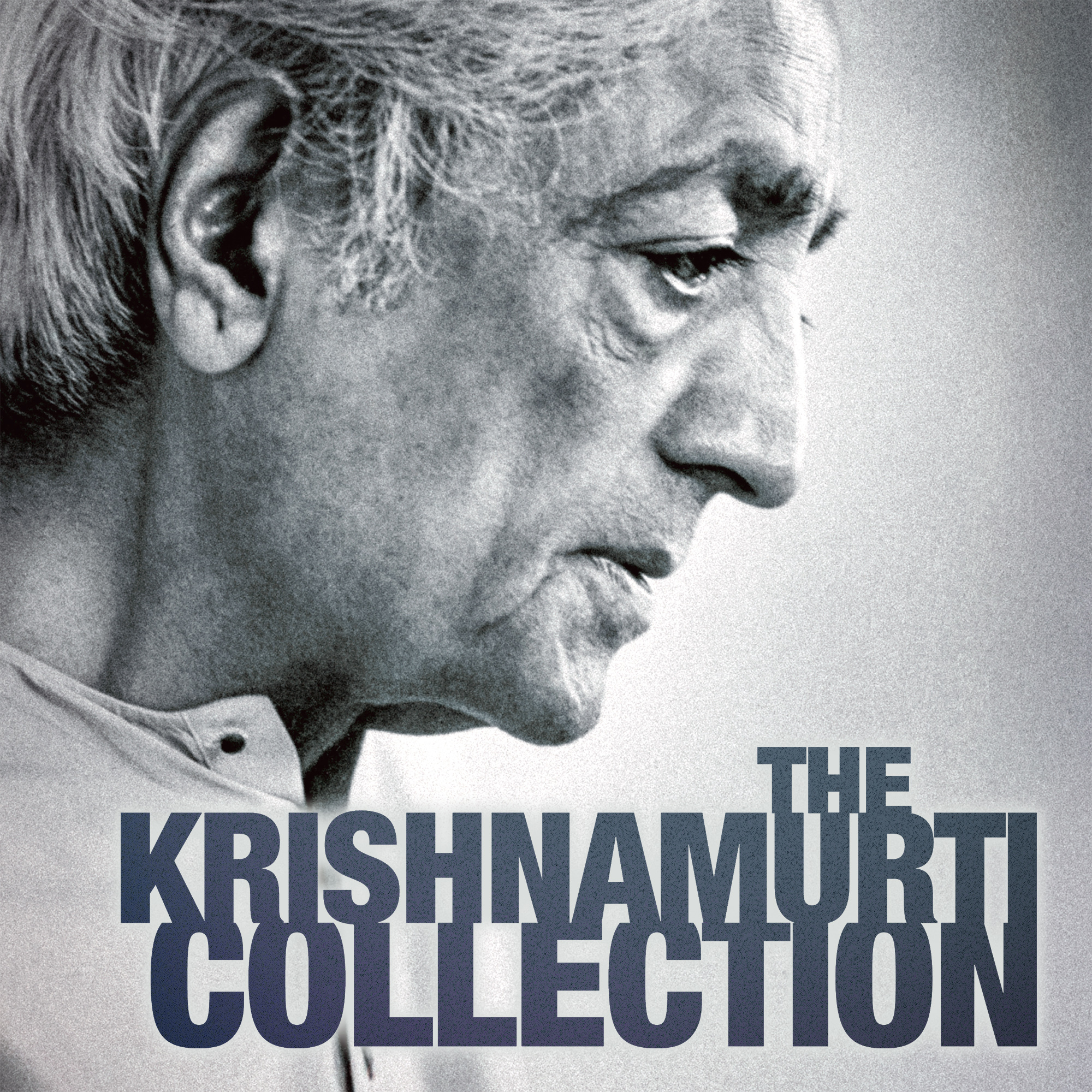
The Krishnamurti Collection
The Krishnamurti Collection is an official podcast by Krishnamurti Foundation Trust. Across this wide selection of events, from public talks to in-depth conversations, Krishnamurti explores fundamental questions of human existence: the nature of thought, fear and desire; the roots of conflict and conditioning; and whether the mind can be free – questions that touch our daily lives and relationships. Each episode of the podcast features a full-length Krishnamurti recording from the Foundation’s archives, with a new series released every week. Krishnamurti is widely regarded as one of the greate...
Be sure to visit the podcast's website and support the creator: krishnamurticollection.podbean.com
Author
Krishnamurti Foundation Trust
Category
Podcast website
Latest episode
Jul 11, 2026
Where to listen?
Podcasts in the app Replaio Radio Coming soonPodcasts are coming to the app soon. Install now and be the first to see a whole new take on podcasts
 Install for free
Android almost 10M downloads · 4.8 rating
iOS soon
Install for free
Android almost 10M downloads · 4.8 rating
iOS soon
Episodes
93 • Gstaad 1965 (5/6) • Small Group Discussion 5: A Complete Stillness 13.05.2026 1:04:53
Krishnamurti: Thought, Stillness and Time Gstaad 1965, Small Group Discussions 5/6: A Complete Stillness Is there a single movement that will completely transform my whole way of life? The passion is there but the perfume doesn’t take place. What am I to do? Am I in a position of a man who for the first time is walking on a road by himself and discovering? Does one know what a complete stillness...
92 • Gstaad 1965 (4/6) • Small Group Discussion 4: From Where Do Attachment and Detachment Come? 13.05.2026 1:05:34
Krishnamurti: Thought, Stillness and Time Gstaad 1965, Small Group Discussions 4/6: From Where Do Attachment and Detachment Come? What is the relationship of the brain to the totality of the mind? Fear of not being, fear of isolation, fear of not having pleasure, fear of having no relationship, is the soil from which the stem of contradiction grows. I want to be free of this stem to see what happe...
91 • Gstaad 1965 (3/6) • Small Group Discussion 3: What Will Make Me See That Thought Breeds Frustration? 13.05.2026 1:18:13
Krishnamurti: Thought, Stillness and Time Gstaad 1965, Small Group Discussions 3/6: What Will Make Me See That Thought Breeds Frustration? What is the function of thought? Can the mind see the fact that thought will always breed frustration? Function is necessary, but function with status, position and power must breed frustration. Without frustration thought says to itself, ‘I am not seeking. I d...
90 • Gstaad 1965 (2/6) • Small Group Discussion 2: Am I Aware of the Process of Thinking? 13.05.2026 1:00:56
Krishnamurti: Thought, Stillness and Time Gstaad 1965, Small Group Discussions 2/6: Am I Aware of the Process of Thinking? Can I see that thought is destructive, except where it is essential? Why is it that we don’t see something immediately? Do you know when you are thinking? Is the thing that we call thinking, thinking at all? Do you think from the background noise when a problem arises? When th...
89 • Gstaad 1965 (1/6) • Small Group Discussion 1: Is Thought Detrimental? 13.05.2026 1:00:48
Krishnamurti: Thought, Stillness and Time Gstaad 1965, Small Group Discussions 1/6: Is Thought Detrimental? Why does one seek pleasure? Can the mind only face facts and not thought? Why have I never said, ‘Thought is poison,’ to myself? Meeting something one doesn’t know, facing something which has no answer. Acting without knowing. What is a state of mind which is silent? Time is detrimental. Are...
88 • Brockwood Park & Gstaad 1975 (12/12) • Conversation with David Bohm 12: Can the Brain Free Itself From All Self-Delusion? 13.05.2026 1:26:03
Krishnamurti: Truth, Actuality, and the Limits of Thought Brockwood Park and Gstaad 1975, Conversations with David Bohm 12/12: Can the Brain Free Itself From All Self-Delusion? Thought and the brain. Can the brain free itself from all self-delusion? Why has the self become important? Can there be only sensation, thought, and no desire? Can desire - which brings illusion, self-deception and all the...
87 • Brockwood Park & Gstaad 1975 (11/12) • Conversation with David Bohm 11: What Is Wisdom Which Is Not a Movement of Thought? 13.05.2026 1:49:52
Krishnamurti: Truth, Actuality, and the Limits of Thought Brockwood Park and Gstaad 1975, Conversations with David Bohm 11/12: What Is Wisdom Which Is Not a Movement of Thought? Wisdom, intelligence and truth. If there is attention is there choice? Why has man divided perception? What is wisdom which is not the movement of thought? What place has the man who perceives truth in this world of realit...
86 • Brockwood Park & Gstaad 1975 (10/12) • Conversation with David Bohm 10: Truth Does Not Belong to an Individual 13.05.2026 1:15:19
Krishnamurti: Truth, Actuality, and the Limits of Thought Brockwood Park and Gstaad 1975, Conversations with David Bohm 10/12: Truth Does Not Belong to an Individual Krishnamurti’s ‘process’ and his early years. Suffering. The Indian tradition says that there is a manifestation of goodness which happens very rarely. Truth does not belong to an individual. What one says is truth. But it becomes t...
85 • Brockwood Park & Gstaad 1975 (9/12) • Conversation with David Bohm 9: Is There in the Brain Anything Untouched by Culture? 13.05.2026 1:40:54
Krishnamurti: Truth, Actuality, and the Limits of Thought Brockwood Park and Gstaad 1975, Conversations with David Bohm 9/12: Is There in the Brain Anything Untouched by Culture? Can there be a total perception which completely heals the brain? What benefit has culture? Does speech come before thought? Is it possible to say something without the operation of thought? Is there in the brain anything...
84 • Brockwood Park & Gstaad 1975 (8/12) • Conversation with David Bohm 8: What Is the Substance of Thought? 13.05.2026 1:42:45
Krishnamurti: Truth, Actuality, and the Limits of Thought Brockwood Park and Gstaad 1975, Conversations with David Bohm 8/12: What Is the Substance of Thought? What is the basic reason for thought to be fragmented? What is the substance of thought? Is it a material process, a chemical process? There is a total perception, which is truth. That perception acts in the field of reality. That action is...
83 • Brockwood Park & Gstaad 1975 (7/12) • Conversation with David Bohm 7: If Thought Cannot Achieve, Why Should It Suffer? 13.05.2026 1:41:48
Krishnamurti: Truth, Actuality, and the Limits of Thought Brockwood Park and Gstaad 1975, Conversations with David Bohm 7/12: If Thought Cannot Achieve, Why Should It Suffer? How does science investigate the mysterious? If thought cannot achieve, why should it suffer? Can consciousness, which is filled with the things of thought, empty itself? Thought cannot possibly apprehend, comprehend or be aw...
82 • Brockwood Park & Gstaad 1975 (6/12) • Conversation with David Bohm 6: Perceiving Without the Perceiver 13.05.2026 2:16:58
Krishnamurti: Truth, Actuality, and the Limits of Thought Brockwood Park and Gstaad 1975, Conversations with David Bohm 6/12: Perceiving Without the Perceiver Can thought naturally cease? Perceiving without the perceiver Facing the truth of death Krishnamurti’s ‘process’ and early years. Kundalini If you can understand suffering, face it and not escape from it, that has quite a different energy. T...
81 • Brockwood Park & Gstaad 1975 (5/12) • Conversation with David Bohm 5: Attention Implies That There Is No Centre 13.05.2026 2:04:43
Krishnamurti: Truth, Actuality, and the Limits of Thought Brockwood Park and Gstaad 1975, Conversations with David Bohm 5/12: Attention Implies That There Is No Centre Consciousness, because it is in constant movement, has never found an energy which is not contradictory, which is not produced by desire and thought. Can thought ever see its own movement and the futility of its own movement? Attent...
80 • Brockwood Park & Gstaad 1975 (4/12) • Conversation with David Bohm 4: How Does Desire Arise From Perception? 13.05.2026 1:27:55
Krishnamurti: Truth, Actuality, and the Limits of Thought Brockwood Park and Gstaad 1975, Conversations with David Bohm 4/12: How Does Desire Arise From Perception? Why has desire become such an extraordinarily important thing in life? How does desire arise from perception? Can I desire truth? Is the energy of nothingness different from the energy of things? Is that nothingness a hypothesis, a the...
79 • Brockwood Park & Gstaad 1975 (3/12) • Conversation with David Bohm 3: Thought Cannot Bring About an Insight 13.05.2026 1:19:02
Krishnamurti: Truth, Actuality, and the Limits of Thought Brockwood Park and Gstaad 1975, Conversations with David Bohm 3/12: Thought Cannot Bring About an Insight Is there a thinking without the word? The action brought about by thought into the investigation of an analysis is always incomplete. Insight is complete. It is not fragmented as thought is. So thought cannot bring about an insight. I m...
78 • Brockwood Park & Gstaad 1975 (2/12) • Conversation with David Bohm 2: Seeing ‘What Is’ Is Action 13.05.2026 2:01:18
Krishnamurti: Truth, Actuality, and the Limits of Thought Brockwood Park and Gstaad 1975, Conversations with David Bohm 2/12: Seeing ‘What Is’ Is Action If truth is something totally different from reality then what place has action in daily life, in relation to truth and reality? Seeing what is is action. What place has love in truth? When I separate you, in that separation love cannot exist. How...
77 • Brockwood Park & Gstaad 1975 (1/12) • Conversation with David Bohm 1: What Is Truth and What Is Reality? 13.05.2026 1:08:44
Krishnamurti: Truth, Actuality, and the Limits of Thought Brockwood Park and Gstaad 1975, Conversations with David Bohm 1/12: What Is Truth and What Is Reality? What is truth and what is reality? Anything that thought thinks about or reflects upon or projects, that is reality. And that reality has nothing to do with truth. The art of seeing is to place reality where it is, and not move that in ord...
76 • Brockwood Park 1985 (6/6) • Talk 4: The Nature of the Brain That Lives Religiously 13.05.2026 1:09:16
Krishnamurti: Facing a World in Crisis Brockwood Park 1985, Public Meetings 6/6: The Nature of the Brain That Lives Religiously Do we realize that we are the world and the world is us? Can we together understand the world, ourselves and our relationship to the world? Can we inquire together into why we want continuity and what is ending? How are time and thought involved in this process? What is d...
75 • Brockwood Park 1985 (5/6) • Talk 3: The Relationship of Freedom to Self-Interest 13.05.2026 1:00:57
Krishnamurti: Facing a World in Crisis Brockwood Park 1985, Public Meetings 5/6: The Relationship of Freedom to Self-Interest Do we realize how very little freedom we have? Are pleasure, fear, self-interest, time, thought, all one movement? Does change imply a movement in time? If we understand that all time is now then is change meaningless? Why has man suffered from time immemorial? Is there an...
74 • Brockwood Park 1985 (4/6) • 2nd Question & Answer Meeting 13.05.2026 1:22:56
Krishnamurti: Facing a World in Crisis Brockwood Park 1985, Public Meetings 4/6: 2nd Question & Answer Meeting Is it possible to be totally free of influence, to find the origin, the beginning of all things? Q1: Is there a faculty to see that there is no path to truth outside myself? What will give me the need, the energy to move in this direction? Q2: I am afraid to change. If I change, what...
73 • Brockwood Park 1985 (3/6) • 1st Question & Answer Meeting 13.05.2026 1:20:43
Krishnamurti: Facing a World in Crisis Brockwood Park 1985, Public Meetings 3/6: 1st Question & Answer Meeting Why are you here? Q1: How can we know if mystical and spiritual experiences are illusions unless we know reality? Q2: Is illness due simply to degeneration or abuse of the body, or does it have some other significance? Q3: What is my responsibility toward the present world crisis? Q4:...
72 • Brockwood Park 1985 (2/6) • Talk 2: The Relationship of Time and Thought To Fear 13.05.2026 1:19:55
Krishnamurti: Facing a World in Crisis Brockwood Park 1985, Public Meetings 2/6: The Relationship of Time and Thought To Fear What is the nature of beauty? What is its relationship to thought, time and love? Can memory apprehend that which is beautiful? Time is the movement of memory, knowledge, experience. Can this movement ever end? What is the connection between thought and time? Can thinking i...
71 • Brockwood Park 1985 (1/6) • Talk 1: Why Do We Have So Many Problems? 13.05.2026 1:09:27
Krishnamurti: Facing a World in Crisis Brockwood Park 1985, Public Meetings 1/6: Why Do We Have So Many Problems? How do you approach a problem or challenge? Can the brain, educated to live with problems, have no problems at all? Are we aware that our brain lives with problems? Can the brain become aware of itself, its thoughts, its reactions, its way of living? Can the brain be free of self-inter...
70 • Brockwood Park 1981 (1/2) • Conversation with Pupul Jayakar 2: Living With Death 13.05.2026 1:01:35
Krishnamurti: Two Conversations with Pupul Jayakar, 1981 Brockwood Park 1981, Conversations with Pupul Jayakar 2/2: Living With Death What is ending? The mind cannot enter into a totally new dimension if there is a shadow of memory of anything. If the movement of thought ends, consciousness as we know it is not. Thought is the enemy of compassion. Q: What significance has death? I meet the Buddha...
69 • Brockwood Park 1981 (1/2) • Conversation with Pupul Jayakar 1: On God 13.05.2026 1:19:49
Krishnamurti: Two Conversations with Pupul Jayakar, 1981 Brockwood Park 1981, Conversations with Pupul Jayakar 1/2: On God Q: Can we discuss and investigate into the nature of God? Can we negate completely the whole movement of knowledge - except the knowledge of driving a car, speaking a language, technological knowledge? Can one totally empty the whole accumulation of a million years? We never...
Similar podcasts







Listen to the The Krishnamurti Collection podcast in Replaio
Radio and podcasts in one app - free, with no sign-up. Install today and do not miss the launch
Replaio is not a podcast publisher; show names, artwork and audio belong to their authors and are distributed through public RSS feeds.