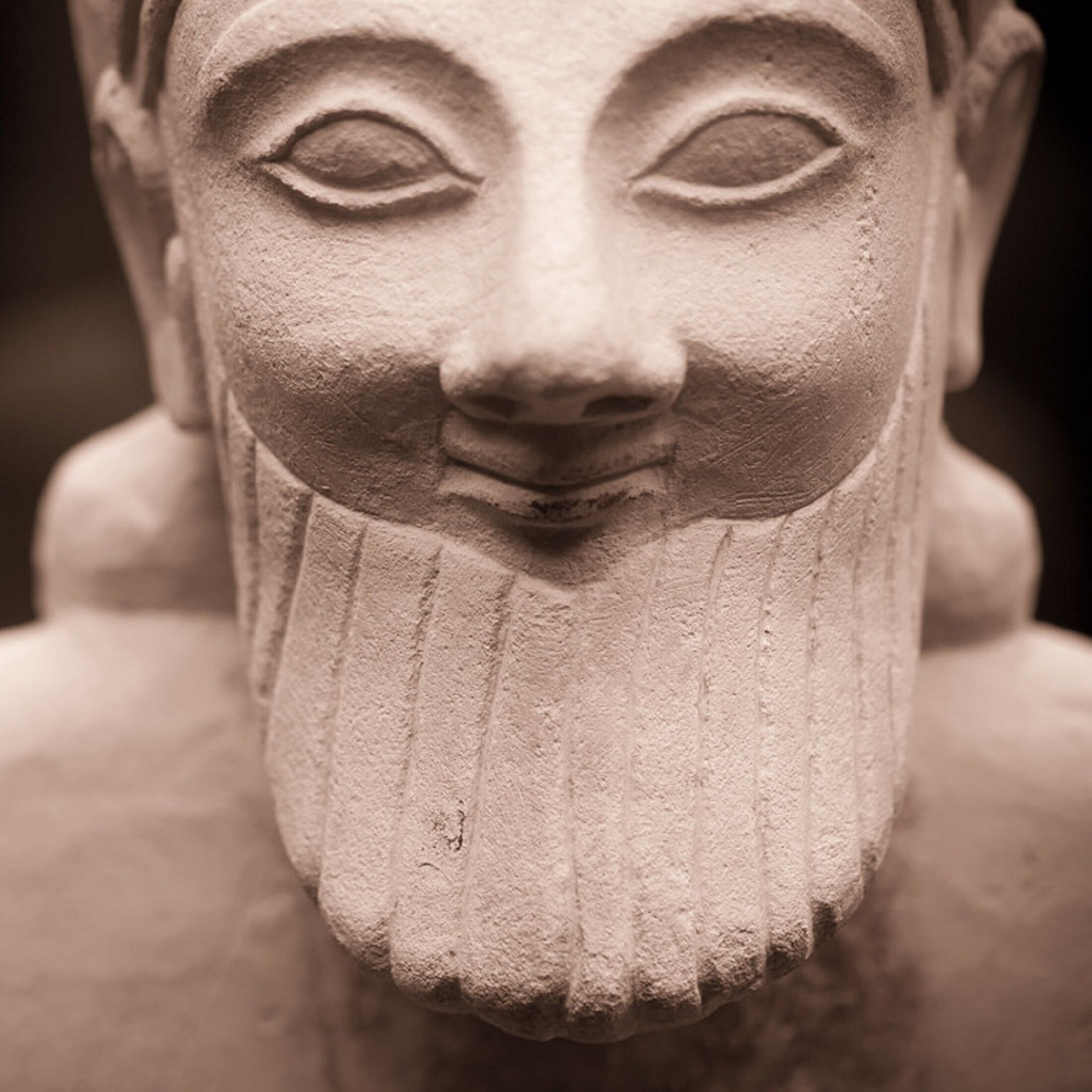
cyprusthepodcast
The History of Cyprus Podcast
Welcome to the History of Cyprus Podcast. Follow us on Instagram!https://instagram.com/thehistoryofcyprusI’d like to thank each and every participant (and every future guest) in this project as without their time and hard work in their respective fields of archaeology, linguistics, social and political history, this would not have been possible. I’ve released three episodes that I know you will find as fascinating to listen to as it was for me to record – Dr. Alan Simmons, professor Emeritus from the University of Nevada shares with us his seminal research on Akrotiri-Aetokremnos where the fir...
Author
cyprusthepodcast
Category
Podcast website
Latest episode
Jul 5, 2026
Where to listen?
Podcasts in the app Replaio Radio Coming soonPodcasts are coming to the app soon. Install now and be the first to see a whole new take on podcasts
 Install for free
Android 5M+ downloads · 4.8 rating
iOS soon
Install for free
Android 5M+ downloads · 4.8 rating
iOS soon
Episodes
UPDATE: Let's keep the project going together! 10.01.2024 2:02
A huge thank you to everyone for your unwavering support to The History of Cyprus Podcast. If you're looking for something to tide you over until the next episode, you can find my interview with Thierry Petit, the Director of Excavations at Amathus, on Patreon . The episode is available to all members, regardless of the tier, and for as little as $1 your donations will make a world of difference....
22. The Kyprogenes: Aphrodite with Stephanie Budin 02.01.2024 1:02:14
Aphrodite is associated with love, beauty and, I learn -- quite erroneously -- with fertility. Often through this sanitized lens, we lose sight of who Aphrodite was: the Goddess of Sex. But who was she? What are her origins? How was she understood in antiquity? And, perhaps more importantly, why is she so intimately associated with Cyprus? Join me as I interview historian and prolific author, Dr....
Primary Source XXII: A reading from Hesiod’s The Theogony 15.12.2023 2:01
Cyprus has been intimately associated with the Greek goddess Aphrodite for centuries. According to Hesiod, in a calculated act of violence, she was born from the severed genitals of Ouranos near the coast of Cyprus. It is one of the earliest surviving works of Greek literature and is considered a foundational text of Greek mythology. But who exactly was Aphrodite that is so associated with Cyprus?...
21. Tα Kυπριακά: The Cypriot Greek Dialect with Stavroula Varella 02.12.2023 1:00:01
Stavroula Varella (King's College London) joins me this month to discuss the origins of the modern Cypriot Greek dialect. We explore the meaning and origins of a myriad of words (e.g., ίντα, θωρώ, έσσω, ηὗρεν and έννε...) and their possible roots. We touch on all the parent languages that inform the Cypriot vernacular including French, Italian, Turkish & English and not only identify potential...
Primary Source XXI: The Cypriot Greek Dialect: An excerpt from Leontios Machairas 15.11.2023 3:23
Listen closely. You'll hear snippets of the Cypriot Greek dialect in this excerpt from the Chronicles of Leontios Machairas as he describes a particularly compelling event during Genoese invasion of Nicosia in the 14th century. But this excerpt was chosen not for the story per se. Rather, it was chosen for its rich Cypriot vernacular. Word use, such as θωρώ (i.e., to see) heard in this excerpt, ha...
20. The Dragoman: The Ottoman Period with Antonis Hadjikyriacou Part 2 02.11.2023 41:36
A dragoman was an interpreter and guide who facilitated communication between individuals or groups who spoke different languages, particularly in the context of diplomatic, commercial, or cultural exchanges. During the Ottoman Empire, the position of dragoman was highly respected and influential. For Part 2 of my interview with Antonis Hadjikyriacou, we discuss the impact of Hadjigeorgakis Kornes...
Primary Source XX: Cabi Omer Efendi and the Execution of Hadjigeorgakis Kornesios 1809 15.10.2023 1:40
Cabi Omer Efendi was an Ottoman statesman and military commander who lived from 1750 to 1814. He served as the Grand Vizier of the Ottoman Empire three times, and was known for his military successes, administrative skills, and political influence. For this month's primary source, he provides a direct account of the execution of Dragoman Hadjigeorgakis Kornesios in 1809 and as a springboard for Pa...
19. Osmanlı Kıbrısı: The Ottoman Period with Antonis Hadjikyriacou Part 1 02.10.2023 1:12:38
The Ottoman Period in Cyprus, which lasted from 1571 to 1878, was a significant era in the island's history as it had a lasting impact on its culture, society, and economy. During this period, the Ottoman Empire brought Islam to the island and established a system of local administration through appointed governors and officials. This resulted in a diverse population with a mix of Greek Orthodox C...
Primary Source XIX: Grand Vizier Sokollu Mehmet Pasha 1571 15.09.2023 1:21
Sokullu Mehmed Pasha was a prominent Ottoman statesman who served as the grand vizier (chief minister) of the Ottoman Empire for over a decade during the 16th century, under the reigns of Suleiman the Magnificent and Selim II. In this excerpt, he addresses the Venetian Ambassador, acknowledging their recent defeat at the Battle of Lepanto but reminding them that they now have Cyprus in their hand...
18. Felis Cypria: Cat Domestication in Prehistoric Cyprus? with Jean-Denis Vigne 02.09.2023 59:42
My guest this month is Dr. Jean-Denis Vigne, Emeritus Director of Research from the Natural History Museum in Paris. In this episode, we discuss the oldest farming village in a Mediterranean island (i.e., Klimonas) in addition to the significance of the Chirokitia Culture to the Neolithic Period and, of course, the earliest possible evidence of felid (cat) domestication: his finds in Shillourokamb...
Primary Source XVIII: Friar Francesco Suriano’s Observations on the Cats of Cyprus 1484 15.08.2023 2:00
If you have ever visited Cyprus, you would have certainly noticed the abundance of cats on the island. On his way to Jaffa in 1484, the Venetian Friar, Francesco Suriano, noticed the same thing. His observations on the number of cats on the island is a perfect springboard in introducing my next month's guest: Dr. Jean-Denis Vigne, esteemed paleozoologist and Emeritus Director of Research at the Na...
17. Venexia e l’ixola de Zipro: Venetian Cyprus with Benjamin Arbel 02.08.2023 1:16:32
The Venetian period in Cyprus has been characterized as one of decline and decay. But was it? In this month's episode, Benjamin Arbel (Professor Emeritus Tel Aviv University) and leading historian on Venetian Cyprus challenges the "Black Legend" and discusses the social, economic and political impact of La Serenissima on the island of Cyprus.
Primary Source XVII: George Boustronios and the Last Queen of Cyprus, Catherine Cornaro 15.07.2023 1:29
George Boustronios, in his Narrative of the Chronicle of Cyprus 1456–1489, documents the transition from the Lusignan dynasty to Venice. In this month's excerpt, you'll hear a dramatized reading of last Queen of Cyprus, Catherine Cornaro, as she abdicates her throne, bequeathing Cyprus to the Republic of Venice, and departing Cyprus forever. Next month I invite Benjamin Arbel (University of Tel Av...
16. Eύώδεα Κύπρον: Perfumery Production in Ancient Cyprus with Maria Rosaria Belgiorno 02.07.2023 59:24
There are seven olfactory families to categorize fragrances. Yet of the seven, only one is named for a place: Chypre. It's no surprise, then, that Cyprus' importance in perfumery has been known throughout antiquity. Maria Rosaria Belgiorno (Senior Associate Researcher of the Institute for Applied Technology to Cultural Heritage of the Italian National Research Council) has published dozens of arti...
Primary Source XVI: Hymn to Aphrodite 15.06.2023 1:19
The Homeric Hymns -- named for their "Homeric" style -- are a collection of anonymously authored hymns dedicated to the major gods and goddesses in the Hellenic Pantheon. This particular excerpt, from the Hymn to Aphrodite, was chosen as this month's Primary Source to emphasize Aphrodite's and Cyprus' connection to "sweet-smelling temples" "heavenly oils," and "fragrant altars." For my next episod...
15. Le Coeur de Lion: King Richard’s Conquest of Cyprus with Angel Nicolaou-Konnari 02.06.2023 59:24
In 1191, during the Third Crusade, King Richard I of England, also known as Richard the Lionheart, led his army to capture the island of Cyprus. The island was controlled by an illegitimate, self-styled emperor, Isaac Komnenos (Comnenus). Richard would rout Isaac's forces and, as legends have it, bind him in silver chains. The island remained under English rule until Richard sold it to the Knights...
Primary Source XV: King Richard’s Letter on the Conquest of Cyprus 1191 15.05.2023 2:13
In this primary source, King Richard of England (The Lionheart) addresses his judiciary, providing us a firsthand account of the events leading up to the capture of the Cyprus and sheds light on the political and military strategies employed by King Richard. This is a valuable source as it is one of only two letters that come from King Richard himself. Contrary to popular belief, Richard -- althou...
UPDATE: How you can support The History of Cyprus Podcast...! 10.05.2023 1:37
Thank you for listening to the History of Cyprus Podcast. I'm incredibly grateful for your support, and I'm thrilled to have you as a listener. Creating this podcast is a labor of love. It's not monetized -- and I'd like to keep it that way, ad free and accessible to all. With that said, it also comes with real costs -- from hosting fees to equipment, research materials, producing the Primary Sour...
14. The Copper Island: Copper Production in Ancient Cyprus with Lina Kassianidou 02.05.2023 1:14:15
For thousands of years, Cyprus exploited its richest resource: copper. The copper trade was, after all, synonymous with Cyprus and integral for its wealth. While the importance of copper is known, certain questions remain: how did ancient Cypriots source copper? What processes were involved in its extraction? What were the risks and dangers involved with mining? How was copper refined and exactly...
Primary Source XIV: Aristotle on Cyprus’ Natural Resources 15.04.2023 1:22
Although many of Aristotle's observations on Cyprus' natural resources have proven to be false or misleading, this excerpt certainly speaks to Cyprus' perceived wealth in natural resources -- renowned for centuries. Next month, my guest is Lina Kassianidou (University of Cyprus) who shares with us the history of Copper Production on Cyprus and how it was sourced, extracted and refined in antiquity...
13. Grilling the Past: Halloumi & Ethnoarchaeology with Rafael Laoutari 02.04.2023 53:18
Rafael Laoutari (Cambridge University) shares a lesser known aspect of archaeology, namely, that of ethnoarchaeology, using it as a lens to explore cheese-making in antiquity. We discuss cheese-making on Cyprus in the archaeological record and the earliest literary references to Halloumi that we know of. By studying how Halloumi is produced in rural settings and recreating its traditional methods,...
Primary Source XIII: Richard Pococke & Cypriot Cheese 1738 15.03.2023 1:50
Richard Pococke (18th century) was an avid traveler providing us with one of the earliest literary allusions to Halloumi. Though not the first reference (that honour may go to the Doge of Venice, Leonardo Dona, who lived in Cyprus for a period during the Venetian era), it does show that Halloumi was well known throughout the Levant. Next month, I invite Rafael Laoutari (Cambridge University) to di...
12. Travelling Artists in Cyprus: 1700-1960 with Rita Severis 02.03.2023 54:34
The canvas isn't simply a medium that the artist uses to capture an image. The paintbrush can be loaded with preconceived notions, biases and agendas. What is more, it can be revealing in ways never considered and provide a unique lens into the past. Rita Severis (the Co-Founder of the Costas & Rita Severis Foundation and Honorary Consul of Canada) is this month's guest. And for this month's episo...
Primary Source XII: From the Diary of Esmé Scott-Stevenson 1880 16.02.2023 1:11
Esmé Scott-Stevenson, wife of the Commissioner of Kyrenia, authored several books documenting her travels across the Mediterranean. She traveled throughout Cyprus with a number of dignitaries and, in 1880, she published "Our Home in Cyprus," observing Cypriot customs in 19th century Cyprus. Her work offers us a springboard into this month's episode, "Travelling Artists in Cyprus 1700-1960," with R...
11. Between Constantinople & the Caliphate: Cyprus in Late Antiquity with Luca Zavagno 03.02.2023 1:06:59
Luca Zavagno's (Bilkent University) work, "Cyprus Between Late Antiquity and the Early Middle Ages" frames the bulk of this month's episode. Traditional narratives suggest that the late Roman Period (i.e., Byzantium) for Cyprus was a period of physical dislocation, social disruption and economic turmoil precipitated by the infamous 7th century Arab Raids. But Zavagno, using archaeological evidence...
Similar podcasts







Listen to the The History of Cyprus Podcast podcast in Replaio
Radio and podcasts in one app - free, with no sign-up. Install today and do not miss the launch
Replaio is not a podcast publisher; show names, artwork and audio belong to their authors and are distributed through public RSS feeds.