
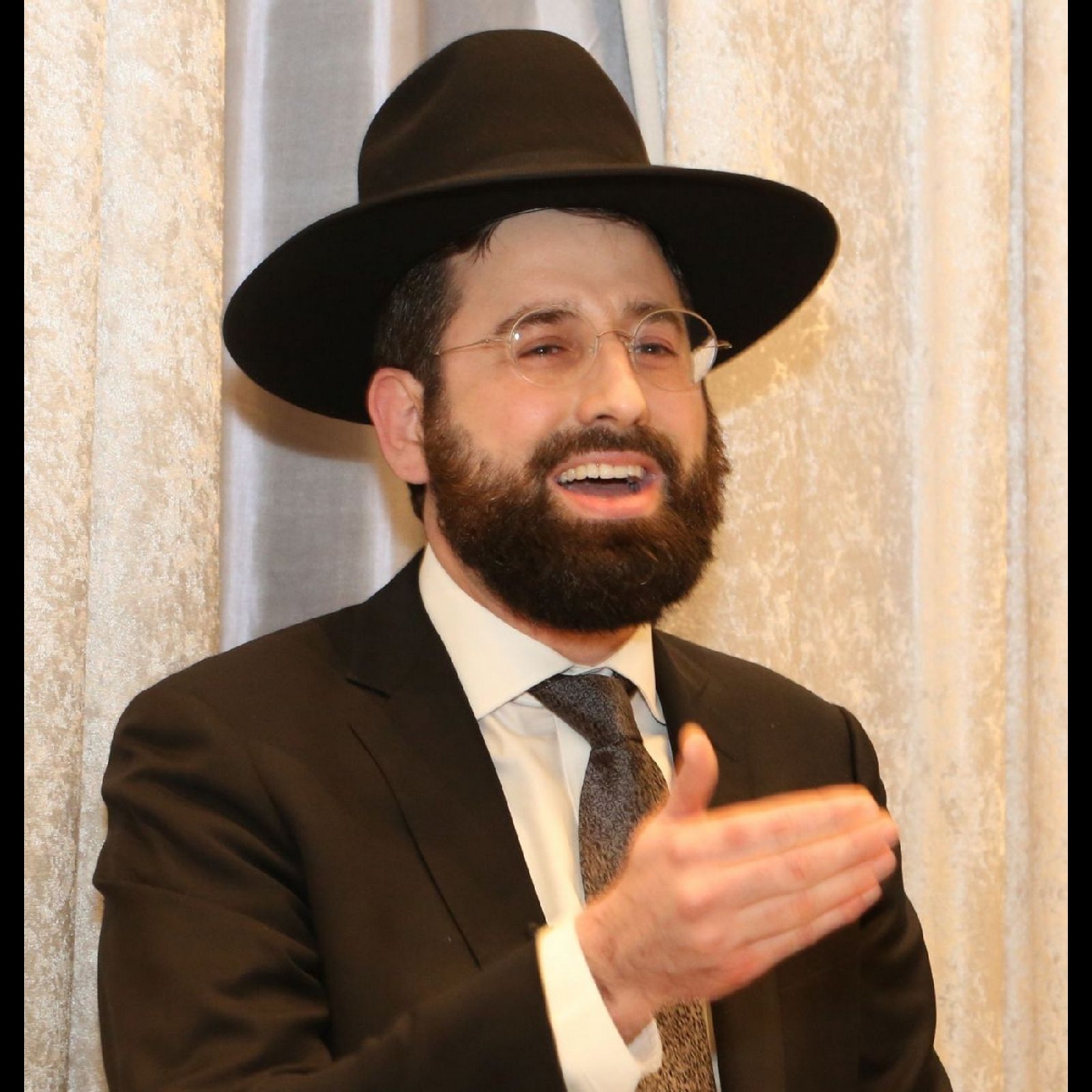
Rabbi Shnayor Burton
The Great Sources with Rabbi Shnayor Burton
To help support this podcast, please consider making a tax-deductible donation via Zelle to jacoblightsfoundation@gmail.com. Lecture series in Jewish Philosophy. What was the purpose of Creation? What is man's place in the world? What are prophecy and prayer about? What is the significance of Shabbos and the Promised Land? Explore these fundamental questions of Judaism from their sources, and become familiar with the systems developed by the great Torah thinkers: R' Saadiah Gaon, R' Yehuda HaLevi, R' Bachya ibn Paquda, Rambam and the school of the Mekubalim.
Be sure to visit the podcast's website and support the creator: podcasters.spotify.com
Author
Rabbi Shnayor Burton
Category
Podcast website
Latest episode
Jun 29, 2026
Where to listen?
Podcasts in the app Replaio Radio Coming soonPodcasts are coming to the app soon. Install now and be the first to see a whole new take on podcasts
 Install for free
Android almost 10M downloads · 4.8 rating
iOS soon
Install for free
Android almost 10M downloads · 4.8 rating
iOS soon
Episodes
S1, E38 Hashem, Source of Living Water: Eden, Sukkos and Sodom 27.09.2020 48:39
On Sukkos we’re judged regarding water. The basis of life, it plays a central role throughout the Torah: Eden, Sodom, Egypt and Eretz Israel are each defined by their water sources. In a cryptic statement about the unique mitzvos of Sukkos, Chazal allude to a little-known journey from the rivers of Eden to the waters of Sodom, and to the stream that will one day flow from the Holy Temple. Learn ho...
S1, E37 The Power of Repentance 21.09.2020 31:32
How does repentance work? Can a wrong be made right with no more than regret and a commitment to be better? Teshuva goes much deeper than regret and commitment, teaches the Avodas Hakodesh. The sinner who engaged with evil must reconstruct God’s divine world by understanding the roots of good and evil; by facing his evil and repudiating it, he strengthens the connection between Hashem and His crea...
S1, E36 The Day of Judgment 13.09.2020 34:43
What exactly is determined on this awesome day? A deep reading of the sources shows that the judgment of Rosh Hashanah isn’t, essentially, about what will happen to man; it is about man himself. On the very first Rosh Hashanah Hashem saw everything that He created, and it was all very good in His eyes. The creation was all goodness, but man introduced evil and became evil himself. On every subsequ...
S1, E35 The Oneness of God, according to R' Bachya ibn Paquda 06.09.2020 33:23
God’s oneness is the foundation and basis of R' Bachya ibn Paquda's monumental religious system delineated in his "Chovos HaLevavos." Beginning with The Gate of Divine Unity and ending with The Gate of the Love of God, this book charts a journey of spiritual development that starts with the first verse of the Shema : “Hashem is one,” and culminates with the second: “And you shall love Hashem...
S1, E34 The Jewish Credo – Shema and its Translations 30.08.2020 34:27
It is a simple passage that declares God’s unity, but its translation is far from simple. The most fundamental statement of faith that is constantly on the Jew’s lips, the Shema is given three distinct interpretations by Rashi, R' Bachya ibn Paquda and Ibn Ezra. For this episode's sources, click here Please take a moment to subscribe and leave a review on Apple Podcasts . Thanks for listenin...
S1, E33 Tzitzis and the Holy Land; Rectifying the Sin of the Spies 23.08.2020 59:15
The Meraglim viewed Eretz Yisrael – and land itself – wrongly, maintaining that physical Earth could never be made divine. What is the remedy for their flawed sense of vision? How can we train ourselves to properly view this materialistic, temporal world? The answer is hiding in plain sight: Tzitzis teaches us how to see. As the four corners of the Earth hide their Maker, the most inner and true r...
S1, E32 A Nation's Original Sin: Rejecting the Promised Land 16.08.2020 33:59
If, as Rabbi Yehuda HaLevi says, the Holy Land is the axis of all spiritual experience, then to spurn the Holy Land is the root of all evil. Indeed, this idea lies at the heart of the Meraglim story. Commissioned not merely to see the land, but to see what a land could be, the Meraglim were on a mission to determine if it's possible to replicate Heaven on Earth. They erred, and that original error...
S1, E31 Eretz Yisrael, Land of Holiness, according to the Kuzari 09.08.2020 32:53
What is the most central aspect of a Torah life, the axis of all spiritual experience? Rabbi Yehuda HaLevi gives a surprising answer which is foundational to his system of man's connection to the divine: the Holy Land. If a land can be hallowed, then the dimension of holiness can be manifest in the physical world – heaven can be brought down to earth. This inspiring concept is the heart and motiva...
S1, E30 Man, Center of Reality 02.08.2020 33:51
Man searches for absolute truth, a precise system of God’s ways. But is there one definitive solution? What if our opinions themselves affect nature and determine how God acts? It may sound like science fiction, but Chazal state it clearly: God modifies His ways according to human opinion. His connection with man is absolutely imperative, but the specific methods of that connection are flexible. T...
S1, E29 The Rise and Fall of the Jewish Empire, part 2 26.07.2020 37:49
How did the city so full of people become so alone? So begins the great lament, with a question that also hints – in coded language – to an answer. What made Israel a godly nation and what led to their downfall? Seen through the lens of Moshe’s parting speech to his people in the Book of Devarim, the opening cry of Eichah answers this with a complete theology of a holy people, its land and exile....
S1, E28 The Rise and Fall of the Jewish Empire, part 1 26.07.2020 54:48
How did the city so full of people become so alone? So begins the great lament, with a question that also hints – in coded language – to an answer. What made Israel a godly nation and what led to their downfall? Seen through the lens of Moshe’s parting speech to his people in the Book of Devarim, the opening cry of Eichah answers this with a complete theology of a holy people, its land and exile....
S1, E27 Negative Theology; from Rabbeinu Sa'adiah Gaon to the Mekubalim 19.07.2020 39:04
What do we know about God? This is the most central dispute between the rival philosophic and esoteric schools of Jewish thought. Armed with ink and quill, the opposing camps have waged impassioned and heated battles throughout the centuries. Rabbeinu Sa'adiah Gaon, Rambam and others assert that it is impossible to understand Hashem's essence. We know only that He exists, or, more accurately, that...
S1, E26 The Chosen People, according to Kuzari and Shaarei Orah 12.07.2020 35:12
Why was one nation chosen from among the seventy – are all human beings not equal before the one God? No, says Rabbi Yehuda HaLevi, most emphatically not. In the sublime system of the Kuzari, the nation of Yisrael alone is a metaphysical, divine people. Only its members can be prophets, and only in their Holy Land; the Torah is decidedly nationalistic. Others are not as exclusive. Rambam maintains...
S1, E25 Reincarnation of Souls, from Rabbeinu Sa'adiah Gaon to Ramchal 05.07.2020 38:08
Rabbeinu Sa'adiah Gaon considered it preposterous. Mekubalim attributed it to Eliyahu HaNavi. Abarbanel and others adduced the authority of Pythagoras in its support. Hotly debated for thousands of years, the mystical doctrine of gilgul is given cogent form by Ramchal. The recurring rules of reality are based on divine attributes that appear and reappear throughout history and the live...
S1, E24 The Relationship between Man and Woman 28.06.2020 32:12
After completing each creation God saw “that it was good” and after completing the whole of creation “that everything He made was very good.” All was complete and perfect – except for just one thing: “It is not good for man to be alone.” Cosmic goodness was in jeopardy, hinging on the rectification of this problem, and indeed, Rashi teaches, man’s very relationship with God depended on this matter...
S1, E23 Torah vs Prophets: Knowing God 21.06.2020 36:32
The Torah's message differs from the prophets': the former focuses on law, the latter on morals. Concomitantly, the prophets taught knowledge of God, while the Torah indicates that this is an impossibility: He is utterly unknowable. If you can know Hashem, then you should emulate Him; if you cannot, then you should obey the fixed, inflexible, and sometimes inscrutable law. Explore how these contra...
S1, E22 Torah vs Prophets: Sacrifices 14.06.2020 39:29
The Torah's message differs from the prophets': the former focuses on law, the latter on morals. Nowhere is the difference starker than in regard to sacrificial worship; when the prophets insist that God does not desire animal sacrifice and wants only kindness, justice and righteousness, the discrepancy becomes outright contradiction. But on close analysis we find that there is no true contradicti...
S1, E21 One God, Un-gods and Other Gods 07.06.2020 38:08
Of major focus in the Torah, idolatry is the subject of numerous commandments, warnings and punishments; but what, precisely, is it? And who are those "Other Gods" that the Torah forbids to worship? Are there more gods than the One God? According to Rambam, idolatry is, essentially, a forbidden practice . While it is theoretically fitting to venerate the heavenly servants of Hashem – the sun, the...
S1, E20 Keeping Time; Sefiras Haomer, Pesach and Shavuos 24.05.2020 46:22
One, two, three, four days; we bridge the Exodus to the revelation at Sinai by marking time's passage, seven time seven weeks, and all this is rooted in the harvest and its special sacrifices of barley on Pesach and wheat on Shavuos. How? This mitzvah takes us back to the beginning of time, to Bereishis. Adam sinned and was sentenced to a life of backbreaking labor in the field. Such a life, long...
S1, E19 Tests and Trials 17.05.2020 40:08
Why does Hashem test people? Isn’t the outcome known to Him in advance? One of the “greatest problems in the Torah” according to the Rambam, the idea of trials is given various explanations by the great Jewish thinkers. But all the reasons only serve to justify an imperfect relationship between man and the Divine, for omniscient God indeed has no need for trials; they only have a function within a...
S1, E18 The Second Temple, the Greeks, and the Oral Law 10.05.2020 35:03
Many people think of the Second Temple as a replay of the first: the Jewish nation returned to the holy land to rebuild the great house of worship and revelation. But it was nothing of the sort. In that pivotal era, prophecy ceased, the divine presence did not return to its sanctuary, and the period of the Oral Law began. All this, Chazal hint, is linked to the ascendancy of the Greek Empire. The...
S1, E17 The Tree of Knowledge, according to the Rambam 03.05.2020 34:59
The story of man eating from the Tree of Knowledge is the fundamental, foundational story of mankind, of humanity’s capacity for perfection or failure. It is the key for us to understand ourselves – but what does it mean? What would man be without knowing good and evil, and how does this knowledge lead to his downfall? In the Rambam’s understanding, the crux of matter is the quality of man’s intel...
S1, E16 The Nature of Evil, according to the Rambam and Avodas Hakodesh 26.04.2020 32:52
Evil – what is it? Where does it come from? Is it real? Will it last forever? The Rambam and the Mekubalim teach diametrically opposed approaches to the ancient problem of evil in a good God's world. According to Rambam, evil has no real existence, being merely the lack of good. God's creation is absolutely good – although we don't always understand its goodness – and much of the evils we face are...
S1, E15 The Significance of Shabbos 19.04.2020 36:20
Why is Shabbos so central to the Torah? What is signified by abstaining from work? This simple practice contains the most profound declaration of faith and, Chazal teach, purifies its observers from all sin. Rooted in the creation story and man's original, root transgression of knowing evil along with good, Shabbos proclaims the pure goodness and faultlessness of God's universe – work is unnecessa...
S1, E14 The Meaning of Matzah 05.04.2020 53:08
Why is the mitzvah of matzah so important? How could a food be so fundamental to redemption and its remembrance? The story of Avraham, Lot and Sodom allude to the secrets of this simple bread. Sodom, like Mitzrayim, was economically secure, supplied with water from a river, while the land of Israel depends on rain, Hashem's heavenly blessing liable to be withheld if not earned by doing...
Similar podcasts






Listen to the The Great Sources with Rabbi Shnayor Burton podcast in Replaio
Radio and podcasts in one app - free, with no sign-up. Install today and do not miss the launch
Replaio is not a podcast publisher; show names, artwork and audio belong to their authors and are distributed through public RSS feeds.
