Robert Morley
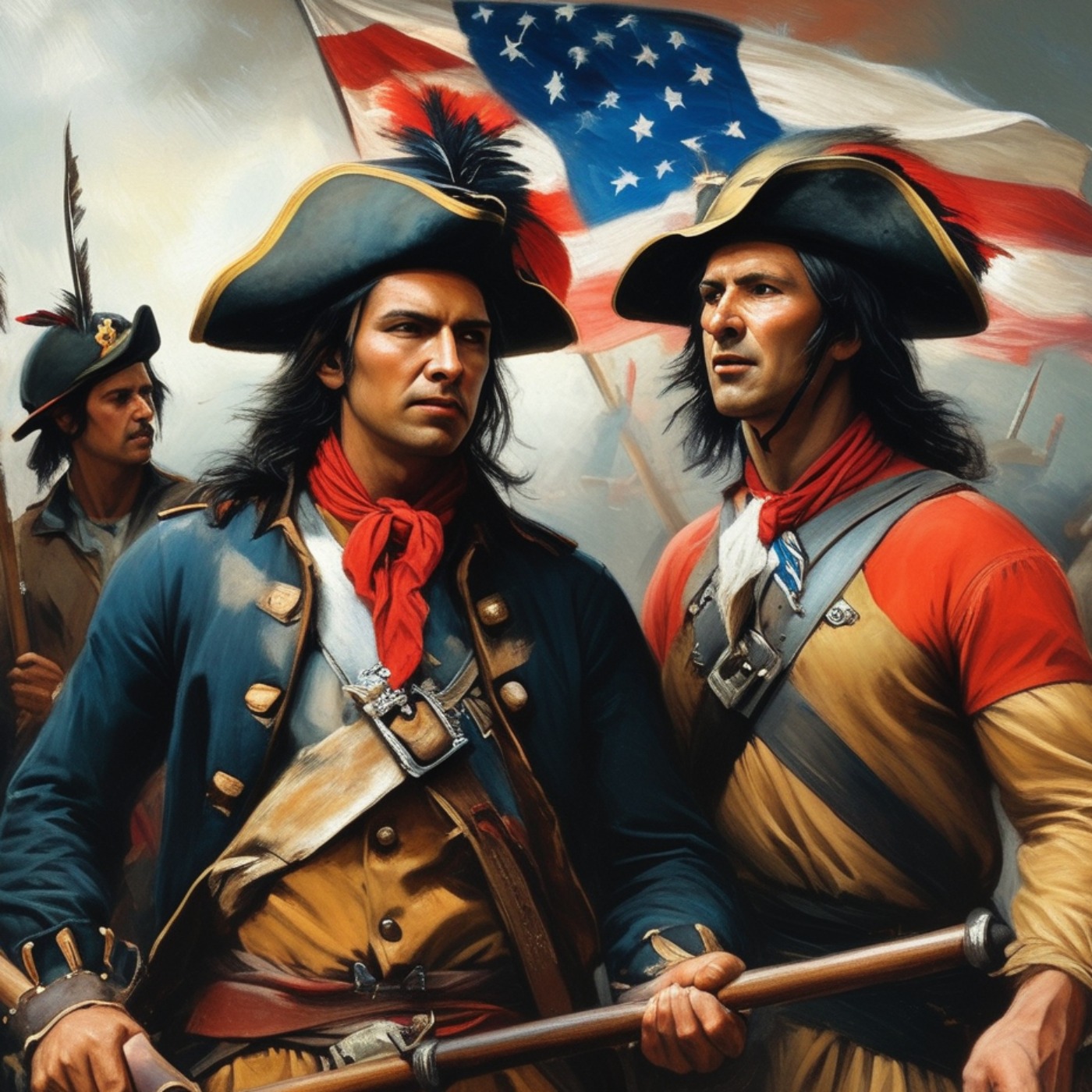
The Clash of the two Americas - Deep Dive Interview
This is my very interesting podcast Hosted on Acast. See acast.com/privacy for more information.
Where to listen?
Podcasts in the app Replaio Radio Coming soonPodcasts are coming to the app soon. Install now and be the first to see a whole new take on podcasts
 Install for free
Android almost 10M downloads · 4.8 rating
iOS soon
Install for free
Android almost 10M downloads · 4.8 rating
iOS soon
Episodes
Volume 2 - Act 1 - McKinley’s Murder the International Subversion of the American System (1890-1929) 21.09.2024 15:44
Sun Yat-Sen's Economic Vision Sun Yat-sen's economic vision for China was rooted in the principles of the "American System of Political Economy," as championed by figures like Alexander Hamilton and Abraham Lincoln. The sources highlight Sun's admiration for Lincoln and his economic policies, particularly the emphasis on protectionism, internal improvements, and national banking. Let's explore the...
Volume 2 - Introduction 21.09.2024 10:18
The American System of National Economy The American System of National Economy is neither "socialist/communist" nor "free trade capitalism", nor is it liberalism or totalitarianism. Instead, it is premised on the harmony between the General Welfare and the inalienable rights of each individual citizen. This system, which spread globally after the Union victory in 1865, is presented as a new parad...
Ch15 - The X Club and the Remaking of the British Empire 21.09.2024 12:36
The X Club and the Remaking of the British Empire The provided excerpt from The Clash of the Two Americas Vol. 1 , introduces the X Club and its role in reshaping the British Empire's strategy for global influence during a period of significant challenge. Amidst a rising tide of anti-colonial sentiment and facing internal and external pressures, the British Empire found itself on the brink of coll...
Ch14 - Gilpin's Vision for a "Cosmopolitan Railway" 21.09.2024 10:55
Gilpin's Vision for a "Cosmopolitan Railway" William Gilpin believed that railways would soon connect all the continents, uniting the world's people and cultures. He envisioned a "Cosmopolitan Railway" that would begin in North America, extend across the Bering Strait, and continue through Russia and into Europe and Asia. Gilpin believed that this railway would be built with American principles an...
Ch13 - The Potential of the Bering Strait Connection and the Two Manifest Destinies 21.09.2024 10:16
The Potential of the Bering Strait Connection and the Two Manifest Destinies The sources explain how the Bering Strait connection represents an opportunity for cooperation between nations. Specifically, the connection of a transcontinental railroad through the Bering Strait has been seen as a way to promote economic growth and development, as envisioned by figures like William Gilpin, Czar Nichola...
Ch12 - Russia's Support of the Union During the American Civil War 21.09.2024 8:19
Russia's Support of the Union During the American Civil War The sources highlight how Russia, under Czar Alexander II, played a crucial role in preventing the breakup of the United States during the Civil War. In 1863, with the war at a critical juncture, Russia dispatched its navy to the east and west coasts of the US, where they remained for seven months. This show of force was strategically tim...
Ch11 - A Mutually Beneficial Arrangement: Russia and the Alaska Purchase 21.09.2024 6:35
A Mutually Beneficial Arrangement: Russia and the Alaska Purchase The sources examine the reasoning behind Russia's decision to sell Alaska to the United States in 1867, highlighting the mutually beneficial aspects of the agreement for both nations. Russia, facing significant challenges and recognizing the potential for a strong alliance with America, saw the sale as a strategic move. The sources...
Ch10 - The Deep State and the Assassination of Lincoln 21.09.2024 8:25
The Deep State and the Assassination of Lincoln The sources allege that Lincoln's assassination was part of a larger conspiracy orchestrated by a "trifold Deep State" opposed to his vision for America. This Deep State, according to the sources, consisted of three main factions: The Anglo-Canadian establishment: This group, descended from the "United Empire Loyalists" who fled the American Revoluti...
Ch09 - Frederick Douglass's Views on the U.S. Constitution 21.09.2024 12:05
Frederick Douglass's Views on the U.S. Constitution Initially, Frederick Douglass agreed with abolitionists like William Lloyd Garrison who believed the U.S. Constitution was pro-slavery. However, Douglass later came to view the Constitution as " an anti-slavery instrument " that "demand[ed] the abolition of slavery as a condition of its own existence as the supreme law of the land". This shift in...
Ch08 - Lincoln's Economic Policies and the Civil War 21.09.2024 7:44
The source is an excerpt from a book titled The Clash of the Two Americas . It focuses on the American Civil War and argues that the conflict was orchestrated by Britain to undermine the American Revolution. Specifically, the text claims that Abraham Lincoln's economic policies, particularly his introduction of greenbacks, were a vital step towards American independence from British financia...
Ch07 - The British Empire’s Plans for America 21.09.2024 10:54
The text from "Clash of the Two Americas" argues that a group of British-backed American figures, led by Aaron Burr, attempted to dissolve the United States in the early 19th century through a series of secessionist plots. The book highlights the alleged role of Burr and other prominent figures in manipulating political events, such as the 1800 presidential election and the 1804 duel with Alexande...
Ch06 - The American System of Political Economy 21.09.2024 11:49
This excerpt from The Clash of the Two Americas focuses on the American System of Political Economy , which was championed by Alexander Hamilton, Abraham Lincoln and Henry Clay. This system is contrasted with the British Free Trade model favoured by Adam Smith. The American System prioritises national sovereignty , large-scale infrastructure projects , and...
Ch05 - Contrasting Approaches to American History 20.09.2024 8:38
This excerpt from The Clash of the Two Americas argues that American history is defined by a conflict between two diametrically opposed ideologies: a nationalist, protectionist, and anti-slavery system championed by figures like Benjamin Franklin, Alexander Hamilton, and Frederick Douglass, and a free-trade, pro-slavery, and individualistic system supported by British imperial forces,...
Ch04 - The 1815 Congress of Vienna and Its Backlash 20.09.2024 10:33
This text from The Clash of the Two Americas explores the impact of the 1815 Congress of Vienna on European and American politics. It argues that the Congress, led by Metternich and Castlereagh, suppressed revolutionary ideals by imposing a cultural dictatorship across Europe. The text then focuses on Marquis de Lafayette, a key figure in the American Revolution, who attempted to spark...
Ch03 - The French Revolution: Success or Failure? 20.09.2024 8:54
This excerpt from The Clash of the Two Americas explores the French Revolution, arguing that its narrative has been distorted by British mythmaking. The author highlights the role of influential figures like Marquis Lafayette and Jean-Sylvain Bailly, who initially sought to establish a constitutional monarchy. However, the revolution was hijacked by Jacobins, leading to the Reign of Te...
Ch02 - Canada's Missed Opportunities for Freedom 20.09.2024 9:25
The text is an excerpt from the book Clash of the Two Americas , which examines the historical relationship between the United States and Canada. The author, Matthew Ehret, explores the reasons why Canada failed to achieve independence from Britain during the American Revolution and how this failure, in his view, shaped the development of both nations. He argues that Benjamin Franklin played...
Ch01 - The International Impact of Benjamin Franklin and the American Revolution 20.09.2024 10:05
The provided text is an excerpt from the book “The Clash of Two Americas”, which argues that American history is a struggle between two opposing views of humanity, law, and mind. The book examines this struggle through the lens of historical events, personalities, and ideas, including the American Revolution, the French Revolution, and the US Civil War. It highlights the contributions of individua...
Similar podcasts





Listen to the The Clash of the two Americas - Deep Dive Interview podcast in Replaio
Radio and podcasts in one app - free, with no sign-up. Install today and do not miss the launch
Replaio is not a podcast publisher; show names, artwork and audio belong to their authors and are distributed through public RSS feeds.