BBC Radio 4
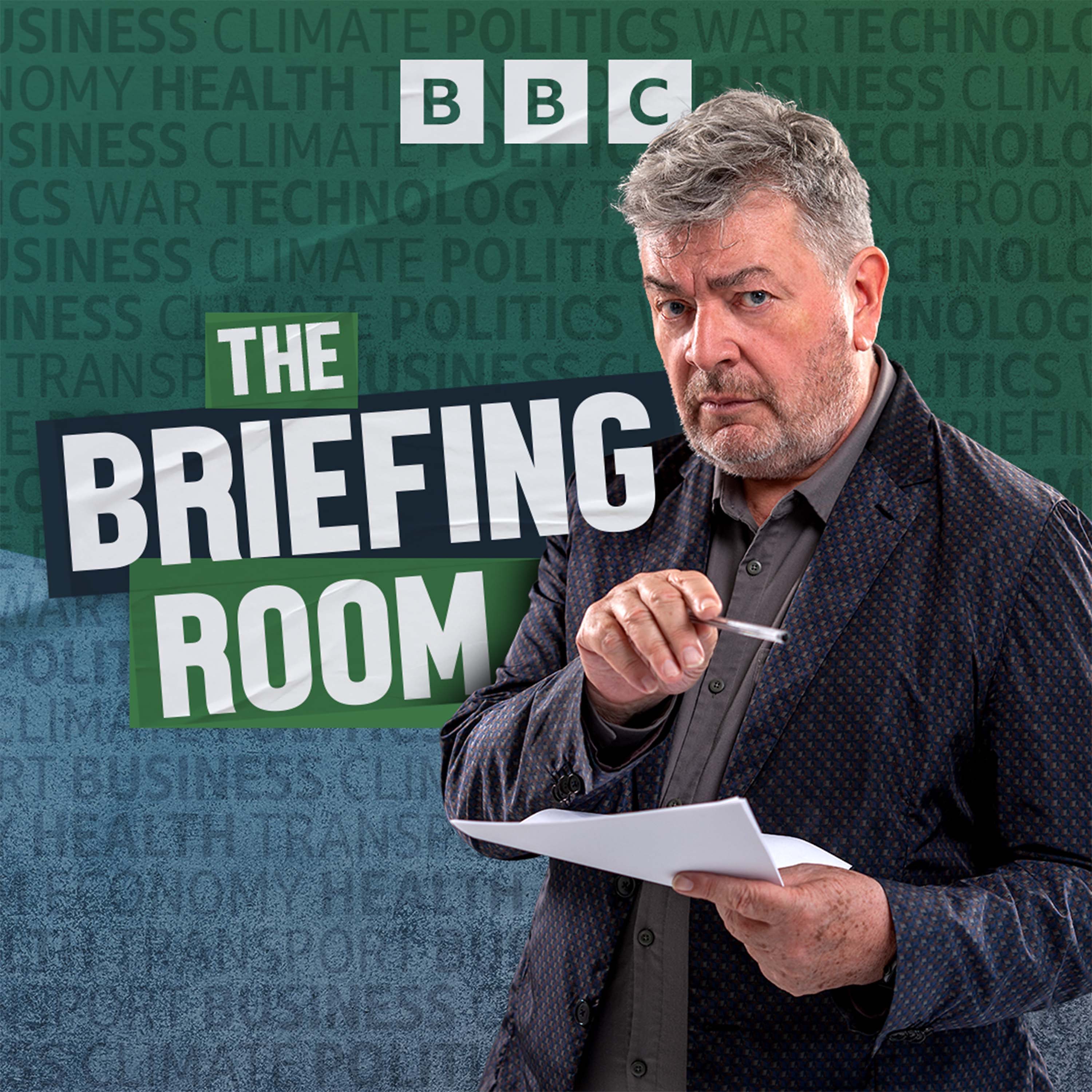
The Briefing Room
David Aaronovitch and a panel of experts and insiders present in-depth explainers on big issues in the news
Where to listen?
Podcasts in the app Replaio Radio Coming soonPodcasts are coming to the app soon. Install now and be the first to see a whole new take on podcasts
 Install for free
Android 5M+ downloads · 4.8 rating
iOS soon
Install for free
Android 5M+ downloads · 4.8 rating
iOS soon
Episodes
Global Tensions 2: China, Taiwan and the South China Sea 14.08.2024 38:25
David Aaronovitch and guests discuss China's desire for 'peaceful reunification' with Taiwan. Can it really be done peacefully and what happens if it can't? Guests: Rupert Wingfield-Hayes, BBC Asia correspondent based in Taipei Amanda Hsiao, Crisis Group's Senior Analyst for China Dr Lauren Dickey, Taiwan analyst at the China Power Project at the Centre for Strategic and International Studies Shas...
Global Tensions 1: The Middle East 08.08.2024 28:53
In the first of three programmes, David Aaronovitch explores the risk of escalation and wider conflict in the Middle East. What would all out war look like and how likely is it? Guests: Shashank Joshi, The Economist's defence editor Professor Lina Khatib, Director of the Middle East Institute at SOAS University of London Dr Burcu Ozcelik, Senior Research Fellow for Middle East Security within the...
Can planning reform really boost economic growth? 01.08.2024 28:44
David Aaronovitch and guests discuss Labour's plans for planning reform. This week the Housing Secretary, Angela Rayner announced a new National Planning Policy Framework. Will it boost economic growth? Sir John Armitt, Chairman of the UK's National Infrastructure Commission Catriona Riddell is an independent planning consultant and commentator who advises on planning policy Anthony Breach, Associ...
Health 3: How far could artificial intelligence transform medicine? 11.07.2024 36:41
Machine learning has come on in leaps and bounds in recent years. Bigger, more powerful computers can crunch ever more amounts of data, analysing complex information just as accurately, it’s claimed, as the best specialists and at speeds humans can never achieve. With the potential to make a significant difference to healthcare - helping to diagnose disease, summarise patients’ medical notes, even...
Health 2: Why is anxiety and depression increasing in the UK? 11.07.2024 27:38
Surveys suggest that at least one in four of us will suffer from anxiety and depression during our lifetimes. The prevalence of these conditions is one of the reasons given for poor school attendance. And it's estimated that these mental health disorders account for 12.5% of all sickness leave in the UK. So what’s caused such an explosion in mental distress and what, if anything, can be done to br...
Health 1: Advances in cancer research and treatment 11.07.2024 36:27
Half the UK population will get cancer during their lifetime - and rates are rising. Each year, around 385,000 people in the UK are diagnosed and around 167,00 lives are lost to the disease. But scientists are developing new therapies, including personalised vaccines and targeted drugs, that attack cancer cells directly and more effectively. It's hoped this pioneering work could lead to better sur...
South African and Indian elections: the aftermath 04.07.2024 28:52
2024 is the year of elections and already hundreds of millions of people around the world have been to the polls. A few months ago The Briefing Room looked ahead to elections in South Africa and India. Both have since delivered shocks to their ruling parties which failed to win parliamentary majorities. So why did the main parties in both countries do worse than expected? And what does this mean f...
What's happening in Sudan? 27.06.2024 28:45
David Aaronovitch and guests dissect Sudan's ongoing civil war. This conflict is now one of the world's worst humanitarian disasters. How can it be brought to an end? Guests: James Copnall - presenter of Newsday on the BBC World Service and former BBC Sudan correspondent Mohanad Hashim - Sudanese journalist working on Newshour on the BBC World Service Dame Rosalind Marsden - associate fellow of th...
What's the Biden ceasefire plan and will it work? 20.06.2024 28:39
David Aaronovitch and guests examine Joe Biden's ceasefire deal and ask whether - despite some positive noises from both sides - Israel and Hamas are interested in making it work. Guests: David Makovsky, Ziegler Distinguished Fellow at The Washington Institute and director of the Koret Project on Arab-Israel Relations Anshel Pfeffer, columnist and Israel correspondent at The Economist Lina Khatib,...
What does Macron's gamble mean for France? 13.06.2024 28:48
David Aaronovitch and guests assess the fallout from France's EU elections and President Macron's subsequent decision to call parliamentary elections later this month. Guests: Hugh Schofield, BBC Paris Correspondent Sophie Pedder, Paris bureau chief at The Economist Mujtaba Rahman, Managing Director for Europe at Eurasia Group who advise investors on political risk Dr Françoise Boucek, Visiting Re...
Are Trump's legal cases really a problem for him? 06.06.2024 29:28
David Aaronovitch and guests discuss Donald Trump's conviction in the hush money case, examine the cases yet to be heard and ask whether any of this hurts his election chances? Guests: Anthony Zurcher, BBC North America correspondent Jack Chin, Professor of Criminal Law at the University of California, Davis Wendy Schiller, Professor of Political Science at Brown University Production team: Caroli...
Ukraine: Who's winning the war? 30.05.2024 28:41
David Aaronovitch and guests assess the latest developments in Ukraine. In 2022, Russia was expected to win the war easily. That didn't happen. But is Russia gaining the upper hand now? Guests: James Waterhouse, BBC’s Ukraine Correspondent Polina Ivanova, FT correspondent covering Russia, Ukraine and Central Asia Michael Clarke, Professor of Defence Studies at Kings College London and Specialist A...
How much trouble are UK universities in? 23.05.2024 29:08
David Aaronovitch and guests discuss the current financial crisis facing UK universities and ask what can be done about it. Guests: Branwen Jeffreys, BBC Education Editor Nick Hillman, Director of The Higher Education Policy Institute Madeleine Sumption, Director of the Migration Observatory at the University of Oxford and member of the Migration Advisory Committee Alan Manning, Professor of Econo...
Avian flu is evolving but what risk does it pose to us? 16.05.2024 28:34
The H5N1 strain of avian flu isn't new. It was discovered in China in 1996. But in recent years it's started passing from mammal to mammal and it's now rife on cattle farms in the United States. How much should humans worry? David Aaronovitch speaks to: Professor Wendy Barclay, action medical research chair in virology at Imperial College London Kai Kupferschmidt, science journalist and molecular...
Why is the water industry in so much trouble? 09.05.2024 28:50
David Aaronovitch and guests explore the troubled state of the water industry in the UK. How do companies solve the sewage problem, fix the leaks and reduce the debt mountain? Guests: Kate Bayliss, research associate in the Department of Economics at SOAS, University of London David Hall, visiting professor in the Public Services International Research Unit at the University of Greenwich Sir Diete...
How does America fix its border crisis? 02.05.2024 28:49
Democrats and Republicans have promised to solve the border crisis in recent times but they've failed and it remains a huge election issue. How does the problem get resolved? David Aaronovitch talks to: Gustavo Solis, investigative border reporter at KPBS television station in San Diego Doris Meissner is Senior Fellow and Director, U.S. Immigration Policy Program Edward Alden, senior fellow at the...
Are Britain's missing workers really a problem? 25.04.2024 29:16
David Aaronovitch and guests discuss the reasons why millions of people in the UK aged between 16 and 64 are neither working nor looking for work and what we can do about it. Tony Wilson, Director of the Institute for Employment Studies Sam Avanzo Windett, Deputy Director at the Learning and Work Institute Torsten Bell, Chief Executive at the Resolution Foundation Production team: Sally Abrahams,...
India: Is democracy under threat? 22.04.2024 29:10
2024 is the year of elections. According to one estimate just under 50% of all the people on earth live in countries where by December 31st there will have been a national vote. In terms of population size there are none bigger than the six week exercise that got underway last Friday. The world’s biggest democracy - India - has gone to the polls and prime minister Narendra Modi is hoping – perhaps...
What does Iran want? 18.04.2024 27:43
David Aaronovitch and guests explore the thinking behind Iran's decision to attack Israel and ask what the short and long term aims of the Iranian regime are. Guests: Shashank Joshi, Defence editor at The Economist Ali Vaez, Iran Project Director at International Crisis Group Dr Roxane Farmanfarmaian, lecturer specialising in the politics of Iran and the Middle East at Cambridge University Product...
What's happened to Hamas? 11.04.2024 28:43
Israel's PM Benjamin Netanyahu has repeatedly vowed to “eliminate” Hamas but after six months of death and destruction in Gaza what do we know about their status? David Aaronovitch talks to: Jennifer Jefferis, Teaching Professor at Georgetown University's Security Studies program and author of Hamas: Terrorism, Governance, and its Future in Middle East Politics. Michael Clarke, Professor of Defenc...
What's the future of the state pension? 04.04.2024 28:33
The state pension system relies on the workers of today paying the pensions of current retirees. But does an aging population and rising costs threaten that model continuing? David Aaronovitch talks to: Paul Johnson, Director of the Institute for Fiscal Studies Paul Lewis, financial journalist and presenter of Radio 4’s Money Box programme Claer Barrett, consumer editor at the Financial Times and...
Election special 2. Elections without democracy 05.03.2024 28:40
2024 is the year of elections. According to one estimate just under 50% of all the people on earth live in countries where by December 31st there will have been a national vote. To mark this phenomenon we are broadcasting three special programmes. David Aaronovitch and guests discuss why do some countries bother holding elections if the outcomes are pre-determined and they also ask why the public...
Election special 3. Uncertain times for the ANC in South Africa 05.03.2024 27:49
2024 is the year of elections. According to one estimate just under 50% of all the people on earth live in countries where by December 31st there will have been a national vote. To mark this phenomenon we are broadcasting three special programmes. In the third and final programme in this special series we’re focusing on South Africa. It is 30 years since the African National Congress - led back th...
How is technology changing warfare? 28.02.2024 41:32
In 1964, pre-historic remains were discovered at Jabal Aṣ-Ṣaḥābah - or Mountain of the Companions - in the Nile Valley near what is now the border of northern Sudan and Egypt. That site contained evidence of the earliest known warfare believed to have taken place around 13,500 years ago. It’s thought that climate change led to that conflict; as crop yields became smaller, more groups had to compet...
Russia: State of the Nation 22.02.2024 28:13
It is two years since Russia began its costly conflict against Ukraine. How does it fund its war effort, how do sanctions impact that and how tight is Putin's grip on power? Guests: Sarah Rainsford, BBC Eastern Europe Correspondent Maria Shagina, Research Fellow for Economic Sanctions, Standards and Strategy at the International Institute for Strategic Studies Isaac Levi, Europe-Russia Policy &...
Similar podcasts








Listen to the The Briefing Room podcast in Replaio
Radio and podcasts in one app - free, with no sign-up. Install today and do not miss the launch
Replaio is not a podcast publisher; show names, artwork and audio belong to their authors and are distributed through public RSS feeds.