
Yardaena Osband & Anne Gordon
Talking Talmud
Learning the daf? We have something for you to think about. Not learning the daf? We have something for you to think about! (Along with a taste of the daf...)Join the conversation with us!
Where to listen?
Podcasts in the app Replaio Radio Coming soonPodcasts are coming to the app soon. Install now and be the first to see a whole new take on podcasts
 Install for free
Android almost 10M downloads · 4.8 rating
iOS soon
Install for free
Android almost 10M downloads · 4.8 rating
iOS soon
Episodes
Eruvin 11: Doorways of... Eruvin 20.08.2020 29:43
Terminology: Tzurat ha-petach. Pitachei shima'ei. Avkata. The need to visualize, and how that plays out, runs throughout the daf. So, what type of space does "tzurat ha-petach" permit? What does it have to look like? How like a door must it be? 2 lechis and a koreh do, fundamentally, create a doorway... Also, the case of an arch, as part of tzurat ha-petach. And: a strange story about R. Nachman,...
Eruvin 10: Of Sideposts, Wide Alleyways, and a Toilet 19.08.2020 25:32
A sidepost that is visible from the outside, as from within, and R. Yosef says he never heard that halakhah. Who's Who: R. Yosef. Now, the case of a sidepost that ends beyond the wall of the alleyway... works as a lechi, within a certain measurement. If longer, the alleyway is treated as not having any lechi. The next case: A 20-amot-wide alleyway... a couple of suggestions how to divide it and ma...
Eruvin 9: When Like Finds Like 18.08.2020 21:25
Topics recurring with more development on each pass, like a spiral passing through again, but at a distance reflecting that development (as an observation of organization). With a focus on Lavud, today - the extension of the material to cover a gap before the wall. As long as that gap is less than 3 tefachim (or 4), you don't need to add an additional koreh (crossbeam). What about a fully suspende...
Eruvin 8: The Case of the Kahanas 17.08.2020 24:59
Some thoughts on learning Eruvin. Plus: What happens when a backyard is owned by more than one person... Or when the alleyway runs between sites that are nobody's property, but also not a public domain. For example, the sea. For example, a garbage heap. Even R. Yehudah HaNasi didn't have an easy answer -- which leads into the question of how the alleyway itself was going to be treated, and whether...
Eruvin 7: How to Not Be Wicked - and Also Not a Fool 16.08.2020 14:08
What do you do when you want to follow the stringencies of two opinions, and they contradict?! Bottom line principle: Follow Beit Hillel! What if you like Beit Shammai's position better? Sure, go ahead. What you should *not* do is follow only the leniencies of both Beit Hillel and Beit Shammai. *Nor* only the stringencies of both. Example: Is the new year for the trees on the first or the fifteent...
Eruvin 6: Lock Up Your City at Night 15.08.2020 15:33
Terminology: (Mavoi) Mefulash. Also Mavoi Akum. We start with the premise that the in-between status of alleyways as a karmelit will be next to a public domain, and expand the private domain into the karmelit. But this daf suggests that an eruv could be made in a public domain. Could that be done with a lechi (sidepost)? Perhaps you need actual doors at every exit point? Jerusalem becomes a counte...
Eruvin 5: Creating a Wall Out of Thin Air 14.08.2020 22:21
Terminology: Gode, Lavud, Lechi, Koreh. And: The crossbeam is there to demarcate the space, distinguishing between the alleyway and the public domain... Or is it a partition? Recognizing that the space within and outside of an eruv is different. Plus: A lechi that protrudes 4 amot into an alleyway - when is that sufficient? Also: Safek d'Rabbanan lehakel - leniencies for rabbinic requirements, whe...
Eruvin 4: The Seven Species and What They Teach 13.08.2020 20:23
More on the phrasing of tefachim and amot: they're happy and sad! Also: All those measurements are "halakhah le-Moshe mi-Sinai." Or are they from the Torah itself? Or are the Torah sources an asmakhta? The verse of the seven species has implicit in it the measurements that each of those species represents, from the amount of time before which a house of tzaraat would render a visitor's clothes imp...
Eruvin 3: Someone Will Take Care of It, Right? 12.08.2020 25:12
Terminology: Amaltra - cornice. Amah - cubit. The implication of having amaltrot, even as high as 20 amot, in your alleyway (in contrast to a sukkah). The subjectivity of the measurements (how many tefachim in an amah, without expressed concern for whose tefach, but a concern for expanded vs. contracted amot). The implication of a larger amah in the context of kilayim (hybrid growth). Also, the im...
Eruvin 2: A Loophole to Protect Shabbat 11.08.2020 30:01
Some words of introduction to the tractate. The phenomenon of this loophole that allows us to carry - on the one hand, feels very permissive, and on the other hand, was limiting for the sake of keeping Shabbat. Also some technique and recommendation for managing the new tractate and its more extensive halakhic (rabbinic) discussion. Note that eruvin bring the community together. Plus: explaining t...
Shabbat 157: Anticlimactic Measuring of Water in a Tub 10.08.2020 15:01
More on muktzah! "Machmat mi'us" -- you can't handle because it has no purpose, because it's disgusting. When you have debris from your meal on your table, how can move it? Also: Lining up the halakhot of Shabbat with R. Shimon's approach. With an old oil lamp being the prime example of something that has no purpose on Shabbat, and would be unpleasant to handle. Plus: The last mishnah in Masekhet...
Shabbat 156: When God Moved Jupiter to Help Abraham 09.08.2020 30:39
Astrology, and whether the celestial bodies impact our lives. Namely, depending on which day of the week you were born, your traits and/or success will follow the events of the days of creation. Alternatively, the determining factors in our fates were the hours of the day. And yet, the very strong statement that "ein mazal le-Yisrael" - that astrological sign does not hold sway over Israel. Or per...
Shabbat 155: Camels, Dogs, and Feeding Them 08.08.2020 24:36
First, in memoriam: Rabbi Adin Steinsaltz, z"l. Then: how far can you to prepare food (for animals) on Shabbat? You cannot overfeed or force-feed animals on Shabbat (especially camels, and excepting chickens). Watering those birds that can't fly to get its own water is also acceptable. Tension between real world application of these laws vs. the true practices and concerns re forcefeeding. Plus: F...
Shabbat 154: Why Rabban Gamliel's Donkey Died 07.08.2020 20:49
(Again with audio issues - it's all here, but you'll hear the separate recordings we did...) Who's Who: Rav Mari bar Rahel. How one can be not obligated to bring a korban chatat for a case of shogeg, and yet be obligated s'kilah (stoning) when intentional? And how does intent with regard to idolatry teach about intent with regard to the rest of Torah? Plus: A prime example of Gemara logic to expla...
Shabbat 153: "Repent, for tomorrow ye shall die" 06.08.2020 19:03
Apologies for audio issues - it turns out that we missed ~20 seconds of Anne, but all the key content from the daf is here || If you do teshuvah every day, you'll always be ready to meet your Maker. The value of this approach is illustrated by a parable of servants invited to a feast by the king. The Gemara offers a couple of different ways of ending the parable. Plus: Last chapter of Masekhet Sha...
Shabbat 152: Confronting Human Mortality 05.08.2020 18:41
A request from the Roman Caesar that R. Yehoshua Ben Chananiah show up at the House of Avidan. Plus: Riddles! Fundamentally, on aging. (Addendum: the Queen of Sheba's riddles for King Solomon, as part of the culture of riddles). Note the challenge of this kind of reminder of our own mortality. So: biblical interpretation where a person's soul mourns over him. From there, an inference that the soul...
Shabbat 151: King David Can't Do Mitzvot Now 04.08.2020 19:08
A difficult daf: When someone dies on Shabbat, don't close their eyes; when someone dies on a weekday, don't risk hastening their death. Note that once a person has died, the body is muktzah. Also, a comparison: break Shabbat to save a newborn, but don't handle any dead body on Shabbat, not even that of King David. Plus: A lion does not pounce upon two people, except when it does. Also: Do mitzvot...
Shabbat 150: Going to the Circus on Shabbat 03.08.2020 22:00
The mishnah reflects two issues: what can we talk about and think about on Shabbat, and what can we plan to do after Shabbat? Tchum Shabbat - how far can one go on Shabbat in preparation to hire workers after Shabbat? The Gemara then applies the mishnah, to determine its specific case, including explanations why it can't mean the more general case. Also: when you cannot say something on Shabbat, b...
Shabbat 149: The Writing on the Wall 02.08.2020 17:43
Today, a halakhah section and an aggadah section. First, halakhah: no written lists for that which will appear at the table, lest one erase items off the list as they happen -- or lest one start dealing with business documents. The Gemara tracks through the different views, and the rationale and implications of each. Fundamentally, what it means to explore the "nafka minah," the practical differen...
Shabbat 148: Better That People Should Sin Less 01.08.2020 27:25
Financial dealings on Shabbat - or at least goods: borrowing without saying "borrow." If Erev Pesach (in Jerusalem in the time of the Temple) fells out on Shabbat, certain negotiations could be done for the sake of the korban pesach. Also: Several cases based on the mishnah's concern re the specific language of the loan, which leads to the difference between a larger, longer-term loan vs. spotting...
Shabbat 147: Why We Don't Go Swimming on Shabbat 31.07.2020 19:30
If you shake crumbs or dust, etc., off your tallit, or garment, that's akin to laundering, and incurs a korban chatat, at least for a new garment. And yet, this was not a universal approach - as some people were not concerned about it, and for them, shaking off the dust, crumbs, etc. did not matter, and therefore did not incur a korban chatat. Ulla, the key personality here, does seem to like to g...
Shabbat 146: A Legacy from the Serpent 30.07.2020 20:42
(Recorded in advance of Tisha B'Av) The Gemara claims that non-Jews were considered contaminated - why? They never had the contamination from the Garden of Eden serpent removed, as Bnei Yisrael did. It's a difficult presumption in a world where we generally claim that people are born good, or at least innocent (which would mean not contaminated!). And what about converts? The implication is that t...
Shabbat 145: Don't Yuck My Yum, or: There's No Accounting for Taste 29.07.2020 26:34
More on squeezing fruit on Shabbat, specifically over food, and not over an empty bowl - salad dressing! Also, hearsay testimony (one witness) is accepted only for allowing women to remarry, instead of leaving them agunot. Is there no other arena of halakhah where one witness's testimony would be sufficient? There is - when one claims that an animal is a first-born animal, and not available for th...
Shabbat 144: Pomegranate Juice 28.07.2020 26:20
That ongoing discussion about liquid that unintentionally comes out from fruit on Shabbat... Blood is also one of the liquids that can grant the food it comes in contact with (!) the capacity to become impure. R. Akiva is more stringent for the milk, over the blood. What do intentional and unintentional mean, in this context? What about other fruit (berries and pomegranates, for example)? And how...
Shabbat 143: Toss the Date-Pits behind the Couch 27.07.2020 28:34
More on moving muktzah. Removing bones and husks from the table - or removing the board of the table altogether. Crumbs and left over pods are less problematic, as they can be eaten by animals, and thereby have a purpose on Shabbat. Also, using a sponge on Shabbat is tricky in that it may entail automatic squeezing, unless it has a strap as a handle. Note the implications for cleaning our own Shab...
Similar podcasts





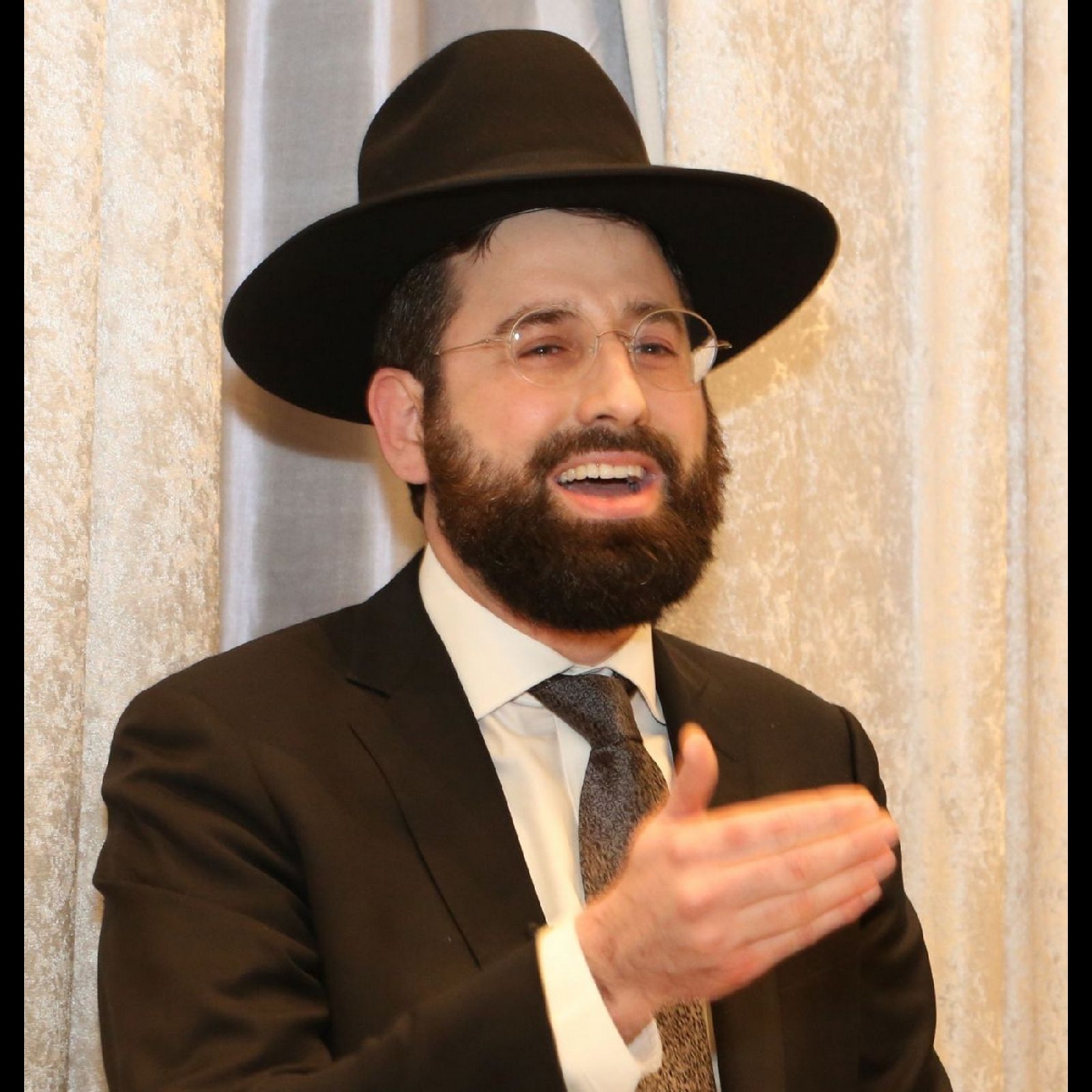


Listen to the Talking Talmud podcast in Replaio
Radio and podcasts in one app - free, with no sign-up. Install today and do not miss the launch
Replaio is not a podcast publisher; show names, artwork and audio belong to their authors and are distributed through public RSS feeds.
