
Yardaena Osband & Anne Gordon
Talking Talmud
Learning the daf? We have something for you to think about. Not learning the daf? We have something for you to think about! (Along with a taste of the daf...)Join the conversation with us!
Where to listen?
Podcasts in the app Replaio Radio Coming soonPodcasts are coming to the app soon. Install now and be the first to see a whole new take on podcasts
 Install for free
Android 5M+ downloads · 4.8 rating
iOS soon
Install for free
Android 5M+ downloads · 4.8 rating
iOS soon
Episodes
Chagigah 11: A Discussion of Those Topics That Should Not Be Discussed 20.02.2022 15:06
On the illicit sexual relationships bring explicitly listed in the Torah - even that list leaves out some prohibited relationships. Plus, a statement by the mishnah on the essence of the Torah that the Gemara understands to be both explicit and derived details of halakhah. Also, chapter 2: Limiting the public study or discourse on certain topics, from the sexually illicit relationships to Ma'aseh...
Chagigah 10: When the Oral Law Is Hanging by a Thread 19.02.2022 14:58
A range of mitzvot, beginning with hatarat nedarim, that the mishnah claims are not well sourced in the text of the Torah. The Gemara than contradicts this premise of the mishnah, for each of the mitzvot or categories of halakhah discussed - by means of examples of biblical verses to back up the defense. The question then is why does the mishnah make this claim?
Chagigah 9: Second Chances - Sometimes 18.02.2022 25:37
Tashlumin - making things up, from sacrifices and beyond. What happens if you can't make it up? Plus, how tashlumin play out after Sukkot, at the point when you can no longer make it up. Also, the difference between theft, for example, and the child who is a mamzer - which status cannot be undone. And how can you make up the korban, when you actually can? Also, delving further into the essence of...
Chagigah 8: What If You Don't Have Money for a Lot of Sacrifices? 17.02.2022 17:46
What monies can be used to pay for the korbanot of a festival, in particular, the Chagigah shelamim? And when you you need to lay out money, can you combine money from your own pocket with your ma'aser sheni money? Especially when you need more than one animal to feed the family. And why ma'aser behamah animals could not be brought on yom tov. Also, a mishnah! What happens when you have many mouth...
Chagigah 7: To Bring or Not to Bring a Hostess Gift 16.02.2022 18:06
A dispute between R. Yochanan and Resh Lakish on the mitzvah here of seeing and being seen. Note the parallel passage to Masekhet Peah, on those mitzvot which have no limit - including "ra'ayon," which needs defining in the context of Re'eiah. What is the extent to which we need to bring what we bring to God? Anthropomorphism par excellence. Also, a new mishnah - on what monies can be used to pay...
Chagigah 6: Why Women Made Holiday Pilgrimages 15.02.2022 28:37
Who is a minor? The Gemara follows the mishnah's discussion of the abilities of the child - to ride on his father's shoulders to the Temple, or to walk holding his hand. But how did the child get to Jerusalem to begin with? Clearly, his mother brought him, as she comes to Jerusalem to fulfill her own obligation of simcha, rejoicing. With support for this presumption in the biblical story of Chana...
Chagigah 5: Seeing the Pain in God's Hidden Face 14.02.2022 20:08
The story of R. Yochanan who encounters a man who is picking less ripe figs and leaving the ripe figs. And the rationale and value of picking the figs that weren't quite ready becomes a springboard for some heavy hitting philosophical discussion of how God takes some people before their time, the question of hidden wrong-doing, and the possibility of trusting people that nothing inadvertently wron...
Chagigah 4: To Be Seen by God 13.02.2022 25:08
A halakhic discussion and an aggadic discussion. First, a study of why those who are excluded from the mitzvah of Re'eiah, even when the exclusions are rather self-evident (women, tumtum, androgynous, plus a slave who has not been freed). Second, one who is blind and can't see, even in one eye, is exempt from appearing, or from the obligation to be seen - which introduces a large measure of anthro...
Chagigah 3: Radical Empathy 12.02.2022 31:29
On the list of people who are not obligated in the mitzvah of Re'eiah is the "deaf" person, a category which is expanded to include those who cannot hear but can speak, and those who can hear but are mute. How does their obligation differ from the obligation of others, including as that obligation is present in the mitzvah of Hakhel. Which spawns the question of whether those who cannot speak cann...
Chagigah 2: Making an Appearance 11.02.2022 20:27
Introducing the closing, shortest tractate in Moed. On the holiday pilgrimages to Jerusalem with the specific sacrifices that were required for those days. What it means to celebrate underlies these factors of the mitzvot of the day, in term so rejoicing. Also, the mishnah that introduces the tractate, the mitzvah of "re'eiah" - going up to the Beit HaMikdash on the holidays. Everyone is obligated...
Moed Katan 29: Going from Strength to Strength 10.02.2022 14:53
Departing the body upon burial becomes the purview of the mourners and the deceased, both. We say: Go in peace, in contrast to the good wishes for the living: Go to peace - there's more to go and do, for the living. Plus, the importance of the language we use at this time, as based on biblical verses. Also, a closing note on occupying yourself with prayer and Torah study, and an ever increasing mo...
Moed Katan 28: Death Comes to All 09.02.2022 28:40
Lifespans, by the sages' estimation, and the biographical detail that we are lucky enough to happen upon, now and again, in the Talmud. Plus, the encounters of various sages with the Angel of Death. Also, the process of honoring the deceased. Plus, the future of death (or absence of a future for death, in the time of redemption). Also, the comforting by the sages of R. Yishmael, when his son's die...
Moed Katan 27: Excessive Grief 08.02.2022 21:27
The daf continues to discuss mourning rituals and can and cannot be done in the house of an Avel. What do these descriptions teach us about daily life in the times of the Taanaim? The daf explores whether a person can grieve excessively and how is that determined
Moed Katan 26: When We Rend 07.02.2022 20:57
Tearing keriya - rending one's clothes. For whom do we tear? Starting with father, mother, and teacher - as learned from the prophet Elisha and his relationship with Eliyahu. Plus, tearing keriya as mourning for the Beit HaMikdash. Also, the specifics of tearing keriya for more than one person at once - which may have been as horrific as it sounds, or perhaps the Gemara is exploring the parameters...
Moed Katan 25: Eulogies, by and for the Sages 06.02.2022 22:55
The mourning practices are not put into play during Chol HaMoed, though if the person who died is a sage or a righteous person, the Chol HaMoed exemption shifts to acknowledge the more communal mourning. Note also the attempt to explain the WHY of one's children's deaths - which the Gemara explores in ways that fly in the face of our understanding (or lack thereof) of why such things happen. Also,...
Moed Katan 24: The Worst 05.02.2022 20:58
NOTE: This episode discusses infant mortality. But first, additional discussion of the rites of mourning, and how some become optional on Shabbat. This rites are less clear than some of the previous ones, because of various customs. Tearing garments is supposed to be a sign of greatest sorrow - including how some sages (like Shmuel) tore for their colleague/teachers (like Rav). Also, how we keep o...
Moed Katan 23: "Go Take Care of Your Sister's Children" 04.02.2022 18:17
Do we actually mourn on Shabbat? Some things are cancelled because of Shabbat, while some things are upheld. And some measures depend on the practices of the given community. Plus, the question of remarrying after the death of a wife, including the possible needs of young children who have lost their mother.
Moed Katan 22: Mourning Our Leaders 03.02.2022 17:59
What is the significance of the thirty day mourning period? How do we mourn our community leaders?
Moed Katan 21: The Calamities That Befell the Sages 02.02.2022 21:45
Outlining the practices (and prohibitions) of the mourner - including some that are very familiar - and a notable exception to accommodate the needs of the community. [Who's Who: R. Yosi bar Halafta] Plus, stories of rabbis who were in mourning and taught Torah publicly anyway. This moves us into a different realm of avelut. Also, the prohibition on a mourner wearing tefillin - and how that plays...
Moed Katan 20: When Bad News Makes Its Way Home 01.02.2022 16:34
How does the mitzvah of rejoicing on the holidays align with the sorrow during a period of mourning? And how does these conflicting emotions play out over the various holidays? Plus, when news of a death in the family came late. And the verses that teach shiva. Also, how much mourning is undertaken by one who hears about the loss more than 30 days after the death takes place? The answer is a sole...
Moed Katan 19: A Master Torah Scroll 31.01.2022 13:01
Collecting on a debt, or to pay a poor scribe - either is permitted writing on Chol HaMoed. Other scribal issues are left until after the holiday. [What's What: The scroll of Ezra/Azarah] Plus, tefillin, mezuzahs, and tzitzit on Chol HaMoed. Also, the way holidays truncate shiva and sheloshim.
Moed Katan 18: Is There Fire Where There's Smoke? 30.01.2022 24:45
Cutting nails on Chol HaMoed - and the implications of seeing long nails on another person. Plus, the connection to covenant, even going back to Abraham and Isaac. Also, the documents allowed to be written on Chol HaMoed. [Who's Who: Rabbi Reuven ben Itzterobili] From the documents that include betrothal and divorce arises a discussion of destiny, and from there to how much can be held against a p...
Moed Katan 17: Excommunicated for Life (and then some) 29.01.2022 21:31
[Who's Who: R. Yehuda bar Yehezkel.] How should the sages handles an excommunicated Torah scholar who was out of line in what must have been a serious way, where the sage who headed up the excommunication is no longer available to walk it back? Take it to the next greatest sage, even if you have to travel to do so. Though he delegated the investigation, and the sub's conclusion was rejected in the...
Moed Katan 16: Multiple Intelligences 28.01.2022 23:05
Narratives of cases that align with the halakhic details of daf 15. What happens when one is ostracized, and what kinds of ethics do we expect from the sages?
Moed Katan 15: Organizing Moed Katan 27.01.2022 20:50
A systematic approach to the various statuses of people and the range of activities that those same categories of people may or may not do, or must do. Plus, a "deeper dive" into the way each of those categories of people is permitted or required or forbidden to engage in learning Torah. (With apologies for some audio glitch that doesn't really hit the content that badly, but we aren't pleased, an...
Similar podcasts





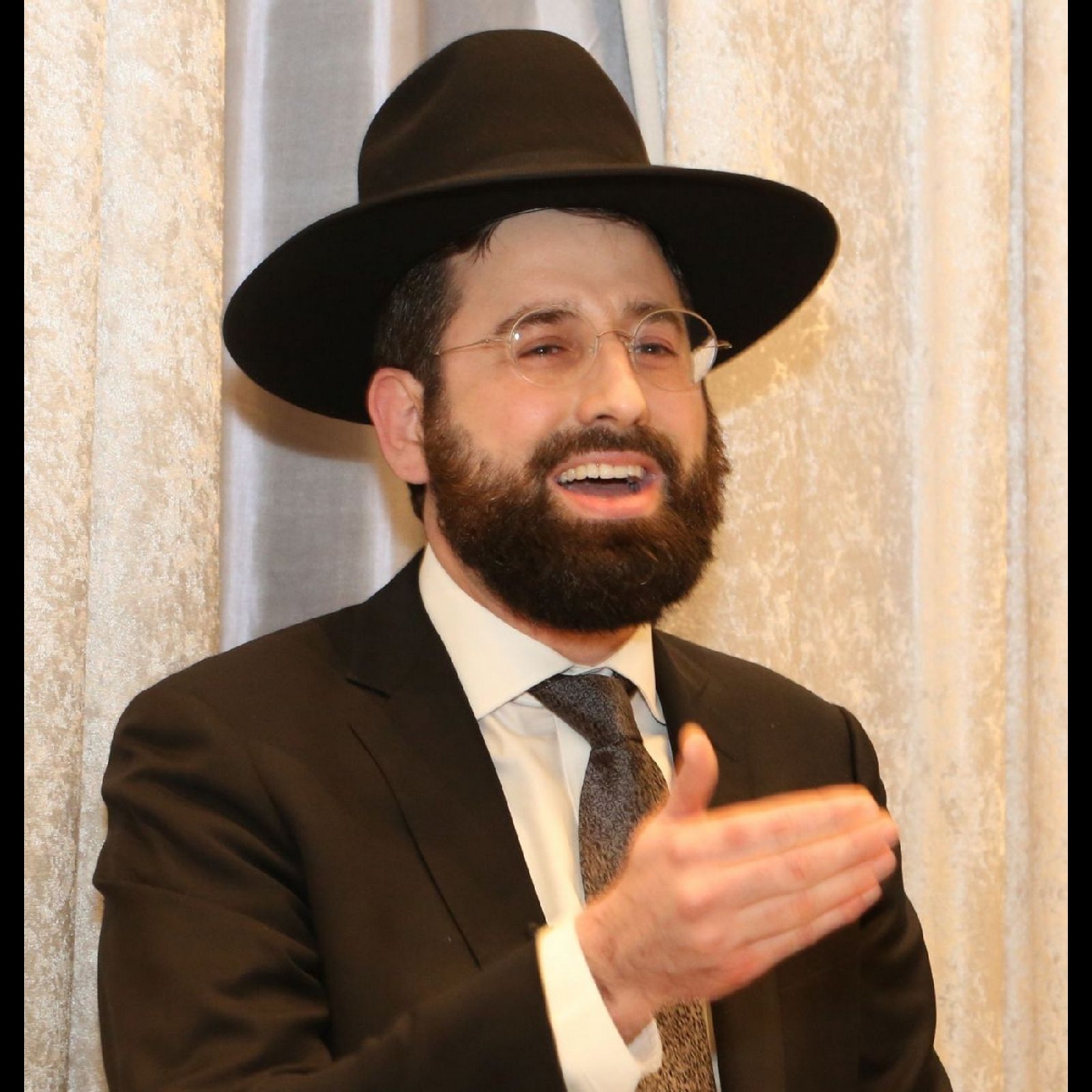


Listen to the Talking Talmud podcast in Replaio
Radio and podcasts in one app - free, with no sign-up. Install today and do not miss the launch
Replaio is not a podcast publisher; show names, artwork and audio belong to their authors and are distributed through public RSS feeds.
