
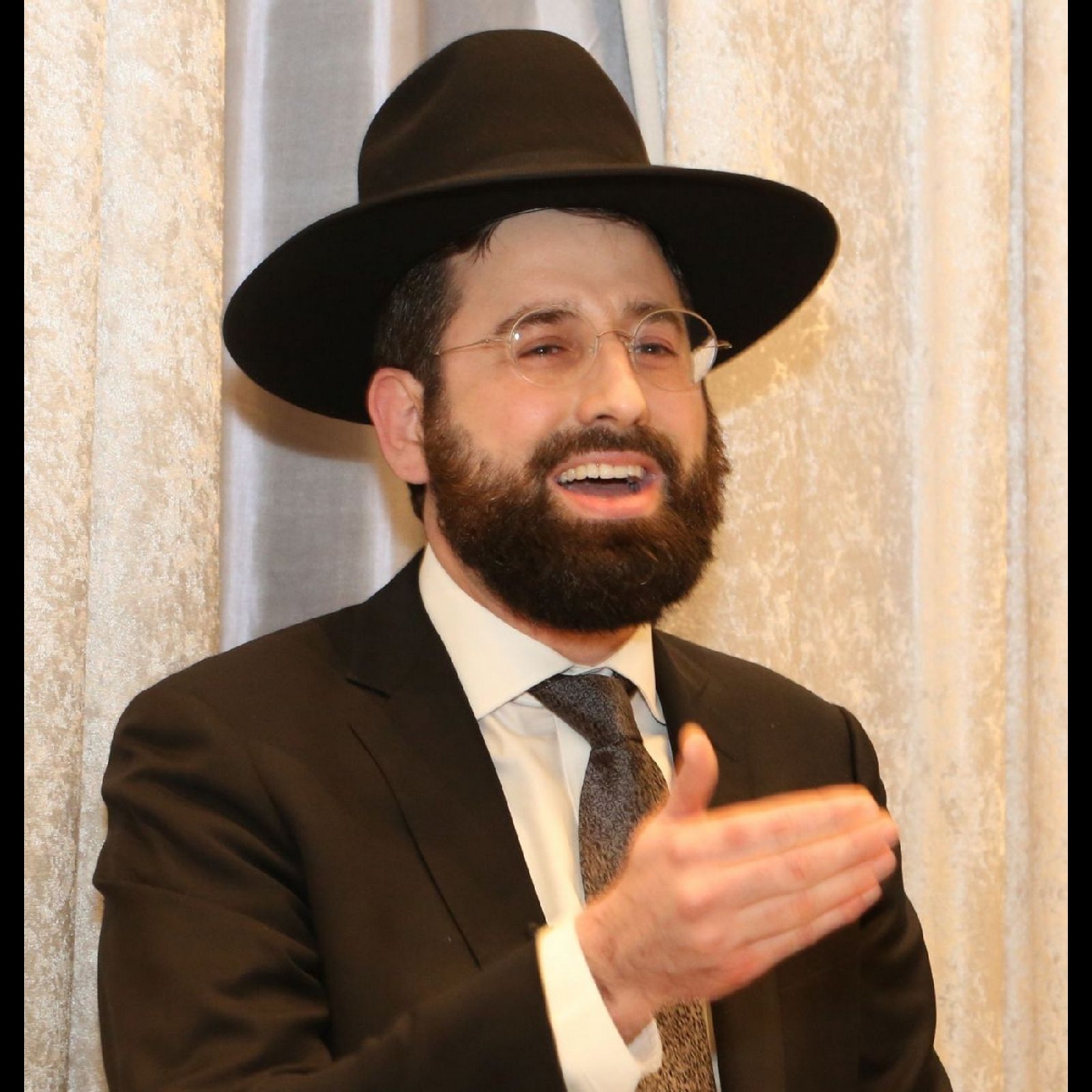
Yardaena Osband & Anne Gordon
Talking Talmud
Learning the daf? We have something for you to think about. Not learning the daf? We have something for you to think about! (Along with a taste of the daf...)Join the conversation with us!
Where to listen?
Podcasts in the app Replaio Radio Coming soonPodcasts are coming to the app soon. Install now and be the first to see a whole new take on podcasts
 Install for free
Android 5M+ downloads · 4.8 rating
iOS soon
Install for free
Android 5M+ downloads · 4.8 rating
iOS soon
Episodes
Nazir 13: Tips for Taking a Vow of Nezirut 05.02.2023 14:49
A new mishnah - one who takes a vow to become a nazir once he has a son. The he has a son. He's a nazir. But other progeny would not make him a nazir. What happens if the woman miscarries? Plus, the possibility of confusion between two different children. Also, conditions for consecutive or overlapping terms of nezirut.
Nazir 12: For the Birds 04.02.2023 17:01
Introducing a parallel to conditions in nezirut vows to the betrothal of a woman via a shaliach/emissary. Plus, a parallel to the birds to be designated for sacrifice. And the uncertainties that can creep into such cases. Plus, a new mishnah: when someone commits to "shave half a nazir" - paying half of the cost of korbanot that a nazir must offer.
Nazir 11: The Whole Is Greater than the Sum of Its Parts 03.02.2023 17:24
Can a person vow a nedrei if nezirut for only one of the nezirut prohibitions? Was the language of becoming a Nazir part of colloquial speech?
Nazir 10: The Talking Cow 02.02.2023 12:54
When a vow for nezirut is conditioned upon an external event, such as the positioning of a cow or a door, and whether the vow will be upheld. Plus, the dispute between Beit Hillel and Beit Shammai continues. Also, Rava's understanding of the role of the cow in this kind of case, plus his revision, as it were, to include the possibility of both the cow and the door.
Nazir 9: People Know What a Nazir Is 01.02.2023 16:03
Chapter 2: One who uses unusual expressions in taking on nezirut (for example, including refraining from dried figs in the vow), and whether that has impact on the assumption of nezirut. A machloket between Beit Hillel and Beit Shammai. Also, specific definitions of the korbanot mitigate against just deciding whatever sacrifice one wanted to offer, for example. Misspeaking for such a thing is allo...
Nazir 8: To Be a Nazir Forever 31.01.2023 11:49
A new mishnah: One who takes on being a nazir using euphemistic language - may indeed take on nezirut for his whole life, with some question as to how often he might be eligible to cut his hair/shave his head - depending on the phrasing used to undertake the nezirut. Likewise, one can undertake longer periods of nezirut, depending on phrasing. Also, one who undertakes nezirut "forever" can also de...
Nazir 7: Until the End of the World 30.01.2023 14:51
3 mishnayot on vowing to become a nazir. First, how to specify the term of nezirut, and how the default remains 30 days. Plus, measuring distance between places based on how long it takes to travel there. Also, the language used itself can make the difference, including when not to default to 30 days, but that doesn't mean adding on an hour or a day in your vow necessarily works.
Nazir 6: Growing Your Hair Long 29.01.2023 12:57
More on the machloket between R. Matanah and Bar Peda. The practical difference between their views is one who becomes impure on the 30th day, because if it's only 29 days, the impurity shouldn't negate the entirety of the nezirut. [Talmudic concept: miktzat ha-yom ke-kulo] Plus, the Gemara lines up this dispute with another one, by tannaim. Also, the impact of growing one's hair long, which takes...
Nazir 5: How Long Nezirut? 28.01.2023 15:28
On Avshalom, son of King David, and nazir. He cut his hair once a year, which is derived from a verse. Or was that every week?? Plus, a new mishnah: the default nezirut is 39 days long -- which leads the Gemara to probe how we know 30 days (and not 29, for that matter - which is a machloket between R. Matanah and Bar Peda.
Nazir 4: Samson Didn't Vow 27.01.2023 15:59
2 mishnayot - beginning with taking a vow like the nezirut of Shimshon (Samson), with different phrasings that all refer to him. But why use all the details?! Also, what's the difference between this kind of nazir and a regular nazir? Beginning with sacrifices, and hair-trimming, and the issues of becoming impure from contact with the dead. Plus, of course, the way one becomes a nazir. Also, the s...
Nazir 3: Beauty Is as It Does 26.01.2023 17:40
A note on Rivan, the son-in-law of Rashi, who takes his place, as it were, in Nazir. || Wording the vow to become a nazir - with a plan to become "beautiful." Is that enough to count as a nazir's vow? Is that physical beauty or the beauty of mitzvot? Plus, the beauty if long curly locks. Also, a new mishnah: mentioning part of nezirut counts as a vow to be a full nazir. And the Gemara explaining t...
Nazir 2: The Vow of the Nazir 25.01.2023 14:31
An introduction to Nazir, including its placement in Seder Nashim, and following Nedarim. An introduction to chapter 1, including the biblical source for nezirut. And the opening of the masekhet, with discussion of how one takes on nezirut with an articulated statement, and the ambivalence about this optional asceticism, which will be discussed at greater length going forward.
Nedarim 91: Signs of an Affair 24.01.2023 13:38
The case of a woman who says to and about her husband that he divorced her - is she to be believed? Also, narrative preceding halakhah with regard to the behavior that follows potentially misspoken words, especially as pertaining to the marital bed and its aftermath.
Nedarim 90: Is Annulment Dependent on Revocation 23.01.2023 16:59
The Gemara presents Rav Pappi’s version of the machloket between Rabbi Natan and the Chachamim. Plus the last Mishnah of our Masechet!
Nedarim 89: The Vows That Can't Be Revoked 22.01.2023 20:44
3 mishnayot, addressing how the father can revoke a daughter's vows, with what terms and what exception, what to pay attention to, etc. Plus, the 9 women whose vows are upheld and can't be revoked. Also, conditional vows that complicate the lives of everyone, and whether they can be revoked or nullified.
Nedarim 88: Can a Blind Man See? 21.01.2023 16:50
When the sages contradict their own opinions, specifically via a parallel case if inadvertent homicide and a blind person, as compared to Nedarim. Also, a new mishnah: when a father wants to give money or property to his daughter, but not to her husband, his son-in-law. That is, the question of whether what she acquires is also immediately acquired by him.
Nedarim 87: Missing Intel 20.01.2023 18:44
The case of a man who discovers later that he didn't have all the details at the time he revoked a vow. With a parallel to tearing keriyah in mourning, and introducing how long it takes to revise the information of the situation. Plus, a mishnah about a woman who swears off figs and grapes, and that vow is revoked apparently partially - is that sufficient? Plus a second mishnah on one who doesn't...
Nedarim 86: Who Owns a Wife's Body? 19.01.2023 14:12
In memory and tribute of our teacher Rabbi Moshe Kahn z"l || More on the question of a vow about something that doesn't yet exist, in parallel to a field that is to be consecrated in the future, and why that parallel doesn't work... Until the Gemara figures out how it could work as a legitimate parallel. Also, what exactly does a husband own in the relationship, as tricky as that question may feel...
Nedarim 85: Swearing Away the Future 18.01.2023 14:09
A new mishnah - a woman who makes the things she produces off-limits from her father, brother, in-laws... The husband can revoke the vow. She can't take those same things away from her husband. But what if she made more than the required amount, and that's the part she was making off-limits to her husband? He should still revoke the vow. Especially if they get divorced one day, and that vow would...
Nedarim 84: The Pool of Poor People 17.01.2023 13:31
A woman who has sworn off benefit from people, and can still eat from the agricultural mitzvot of charity, but it doesn't mention ma'aser ani. But is that lack of mention because she can't eat from ma'aser ani? What are the implications of demai (uncertainty with regard to whether tithes have been taken). Note that ma'aser ani doesn't have kedushah, as some other such mitzvot do. Also, the questio...
Nedarim 83: If It's a Mitzvah, It's No Gift 16.01.2023 13:12
What did R. Yochanan mean about partial revoking of vows? With the parallel to nezirut, and how it can't be separated in its vow. Plus, when a woman swears off benefit from others, and the husband cannot revoke that vow, she can indeed eat from leket, shikhcha, and pe'ah - because they're mitzvot. Is the husband included in the "everyone" though? (It's a machloket)
Nedarim 82: Combination Nedarim 15.01.2023 14:13
More on the husband's revoking his wife's vows, and how he cannot do so when it comes to a vow she makes pertaining to a third party. Though when the vow can be extended as pertaining to his household, then he can revoke. Also, if one makes a vow that includes self-affliction and no self-affliction in the same vow (e.g., two loaves of bread, one of which is affliction to miss out on and another wh...
Nedarim 81: Swearing Off Makeup 14.01.2023 14:55
Why are the children of Torah scholars not themselves also Torah scholars? With several possible answers. Also, going back to a wife's nedarim that do not involve self-affliction. The husband can then revoke the vows if they pertain to the couple's relationship, but if they pertain to her connection to others, he cannot revoke them. But if her vows pertain to both of them, he can revoke them.
Nedarim 80: Defining Affliction 13.01.2023 18:50
A study of self-affliction: what is "inui"? What needs to be prohibited from oneself? With bathing as the example. Also, the question of how not bathing is suffering (or not, as the case may be) in the context of Yom Kippur, and where the karet punishment might kick in. Note that discomfort and affliction may not quite define halakhic "inui."
Nedarim 79: The Safety Net 12.01.2023 12:12
Finishing the 10 chapter of Nedarim on the husband who revokes his wife's vows, as needed. And... beginning chapter 11, with a new mishnah on a vow taken by a woman that afflicts her, and which her husband or father can then revoke. Some of which might affect him or their relationship. Which means that the vows that bring about self-affliction need to be explored and defined. Also, some rationale...
Similar podcasts







Listen to the Talking Talmud podcast in Replaio
Radio and podcasts in one app - free, with no sign-up. Install today and do not miss the launch
Replaio is not a podcast publisher; show names, artwork and audio belong to their authors and are distributed through public RSS feeds.
