
Yardaena Osband & Anne Gordon
Talking Talmud
Learning the daf? We have something for you to think about. Not learning the daf? We have something for you to think about! (Along with a taste of the daf...)Join the conversation with us!
Where to listen?
Podcasts in the app Replaio Radio Coming soonPodcasts are coming to the app soon. Install now and be the first to see a whole new take on podcasts
 Install for free
Android almost 10M downloads · 4.8 rating
iOS soon
Install for free
Android almost 10M downloads · 4.8 rating
iOS soon
Episodes
Hullin 119: Join Together (without a band) 27.08.2026 14:58
A pod that has beans that come in contact with a creepy-crawly will not impart impurity (the beans are protected well enough on their own). In contrast to a pod with smaller legumes. What kind of "protections" of the food can come together to make the food large enough to impart impurity? For example, the 3 peels of an onion have different practical implications with regard to this kind...
Hullin 118: Useful Handles 26.08.2026 13:34
How handling impure food can become its own issue, and using a handle or an item of protection for the food will have different implications for the impurity and transfer thereof. The connection between the accouterments of food and the food itself is derived from the Torah verses. Also, in the case of something that was impure from a carcass falls on food - then the handle can import or export im...
Hullin 117: Food Impurities 25.08.2026 11:41
A new mishnah! Both blood and forbidden fats are prohibited by Torah law, but there are ways in which each is more stringent than the other, and also more lenient than the other. But one would not be liable for the other prohibitions that are more connected to the sacrifices, like "pigul," at that same time. Also, a new chapter (9) with a new mishnah! Parts of an animal that are not edib...
Hullin 116: Chicken and Cheese 24.08.2026 14:27
The distinction between Rabbi Akiva's leniencies regarding cooking undomesticated animals and fowl in milk vs. those of Rabbi Yossi HaGelili's permission and stringency in that regard. Plus, the respect afforded Rabbi Yossi HaGelili's opinion because it was his opinion, in his own region -- even by those who strongly disagreed, like Rabbi Yehudah HaNasi. Also, a new mishnah! On curdlin...
Hullin 115: And... No Benefit from Meat Cooked in Milk, Either 23.08.2026 15:20
More on the abominable products that are the result of actions that are prohibited -- for example, food that was cooked on shabbat, which violates shabbat and then is itself problematic. Also, the prohibition against benefitting from meat cooked in milk -- an inference that comes not only from the 3-fold repetition about the kid and its mother's milk, but together with the Pesach sacrifice.
Hullin 114: Mother's Milk 22.08.2026 16:07
How literal is the Torah's phrasing of "mother's milk"? Does it really mean the milk of the mother of the given animal, or all milk? Clearly, all milk - and the Gemara provides the logic for that as well as a verse to teach it too. But why both? Also, how do we know that it is prohibited to consume meat and milk that have been cooked together? The product of that which is prohibi...
Hullin 113: The Soul and the Life Force 21.08.2026 19:28
Beginning with a mnemonic to help remember the cases that are exceptions -- for example, the way salting (and rinsing, depending on the order and location) renders some meat kosher. Also, what happens if the blood from one piece of meat can be absorbed elsewhere? And - a new mishnah! What if you have cheese and fowl on the table? Does that violate the meat/milk-on-the-same-table problem? It would...
Hullin 112: Kutach and Kashering Meat 20.08.2026 13:33
Can you put a jug of salt alongside a jug of kutch - milk and grain reality....? The Gemara seems to say other substances would not be allowed - and that the kutach would not allowed.... depending on whether it was mixed with salt, or maybe vinegar. Also, bread that was used as something under the meat that you're cooking - that bread is a complicated situation, for the blood that emerges from...
Hullin 111: Dairy/Meat Equipment 19.08.2026 17:15
What if you roast a liver with other meat? Over a fire is acceptable, because the blood would be burned out, but an udder is not, because of the milk being absorbed. Except that there's a machloket, where the reverse positions are taken. Also, fish that was put in a meat bowl that doesn't have meat in it at the time -- can that same fish be eaten with kutach (the very dairy sourdough ferme...
Hullin 110: Udder, Liver, and Common Practice 18.08.2026 18:20
More on the udder. And the different practices with regard to eating udder, as per different places. Plus, the story of Rami bar Dekuli, who went to Sura from Pompedita (where they don't eat udders) on the day before Yom Kippur. But in Sura, they don't eat udder, and so they were shocked when he collected them to eat. Leading to an intensive discussion about minhag, basic practice. Also, m...
Hullin 109: Yalta's Search for Permitted Meat-and-Milk 17.08.2026 19:30
When milk flavor is imparted to a plate of meat -- it's prohibited even if the milk flavor would be squeezed out of it. With a 3-way machloket, on the efficacy of squeezing out the flavor. Also, a new mishnah! On the udder and the heart, filled with milk and blood, respectively. Also, a story of Yalta [Who's Who: Yalta!]. She is clear on the fact that every prohibited area of halakhah has...
Hullin 108: The Flavor of Milk 16.08.2026 16:51
A new mishnah! A drop of milk falls on a piece of meat that is cooking in a pot -- is there enough milk to give over some flavor? Note the Torah-level of prohibition regarding the milk. Also, when the milk can be nullified and when it cannot. And likewise, meat, which sometimes disappears against its backdrop, as it were, and sometimes renders a whole pot of meat unkosher.
Hullin 107: Cleanliness vs. Ritual: Handwashing 15.08.2026 20:38
More on the laws pertaining to the ritual washing of hands: What if you hold the bread via a cloth or gloves or some such and don't wash? What if the reason you don't touch the food with your hands is because you're finicky, and not about ritual washing? Also, a woman who is feeding her child on Yom Kippur and rinses a hand before doing so -- clearly is not in violation of not-washing...
Hullin 106: How Ritual Handwashing Protects 14.08.2026 14:01
Rav Dimi tells the story of how not washing before the meal in the ceremonial washing that precedes a meal led to a Jew eating pork. Likewise, a story of a woman who ended up divorced because of not washing after the meal. Another version of the story -- replace "pork" with non-kosher meat and "divorce" with death. Also, the difference between ritual washing and washing for cle...
Hullin 105: Cheese before Meat 13.08.2026 18:51
On using bread as a napkin, to wipe your mouth from a given flavor. Also, how long to wait between milk (cheese) and meat -- perhaps no time at all, as it turns out. Though some were known for waiting a full 24 hours, no less, from meat to dairy. Plus, salt from Sodom -- a very fine salt -- that gave rise to the practice of washing one's hands after the given meal. At one point, it was a very...
Hullin 104: No Meat and Milk 12.08.2026 17:12
Chapter 8! And the 3 verses that repeat not to cook a kid in its mother's milk. Also 2 mishnayot. 1 - No meat and milk together, not even on the same table, where "meat" refers to domesticated animals, non-domesticated animals, and birds, but not to fish or grasshoppers. 2 - That policy of no meat and milk on the table together is a matter of dispute between Beit Hillel and Beit Sham...
Hullin 103: Already Eaten Food 11.08.2026 19:12
Finishing chapter 7! But first, a case of several sins in one period of time, including non-kosher meat, and in which it seems that 2 sets of lashes would be sufficient. Or should it be three sets? What is the focal point of this dispute? When did it become a treyfa - quite young, as it turns out. With 3 explanations for the various cases. Plus, a discussion of the measure of eating for a prohibit...
Hullin 102: The Noahides and a Limb from a Live Animal 10.08.2026 16:04
More on the prohibition of eating a limb from a live animal - which applies to everyone, and regardless of whether the animal itself is kosher or non-kosher (though for Jewish, this prohibition would only apply to kosher animals). Also, the Noahides! Plus, one who has intent to eat a tiny bird - alive - or eating limb by limb... and when that intent has impact on one's liability for the physic...
Hullin 101: The Torah Is Not in Pieces 09.08.2026 19:17
On the sciatic nerve of the carcass of a kosher animal -- is there a way out of the punishment for the forbidden food? What happens when there's more than one prohibition, but they are only tangentially connected? Plus, the Gemara does some digging to determine which sage was partial to which approach. Plus, the order of factors that make a given piece of meat prohibited - that order can make...
Hullin 100: The Sciatic Nerve, Before Sinai 08.08.2026 21:41
More on nullifying non-kosher food in a larger amount of kosher food. First, remove the non-kosher food, but what happens if the remnants are giving flavor to the kosher food? That's a problem. [What's What? An "Amora"] And what happens when there's a third category of food there? How does that affect the nullification process? Also, a new mishnah! On the prohibition of the g...
Hullin 99: The Taste of the Gid HaNasheh (or lack thereof) 07.08.2026 14:57
More on nullification of a non-kosher food in the greater quantity of a kosher food. In accord with the view that said 100x more than the non-kosher food was necessary, but the idea that it should be 100x seems off to Abaye -- at least if the claim is that that quantity is necessary for all prohibited food in this kind of mixture, but that's illogical. Also, do sinews contain flavor? Do they i...
Hullin 98: Counting Eggs 06.08.2026 19:15
The question of 1 in 60 vs. 1 in 61, and the conundrum of eggs -- where they are all counted, and including in the same food -- depending on the ratio of non-kosher to kosher. The kosher food essentially dwarfs the non-kosher food to nullify it. Also, the source texts from the rulings regarding the nazir. With a question of whether the ration is 1/60 or 1/100.
Hullin 97: A Non-Jewish Chef, a Cow's Udder, and 1/60th of Food 05.08.2026 17:34
When foods get mingled, and you need to determine whether you can eat the kosher food, or whether the contamination of the non-kosher with the kosher. Plus, how to pull away the non-kosher/forbidden fat, and leave the kosher meat behind, with no flavor of the forbidden fat added to the taste of the otherwise kosher food. Determining whether the non-kosher food imparts flavor -- one needs a non-Jew...
Hullin 96: The Flavor of the Sciatic Nerve 04.08.2026 14:53
2 mishnayot! 1 - Which part of the sciatic nerve incurs a violation of the prohibition? And how much would one need to eat to be liable? Including a dispute and the distinction between what was prohibited at the biblical level of prohibition and what was prohibited at the rabbinic level. With an acceptance of diversity in the practice of kashrut that seems radical for many in this day and age. 2 -...
Hullin 95: Keeping Kosher 03.08.2026 19:03
The case of meat that is held by a non-Jew: what if it wasn't supervised continually? According to Rav - that's prohibited as a caution against the possibility that the kosher meat was swapped out for non-kosher meat. Which leads to a discussion of that likelihood, as the Gemara argues against Rav. Also, if the meat were unsupervised at any time, was it a stringency to not eat it, or was t...
Similar podcasts






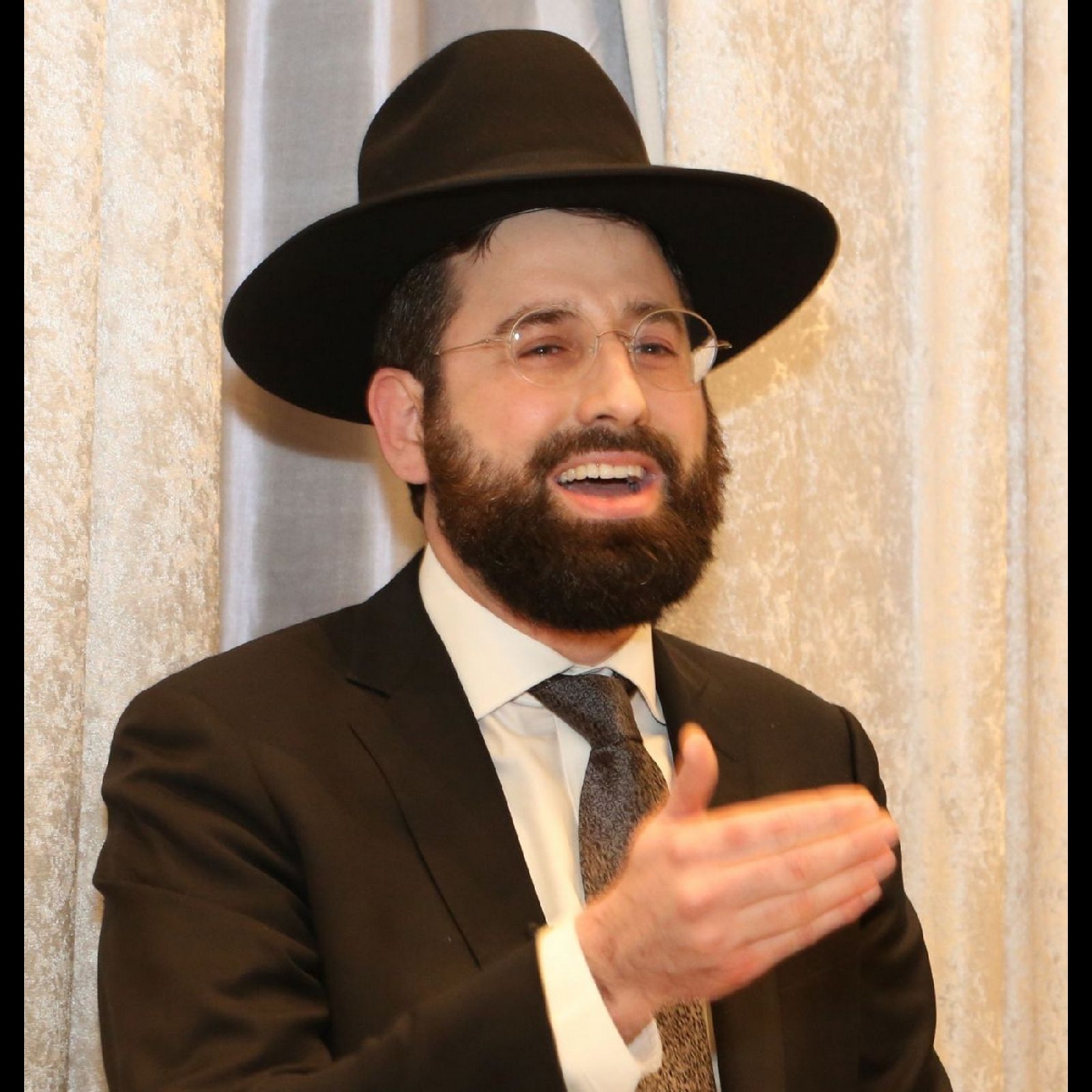

Listen to the Talking Talmud podcast in Replaio
Radio and podcasts in one app - free, with no sign-up. Install today and do not miss the launch
Replaio is not a podcast publisher; show names, artwork and audio belong to their authors and are distributed through public RSS feeds.
