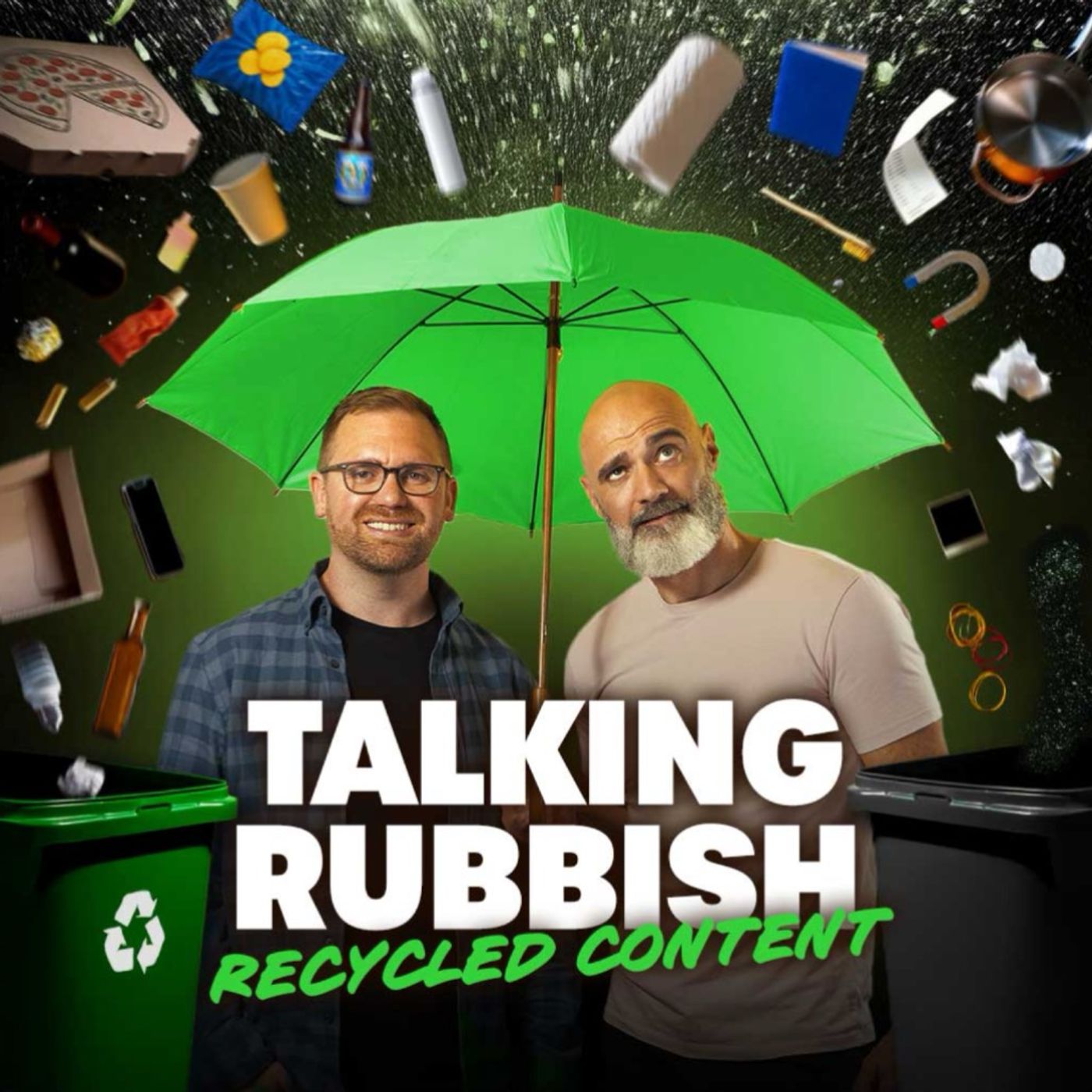
James Piper, Robbie Staniforth
Talking Rubbish - Recycled Content
'Talking Rubbish - Recycled Content' brings you the most useful moments from the Talking Rubbish podcast, all in bite-sized episodes. From practical recycling tips to surprising waste facts and myth-busting insights, James and Robbie cut straight to the good stuff to help you waste less, recycle better, and see your bin in a whole new way. Praise for Talking Rubbish: "Toast this pair who are trying to make a difference one rubbish episode at a time" - The Independent“Eye-opening stuff and only rarely dry” - The Guardian"Who knew rubbish could be so interesting" - Radio Times "This podcast will...
Where to listen?
Podcasts in the app Replaio Radio Coming soonPodcasts are coming to the app soon. Install now and be the first to see a whole new take on podcasts
 Install for free
Android 5M+ downloads · 4.8 rating
iOS soon
Install for free
Android 5M+ downloads · 4.8 rating
iOS soon
Episodes
Is tracing paper recyclable? 27.04.2026 2:35
In this episode, we answer a simple question: is tracing paper recyclable? In most cases, yes—tracing paper can be recycled like regular paper unless it has a silicone coating or other special treatment. This episode of Recycled Content, is the 'Rubbish or Not' from episode 39 of Talking Rubbish, which first aired on 24th April 2025. While every effort has been made to provide the most accurate in...
Can you recycle broken glass? 26.04.2026 4:40
Can you recycle broken glass? Sometimes, but it depends on your local council. Broken bottles and jars are often accepted in glass recycling bins, but sharp shards can be dangerous for collection workers and sorting machines, so some councils ask you to wrap small amounts carefully and place them in general waste instead. Items like drinking glasses, mirrors, Pyrex, and window glass usually can’t...
Are Calpol syringes recyclable? 25.04.2026 4:18
A question lots of parents ask, are Calpol syringes recyclable? The answer is usually not through standard household recycling. However, Calpol has partnered with some Tesco stores where you can return used syringes, and there’s also a postal recycling scheme available. It’s not the most convenient solution, but it’s definitely better than sending them straight to landfill. This episode of Recycle...
Should we compost dog poo? 24.04.2026 3:39
Composting dog poo sounds eco-friendly, but it’s not as simple as tossing it in the garden heap. Unlike fruit peels or grass clippings, dog waste can contain harmful bacteria, parasites, and pathogens, which can survive in regular home compost systems that don’t get hot enough to kill them. That means compost made from pet waste should never be used on edible plants or vegetable beds. So while the...
Are dog toys recyclable? 23.04.2026 5:14
Most dog toys are made from mixed materials such as rubber, nylon, polyester fabric, foam, rope, squeakers, and hard plastics, which makes them difficult or impossible for standard local recycling systems to process. Even toys labelled as plastic are often contaminated with dirt, saliva, or damaged components, meaning they usually end up in landfill. While some natural rubber or single-material to...
How are pet food pouches recycled? 22.04.2026 9:49
Pet food pouches are difficult to recycle because they are usually made from several layers of different materials, such as plastic films and foil, sealed together to keep food fresh and prevent leaks. These mixed materials cannot normally be separated by standard household recycling systems, so most pouches end up in general waste unless collected through specialist schemes. In dedicated recyclin...
How could EPR improve reusable packaging? 21.04.2026 4:53
In this episode, we explore how Extended Producer Responsibility (EPR) could transform reusable packaging systems. By making producers responsible for the full lifecycle of their packaging, EPR can encourage businesses to design durable, refillable, and returnable packaging instead of single-use waste. It can also help fund collection, cleaning, and reuse infrastructure, making reusable options mo...
Are magnets recyclable? 20.04.2026 3:13
Common household magnets, like fridge magnets, are usually made from mixed materials and aren’t easily recycled through kerbside collections...and they will stick to everything in the recycling facility! Magnets found in electronics, speakers, motors, and hard drives may contain valuable metals such as neodymium or ferrite, which can often be recovered through specialist e-waste recycling. As dema...
How is clothing recycled? 19.04.2026 9:29
In this episode we explore the process of turning unwanted garments into useful new products. After clothing is collected and sorted, items that cannot be reused are sent for recycling. Fabrics may be shredded into fibers to create products such as insulation, stuffing, or cleaning cloths, while some materials can be processed into new yarn and made into fresh clothing. This episode shows how clot...
How is clothing sorted? 18.04.2026 7:14
In this episode we take a closer look at what happens after clothes are collected. Once garments arrive at sorting centers, workers carefully separate them based on quality, type, material, and condition. Items in good shape may be prepared for resale in second-hand shops, while damaged clothing can be recycled into new textiles, insulation, or cleaning cloths. Some facilities also use modern tech...
How is clothing collected? 17.04.2026 5:43
In this episode we explore the journey of clothes after they leave our wardrobes. From charity donation bins to store take-back schemes, clothing can be collected in many different ways. We discuss who gathers these items, and what happens to garments that can be reused, resold, or recycled. This episode highlights the importance of responsible clothing disposal and how small choices can help redu...
Does mixing waste affect recycling rates? 16.04.2026 3:50
Mixing waste, such as combining recyclables with general rubbish or food waste, has a significant negative impact on recycling rates. When materials like paper, plastic, and glass are contaminated by leftover food, liquids, or non-recyclable items, they often become unsuitable for processing and are diverted to landfill or incineration instead. This contamination not only reduces the overall volum...
Are hot water bottles recyclable? 15.04.2026 7:34
Hot water bottles became a bit of a divisive topic on Talking Rubbish as you will hear. Traditional hot water bottles are usually made of rubber, which is not usually collected in standard household recycling collections. Rubber bottles are particularly tricky, as natural rubber can degrade and isn’t widely processed in recycling systems. However, some local recycling centres may accept them, alth...
How will EPR affect small businesses? 14.04.2026 4:33
In the UK, Extended Producer Responsibility (EPR) is likely to have a more nuanced impact on small brands because of the specific turnover and packaging thresholds built into the policy. Businesses with an annual turnover under £1 million and handling less than 25 tonnes of packaging are largely exempt, while those between £1–2 million and 25–50 tonnes face lighter reporting requirements without f...
Are tomato puree tubes recyclable? 13.04.2026 4:36
Tomato purée tubes are recyclable, although as always it is worth checking with your local collection rules. Even though they’re made from a mix of aluminium and plastic, the recycling process is designed to handle this: the tubes are heated so that any leftover food residue and the thin plastic layer are burned off, leaving behind clean aluminium. That aluminium can then be melted down and reused...
How are lightbulbs recycled? 12.04.2026 8:16
Lightbulbs are recycled through specialised processes that safely separate their different components so valuable materials can be recovered and reused. Once collected, bulbs are sorted by type, such as LEDs, fluorescent tubes, or traditional incandescent bulbs. By breaking lightbulbs down into their raw materials, recycling helps reduce hazardous waste, conserve resources, and support a more circ...
How are lightbulbs collected? 11.04.2026 9:51
Lightbulbs are typically collected through dedicated recycling schemes rather than regular household waste because many types, especially fluorescent tubes, contain small amounts of hazardous materials like mercury. In most areas, households can take used bulbs to local recycling centres, supermarket collection points, or designated drop-off bins often found in hardware stores. Even LEDs, which do...
What plastic should you use as a bin liner? 10.04.2026 4:36
When choosing a plastic bin liner, prioritising recycled content is one of the most effective ways to reduce environmental impact without sacrificing performance. Liners made from recycled polyethylene, are a great outlet for plastic waste, cutting down on the need for new raw materials and lowering overall carbon emissions. These bags can be just as strong and reliable as virgin plastic options,...
Are glass candle holders recyclable? 09.04.2026 3:46
Glass candle holders are often recyclable, but it depends on their type and condition. If the holder is made from standard container glass (like clear jars), it can usually go in household recycling once all wax, labels, and metal parts are removed. However, heat-resistant glass may not be accepted by local recycling systems because it melts at a different temperature. In those cases, it’s better...
What is the purpose of the Green Dot? 08.04.2026 3:42
The “green dot” in the UK is often misunderstood, but it’s actually a symbol linked to packaging waste recovery rather than a guarantee of recyclability. It shows that the producer has contributed financially to a system that supports the recycling and recovery of packaging materials. Unfortunately, it is not relevant to the UK market, making it relatively useless. This episode of Recycled Conten...
Is the widget in a Guinness can recyclable? 07.04.2026 5:50
The Guinness widget, found inside cans of Guinness, is a small plastic capsule that helps create the beer’s signature smooth head when poured. While the can itself is widely recyclable, the widget is typically made from plastic that is not easily separated during standard recycling processes. As a result, although the aluminium can is recyclable, the widget often ends up as waste. However, some re...
How are tyres recycled? 06.04.2026 8:31
Tyres are recycled through a series of mechanical and sometimes chemical processes designed to break them down and reuse their materials. First, collected tyres are inspected and sorted, some may be suitable for reuse or retreading, while others are sent for recycling. The tyres are then shredded into smaller pieces, often called rubber chips. Steel wires are removed using powerful magnets, and te...
How are tyres collected? 05.04.2026 8:05
Tyres are typically collected through specialised recycling programs. When consumers replace old tyres, garages and tyre shops often take them back and store them for collection by licensed waste carriers. These tyres are then transported in bulk to processing facilities, where they are sorted and prepared for reuse, recycling, or energy recovery. This episode of Recycled Content, is the 'Rubbish...
How clean does our recycling need to be? 04.04.2026 3:11
How clean does our recycling really need to be? In this episode, we rinse away the confusion and get into the surprisingly messy truth behind recycling habits. From yogurt pots to takeaway containers, we explore what actually happens at recycling facilities, why a quick rinse can make a big difference, and where the line is between “good enough” and overdoing it. If you’ve ever stood at the sink w...
Are glasses recyclable? 03.04.2026 3:09
Glasses aren’t typically recycled through standard household systems, most frames are made from mixed materials like plastic, metal, and coatings, which makes traditional recycling difficult. Instead, many opticians and charities collect old glasses to be cleaned, refurbished, and redistributed to people in need around the world. This episode of Recycled Content, is the 'Rubbish or Not' from epis...
Similar podcasts







Listen to the Talking Rubbish - Recycled Content podcast in Replaio
Radio and podcasts in one app - free, with no sign-up. Install today and do not miss the launch
Replaio is not a podcast publisher; show names, artwork and audio belong to their authors and are distributed through public RSS feeds.