McHenry Museum and Historical Society of Modesto, California
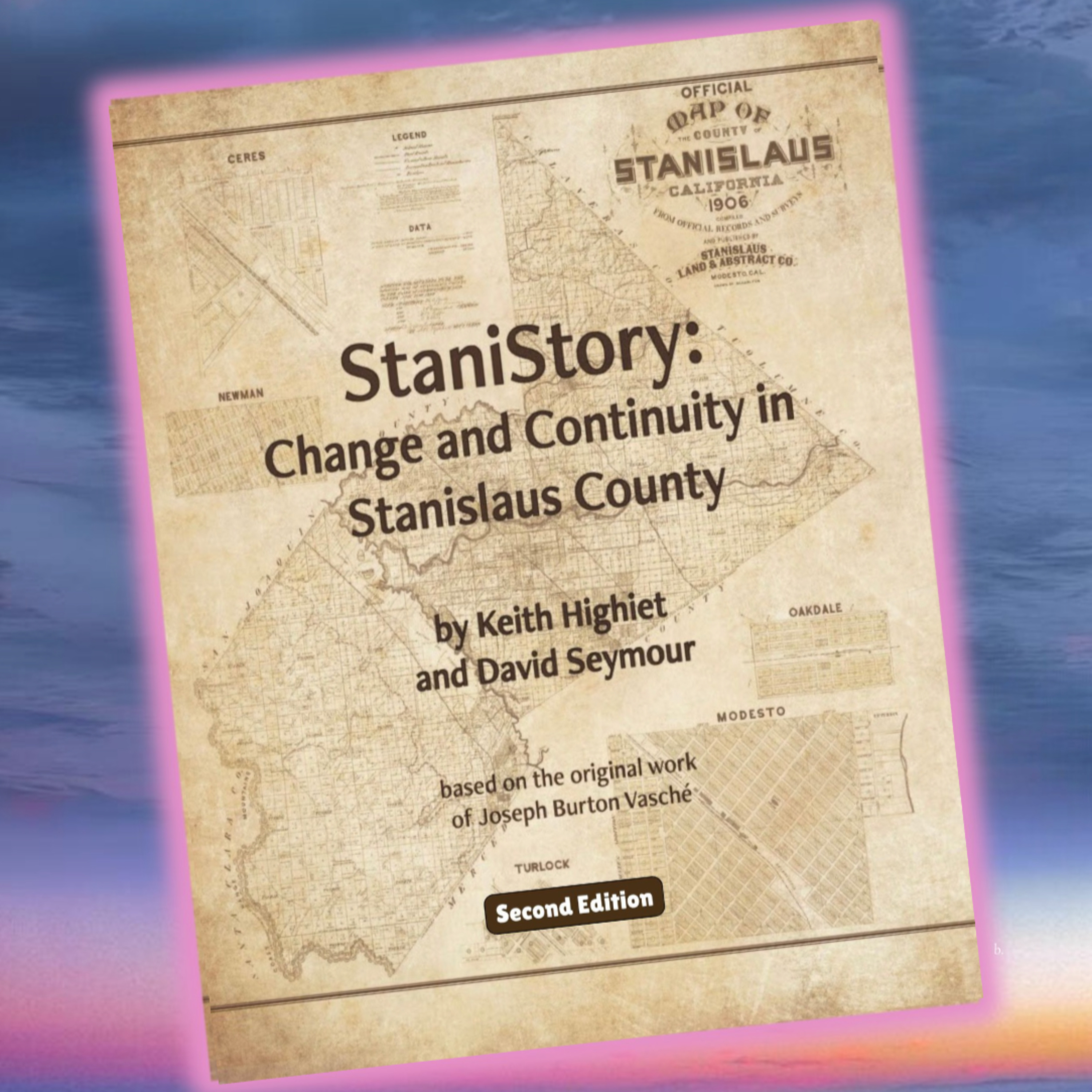
StaniStory: Change and Continuity in Stanislaus County
Authored by Keith Highiet and David Seymour for the McHenry Museum & Historical Society in 2025, "StaniStory: Change and Continuity in Stanislaus County" (2nd Edition) is an epic exploration into the history of Stanislaus County, California. Based on the original 1941 landmark book by Joseph Burton Vasché, this work updates local elementary history curriculum. The audio version of the book was recorded at Modesto Junior College's Music & Recording Lab under the direction of professor David Dow. Editing and post-production technical work was completed by Ben Hoover and Colby Gomes.
Author
McHenry Museum and Historical Society of Modesto, California
Category
Podcast website
Latest episode
Jun 4, 2026
Where to listen?
Podcasts in the app Replaio Radio Coming soonPodcasts are coming to the app soon. Install now and be the first to see a whole new take on podcasts
 Install for free
Android 5M+ downloads · 4.8 rating
iOS soon
Install for free
Android 5M+ downloads · 4.8 rating
iOS soon
Episodes
Stanislaus County 04.06.2026 1:50
Read by Betty Ustach, Stanislaus County was formed 1854 as a carve-out of Tuolumne County. The northern triangular part of the county was added from San Joaquin County in 1860. The county seats were Adamsville, Empire City, La Grange, and Knights Ferry, before settling on Modesto in 1871.
La Grange 04.06.2026 2:49
Read by Mary Lou Dieterich, the town of La Grange was settled by fifty men who came to mine for gold from France along the Tuolumne River in 1848 to 1849. A man named Bret Harte taught school near the town, and his first literary stories which were based on the area became the foundation of the Western genre in American literature. By the time the gold mining town had reached a population of 2,000...
Knights Ferry 04.06.2026 2:58
Read by Mary Ann Sanders, Knights Ferry became an important river-crossing site for miners traveling from the port city of Stockton to the city of Sonora and the southern gold mines. A "Fun Facts" descriptor, 'Old Local Buildings,' highlights the two of the oldest structures in Stanislaus County: the "old adobe barn" (in La Grange), and California's oldest running g...
Gold Rush 04.06.2026 1:50
Read by Betty Ustach, during the California Gold Rush of 1849, the towns of Knights Ferry and La Grange were the centers of gold mining activity on the land which would become Stanislaus County.
Mexican Travelers, Miners, and Legends 04.06.2026 2:36
Read by Mary Lou Dieterich, men came to the area from the Sonora territory in now-northern Mexico to capture wild horses since the early 1800s. Their descendants and families were among the first to move into the gold-mining foothills in 1848, kicking off the California Gold Rush. The rise in notoriety of Joaquin Murrieta was the most famous product of this sequence of events.
Mexican-American War 04.06.2026 0:59
Read by Mary Ann Sanders, Mexico and America went to war in 1846; Mexico lost the war and the area which would later become Stanislaus County was officially now part of the United States as of 1848.
New Hope / Stanislaus Prairie 04.06.2026 1:54
Read by Betty Ustach, Mormon pioneers were the first Americans to settle land in the area (1846): on what is now Caswell State Park / Ripon in San Joaquin County, and crossing over the Stanislaus River into what is now Salida in Stanislaus County.
Ranchos 04.06.2026 4:38
Read by Mary Lou Dieterich, large land grants were given out by the Mexican government to politically-connected Californios in the 1840s in the area which later became Stanislaus County: Pescadero, Del Rio Estanislao, Del Puerto, Orestimba y Las Garzas, and Thompson.
American Fur Trappers and Explorers 04.06.2026 2:27
Read by Mary Ann Sanders, some of America's most famous frontiersman hunted for animals in Stanislaus County: Christopher "Kit" Carson, Thomas "Broken Hand" Fitzpatrick, and John C. Frémont.
Cucunuchi (Estanislao) and Yoscolo 04.06.2026 5:29
Read by Betty Ustach, the namesake of Stanislaus County was a Yokuts man named Cucunuchi (who was later baptized as Estanislao). He and his co-warrior Yoscolo, are immortalized in American culture, as explained in "Fun Facts": 'Holy Batman!,' their lives partially inspired the creation of the popular fictional characters, Zorro and Batman.
Mexico Controls the Region (1821 - 1848) 04.06.2026 0:50
Read by Mary Ann Sanders, Mexico controlled the land which is now Stanislaus County, California from 1821 to 1848.
Spain Claims the Region (1806 - 1821) 04.06.2026 2:55
Read by Mary Ann Sanders, era of Spanish claim on the land which is now Stanislaus County, California lasted mainly from 1806 to 1821. The first western explorer to purposefully venture onto the land here was Gabriel Moraga and his group of Spanish soliders and Catholic missionary priests.
Yokuts 04.06.2026 7:57
Read by Betty Ustach, the Indigenous Americans (American Indians, Native Americans) lived on the land of what is now Stanislaus County: primarily the Yokuts, and also a band of visiting Miwok tribe; "Fun Facts" tell the tale of 'The Legend of Lover's Leap.'
Natural Plants and Wildlife 04.06.2026 1:43
Read by Mary Lou Dieterich, past and present flora and fauna of Stanislaus County, California includes the wild lupine, California poppy, valley oak tree, salmon, yellow-billed magpie, mountain lion, and tule elk.
Prehistoric Animals 04.06.2026 1:50
Read by Mary Ann Sanders, learn about the animals which were in the area we now call Stanislaus County from more than 60 million years ago to as recent as 10,000 years ago. In 1936, a local teenager, Allan Bennison, found the skeleton fossil of a hadrosaur, and later a mosasaur, in the Diablo Mountains of Stanislaus County. Columbian mammoths and mastodons roamed in the area until just about 10,00...
Climate and Landscape 04.06.2026 2:46
Read by Betty Ustach, the weather in Stanislaus County is good for agricultural food production. It has a Mediterranean type of climate. "Fun Facts" include a detail of 'Volcanic Lava and Rock Walls' in the low, eastern foothills of the county.
Geography and Geology 04.06.2026 3:24
Read by Mary Lou Dieterich, Stanislaus County is almost 1,500 square miles in size, stretching from the lower foothills of the Sierra Nevada across the San Joaquin Valley (part of the Central Valley) floor and deep into the Diablo Range (part of the Coast Ranges of California). The Stanislaus River and Tuolumne River flow east to west from the Sierra. They are tributaries to the San Joaquin River,...
Preface / Introduction / Overview 03.06.2026 2:40
The mission of StaniStory (that’s a mash-up of the words “Stanislaus” and “history”) is to instill in students an appreciation of Stanislaus County's history and to help readers identify connections from their own lives to their larger community. As a resident of Stanislaus County, you are part of its storied local history. As you learn more about the area and its history, you may realize the...
Acknowledgments 03.06.2026 4:38
Highlighting the people and organizations who helped make this book a reality, this also includes the first in a series of "Fun Facts": 'Stanislaus County's Connection to California Schools,' which details the unique connection of John Gage Marvin, California's first superintendent of public instruction, to Lakewood Elementary in Modesto. # # # Original work by Joseph Bur...
Similar podcasts








Listen to the StaniStory: Change and Continuity in Stanislaus County podcast in Replaio
Radio and podcasts in one app - free, with no sign-up. Install today and do not miss the launch
Replaio is not a podcast publisher; show names, artwork and audio belong to their authors and are distributed through public RSS feeds.