
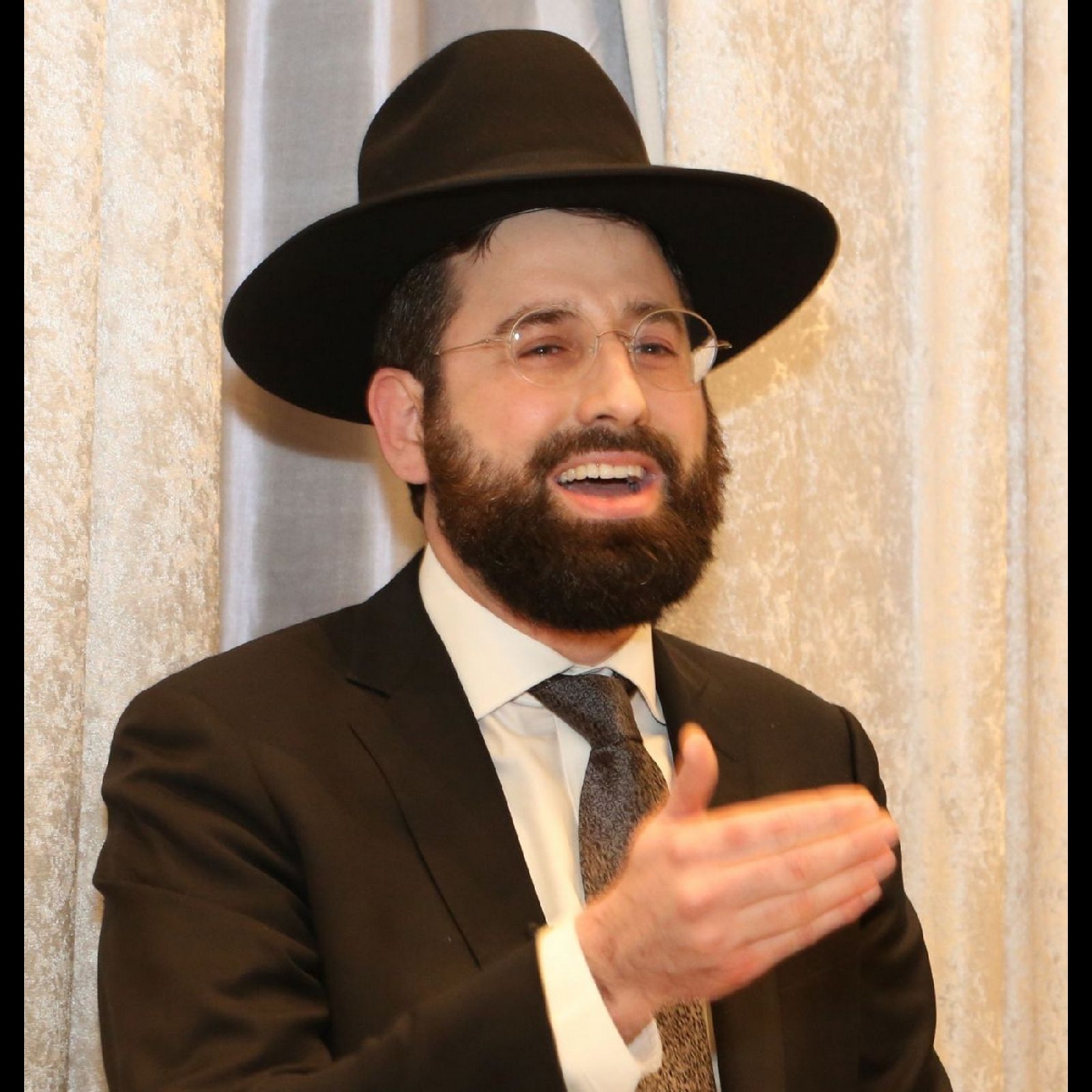
Edison Wu
Reformed Thinking
"Reformed Thinking" is a podcast dedicated to unraveling the intricacies of biblical teachings and theological questions, influenced by the abundant heritage of Reformed theology and Puritan writings. Whether exploring weighty Bible passages or dissecting influential Reformed books and articles, our goal is to offer insights that not only cultivate intellectual expansion but also, and more crucially, spiritual edification. Join us as we traverse the depths of scripture and Reformed thought, aiming to enlighten and broaden your faith sojourn.
Where to listen?
Podcasts in the app Replaio Radio Coming soonPodcasts are coming to the app soon. Install now and be the first to see a whole new take on podcasts
 Install for free
Android almost 10M downloads · 4.8 rating
iOS soon
Install for free
Android almost 10M downloads · 4.8 rating
iOS soon
Episodes
Two Verdicts, One Cross: God’s Power and Wisdom (1 Corinthians 1:18–24) 04.11.2025 41:30
Deep Dive into Two Verdicts, One Cross: God’s Power and Wisdom (1 Corinthians 1:18–24) The permanent center of all Christian truth and life is the cross , specifically the "word of the cross" or Christ crucified . This message is the exclusive locus of God’s power and wisdom . God’s power is defined as His saving efficacy , which achieved propitiation, reconciliation, and the public vind...
From Exile to Christ: Davidic Title and Divine Sonship (Matthew 1:12-16) 03.11.2025 34:05
Deep Dive into From Exile to Christ: Davidic Title and Divine Sonship (Matthew 1:12-16) Matthew’s genealogy acts as a precise theological instrument designed to crown Jesus as both the legal Son of David and the true Son of God, framing His arrival as the long-awaited sunrise of restoration following the Babylonian exile. The genealogy employs telescoping names, purposefully structured into three...
Formed and Provisioned: God’s Word, Order, and Fruitfulness on the Third Day (Genesis 1:9–13) 03.11.2025 25:41
Deep Dive into Formed and Provisioned: God’s Word, Order, and Fruitfulness on the Third Day (Genesis 1:9–13) The third day of creation is the unique and pivotal day in Genesis 1, crucial for establishing the foundation of order and provision in the created world. The creation narrative is structured to cure two deficits of the primordial world: "formless and void." Days one through three...
Introduction to the Psalms | John Peter Lange 03.11.2025 39:42
Deep Dive into A Commentary on the Holy Scriptures: Psalms by John Peter Lange et al. - Psalms Introduction The Psalter is recognized as the sacred hymn-book of ancient Israel, rooted in the theological soil of divine revelation. The collection is known by the Hebrew titles Tehillim (Hymns) and Teffiloth (Prayers of David), the latter term collectively designating the first seventy-two Psalms. The...
Dead to Sin, Alive to God: Union with Christ and the Shape of Sanctification (Romans 6) 03.11.2025 20:08
Deep Dive into Dead to Sin, Alive to God: Union with Christ and the Shape of Sanctification (Romans 6) Paul's argument in Romans 6 establishes that salvation is a decisive realm-transfer accomplished through the believer's union with the crucified and risen Christ. This theological shift grounds the call to sanctification, refuting the antinomian inference that grace licenses continued sin...
From Crown to Captivity to Christ (Matthew 1:6–11) 02.11.2025 25:07
Deep Dive into From Crown to Captivity to Christ (Matthew 1:6–11) Matthew’s genealogy (Matthew 1:1–17) is structured as a powerful theological argument, serving as Christological preparation rather than a simple historical record. This structure is divided into three architected movements—Promise, Problem, and Resolution—a design often referred to as the "three fourteens." The Problem se...
Heavens Spread, Waters Bound: Creational Boundaries and the Goodness of Limits (Genesis 1:6–8) 02.11.2025 22:50
Deep Dive into Heavens Spread, Waters Bound: Creational Boundaries and the Goodness of Limits (Genesis 1:6–8) The structure of creation, particularly on Day Two (Genesis 1:6–8), is defined by a royal and priestly grammar consisting primarily of two verbs: separationThe structure of creation, particularly on Day Two (Genesis 1:6–8), is defined by a royal and priestly grammar consisting primarily of...
What is the Role of the Holy Spirit? 02.11.2025 24:49
Deep Dive into What is the Role of the Holy Spirit? The Holy Spirit is confessed by historic Christianity as true and eternal God, the third person of the undivided Trinity, distinct in person yet one in essence with the Father and the Son. He is a living divine person, possessing intellect, will, and affections, who should never be reduced to an impersonal force. His central and governing mission...
New Creation, Old Promises: The Royal Genealogy of Grace (Matthew 1:1–6) 02.11.2025 26:16
Deep Dive into New Creation, Old Promises: The Royal Genealogy of Grace (Matthew 1:1–6) Matthew's opening verses are a foundational theological overture that establishes Jesus Christ’s dual nature—His legal royal descent and His divine, supernatural origin—by drawing upon the convergence of the Abrahamic and Davidic covenants. The entire list is framed by the programmatic superscription, which...
Live by What Gave You Life: Craving the Pure, Word-Shaped Milk (1 Peter 2:2–3) 02.11.2025 18:13
Deep Dive into Live by What Gave You Life: Craving the Pure, Word-Shaped Milk (1 Peter 2:2–3) Peter establishes the Christian's posture toward God's Word by declaring their identity as "newly begotten infants" ( ὡς ἀρτιγέννητα βρέφη ). This simile is a declaration of identity, not a rebuke for immaturity, emphasizing that spiritual life is derivative, received, and dependent. Thi...
Let There Be Light: Word, Spirit, and the Birth of Time (Genesis 1:1–5) 01.11.2025 34:57
Deep Dive into Let There Be Light: Word, Spirit, and the Birth of Time (Genesis 1:1–5) The theological architecture of Christian origins is established in Genesis 1:1–5 through three interlocking truths that define the relationship between the self-existent God and His creation. First, the assertion of an absolute beginning in verse 1—"In the beginning, God created the heavens and the earth&q...
θεός (Theos): God 01.11.2025 33:25
Deep Dive into θεός The concepts of God ($\theta\epsilon\acute{o}\varsigma$) in Greek, Jewish, and early Christian traditions present fundamental contrasts regarding monotheism, God's relationship to the world, and divine characteristics. The Greek concept is essentially polytheistic, viewing Godhead as an ordered totality of gods or a "world of gods". Greek deities, while eternal, c...
Approved Before God: The Unashamed Craft of Straight-Handling the Word of Truth (2 Timothy 2:15) 01.11.2025 21:35
Deep Dive into Approved Before God: The Unashamed Craft of Straight-Handling the Word of Truth (2 Timothy 2:15) Paul’s second letter to Timothy, written from Roman confinement, serves as his final pastoral charge to his younger colleague laboring in Ephesus. The letter’s central command is for Timothy to embrace decisive, whole-person exertion ($\sigma\pi o\text{ú}\delta\alpha\sigma o\nu$). The pu...
אֵשׁ (Esh): Fire 31.10.2025 22:21
Deep Dive into אֵשׁ The usage of the term ʾēš (fire), which occurs approximately 380 times in the Hebrew Old Testament, exhibits a complex evolution across biblical genres, functioning in literal, cultic, theological, and metaphorical capacities. In the earliest narratives and legal texts, ʾēš is a concrete element. Literally, it refers to fire used in daily life for cooking, roasting, and industr...
Unceasing Prayer: A Life Lived Before God (1 Thessalonians 5:17) 31.10.2025 25:49
Deep Dive into Unceasing Prayer: A Life Lived Before God (1 Thessalonians 5:17) The command to “pray without ceasing” (1 Thessalonians 5:17) defines a whole-life posture of persistent dependence on God, rather than requiring nonstop verbalization or monastic withdrawal. The Greek adverb $\text{ἀδιαλείπτως}$ signifies "without let-up," meaning steady regularity and dependable persistence...
The Minister's Self Watch | Charles Spurgeon 30.10.2025 24:03
Deep Dive into Lectures to My Students - The Minister's Self Watch by Charles Spurgeon The sources define the Christian minister by the supreme necessity of his personal spiritual condition, emphasizing that his very being is the essential instrument for sacred service. The minister’s "nearest machinery for sacred service" is his "own spirit, soul, and body," making him his...
Rooted by the River: The Two Ways (Psalm 1:1–4) 30.10.2025 23:49
Deep Dive into Rooted by the River: The Two Ways (Psalm 1:1–4) Psalm 1 stands as the deliberate doorway to the Psalter, defining true blessedness as covenantal well-being—the settled happiness and flourishing of a soul aligned with God’s revealed will. The psalm contrasts two irreconcilable ways of life: the path of the righteous and the way of the wicked. Blessedness begins with a necessary gate...
How to Rebuild Ukraine's Social Welfare and Community Services after War? 29.10.2025 30:16
Deep Dive into How to Rebuild Ukraine's Social Welfare and Community Services after War? The recovery strategy for Ukraine's social welfare system is structured around four distinct movements: stabilizing the social floor, rebuilding local delivery, reforming and modernizing systems, and institutionalizing resilience. This approach is designed to restore trust by making support equitable,...
Walking Wisely in Evil Days: Redeeming the Time (Ephesians 5:15–16) 29.10.2025 21:04
Deep Dive into Walking Wisely in Evil Days: Redeeming the Time (Ephesians 5:15–16) Wise urgency is the core practice of Christian living, defined as sanctification on a clock: watchful, Scripture-ruled, Spirit-enabled, and joyfully accountable to the Lord . This posture is commanded in Ephesians 5:15–16 to "Look carefully then how you walk, not as unwise but as wise, redeeming the time, becau...
Inversions in the English Bible 28.10.2025 30:37
Deep Dive into Inversions in the English Bible Inversions in English Bible translations are marked departures from the default Subject-Verb-Object (SVO) order, classically termed anastrophe. This clause-level reordering, which preserves constituents while changing their sequence, is used to achieve emphasis, framing, or elevation of style. These features arise from three converging pressures: the...
Fixed in Heaven, Light for the Path: The Word-Shaped Life (Psalm 119) 28.10.2025 27:11
Deep Dive into Fixed in Heaven, Light for the Path: The Word-Shaped Life (Psalm 119) The psalmist in Psalm 119 defines the blessed life as a Spirit-enabled, Scripture-saturated existence characterized by integrity ( tamim ) and covenantal conformity to God’s instruction ( tôrāh ). The believer must seek God with their "whole heart," signaling undivided allegiance of intellect, affections...
The Continuing Rite of the Church: The Lord's Supper 27.10.2025 26:42
Deep Dive into Christian Theology by Millard J. Erickson - The Continuing Rite of the Church: The Lord's Supper The Lord’s Supper is a vital rite, considered the continuing practice of the visible church, instituted by Jesus Christ himself. Christian groups agree on six foundational points, including the necessity of repetition of the rite until Christ’s second coming, its function as a procla...
From Cosmos to Canon to Conscience: The Progress of Revelation (Psalm 19) 27.10.2025 21:30
Deep Dive into From Cosmos to Canon to Conscience: The Progress of Revelation (Psalm 19) The structure of divine regulation and spiritual growth is presented across three stages of revelation—Creation $\rightarrow$ Canon $\rightarrow$ Christ—leading the worshiper from universal awe to acceptable devotion. The initial stage, Creation (general revelation), is the “Silent Sermon of the Skies”. The he...
Sins of the Heart: Hatred 26.10.2025 29:28
Deep Dive into Sins of the Heart: Hatred Hatred is fundamentally rooted in the hidden soil of the heart, flowing from total depravity and deeper sins like pride, envy, and unforgiveness. Scripture identifies this inner posture as "heart-level murder," where angry contempt and malicious ill-will toward an image-bearer violate the Sixth Commandment. The Law exposes this pervasive sin, forb...
Sufficient by God: Ministers of the New Covenant (2 Corinthians 3:5–6) 26.10.2025 28:27
Deep Dive into Sufficient by God: Ministers of the New Covenant (2 Corinthians 3:5–6) Paul’s defense of ministry establishes that sufficiency originates wholly and exclusively from God, decisively rejecting the modern temptation toward self-sufficiency. Paul denies any intrinsic competence, stamina, or spiritual ability within the minister, stating that nothing, not even the ability to form right...
Similar podcasts







Listen to the Reformed Thinking podcast in Replaio
Radio and podcasts in one app - free, with no sign-up. Install today and do not miss the launch
Replaio is not a podcast publisher; show names, artwork and audio belong to their authors and are distributed through public RSS feeds.
