Rick Derderian
Realms of Memory
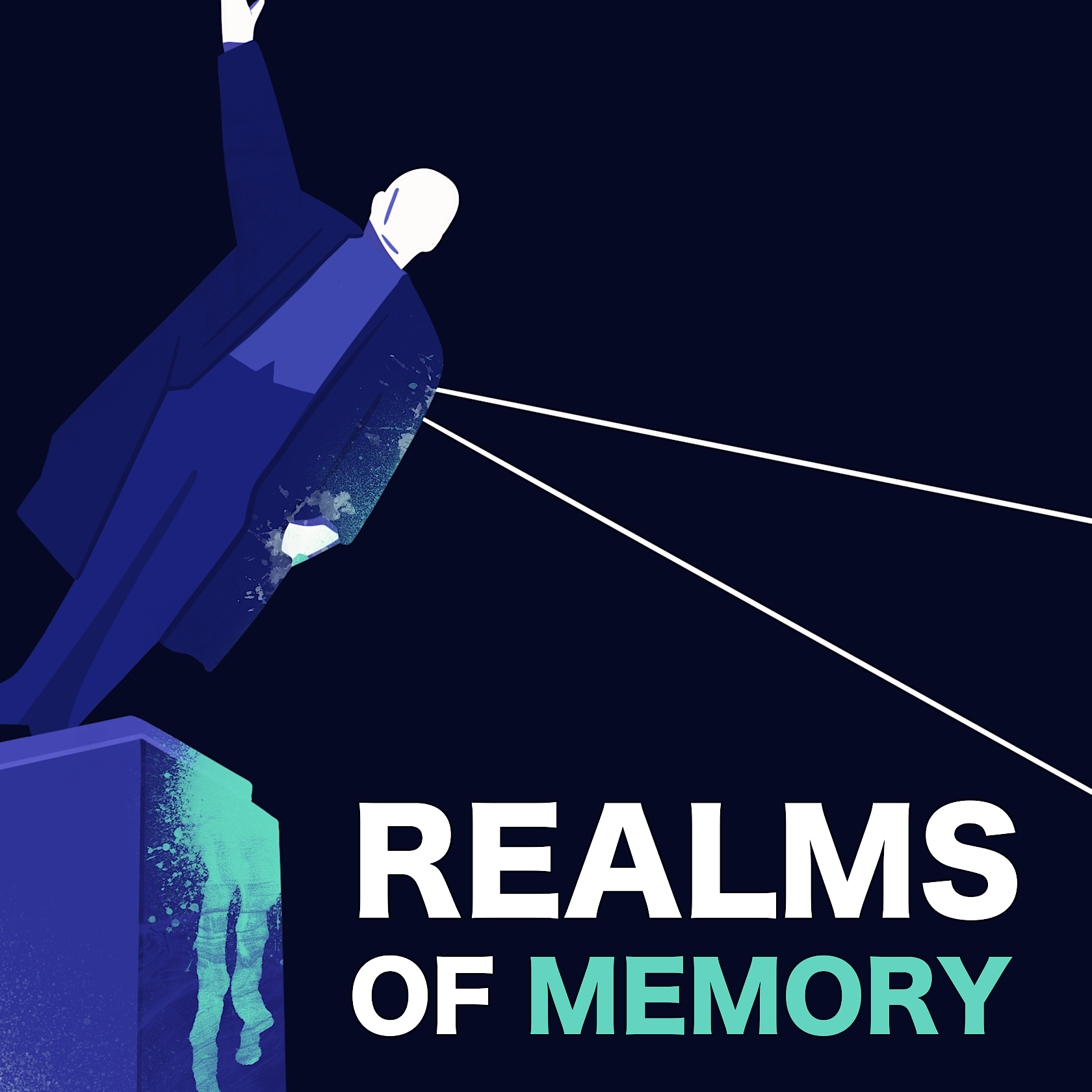
Realms of Memory is a podcast that looks at how countries confront their darkest chapters, what they gain by doing so, and what happens when they fail to take up this challenge. We feature the insights of leading experts on a wide range of difficult national memories.
Author
Rick Derderian
Category
Podcast website
Latest episode
Jul 7, 2026
Where to listen?
Podcasts in the app Replaio Radio Coming soonPodcasts are coming to the app soon. Install now and be the first to see a whole new take on podcasts
 Install for free
Android 5M+ downloads · 4.8 rating
iOS soon
Install for free
Android 5M+ downloads · 4.8 rating
iOS soon
Episodes
Confederate Monuments and the Fight for Racial Justice 02.07.2024 1:01:17
In the wake of the 2020 murder of George Floyd the toppling of scores of monuments to the Confederacy made national and international news. But four years on the vast majority of these monuments remain firmly in place. University of North Carolina at Charlotte historian and professor emerita Karen L. Cox spent much of her career studying the women responsible for building most of these monuments...
Confederate Monuments and the Fight for Racial Justice 18.06.2024 3:33
For communities to determine the fate of the hundreds of remaining monuments to the Confederacy they need to understand the context and purpose for which they were built. University of North Carolina at Charlotte historian and professor emerita Karen L. Cox stresses that these monuments were erected to restore and perpetuate a system of white supremacy. Situated in prominent public spaces, parti...
Mexican Americans and the Memory of the US-Mexico War 04.06.2024 1:08:21
As campaign season in the United States kicks into high gear the border has once again become a political football for both the right and left. University of Texas at San Antonio historian Omar Valerio-Jiménez reminds us that these uses and abuses of the border typically rely on collective amnesia about the past. In Remembering Conquest: Mexican Americans, Memory and Citizenship , Valerio-Jiméne...
Mexican Americans and the Memory of the US-Mexico War 14.05.2024 2:34
Fears of the border are reaching fever pitch in the lead up to the 2024 US presidential elections. Much of the alarm hinges on the forgetting of the US-Mexico War (1846-1848). University of Texas at San Antonio historian Omar Valerio-Jiménez reminds us that it was the United States that invaded and annexed half of Mexico. In Remembering Conquest: Mexican Americans, Memory and Citizenship , Vale...
Memorials and Public Feeling in America 07.05.2024 59:09
Americans are living in an age of frenzied memorial making, argues University of Texas at Dallas art and cultural historian Erika Doss. We saturate the public landscape with memorials to every conceivable cause, aggrieved group, or unsung hero. What do memorials tell us about Americans and America today? In Memorial Mania: Public Feeling in America , Erika Doss contends that memorials embody pub...
Memorials and Public Feeling in America 16.04.2024 3:09
From the 9/11 to the Salem witch trials memorial, University of Texas at Dallas art historian Erika Doss argues that we are living in an age of memorial mania. In her book Memorial Mania: Public Feeling in America , Erika Doss explains how memorials embody and allow for the public expression of emotions such as grief, fear, gratitude, shame and anger. What are the benefits and drawbacks of today...
Remembering Emmett Till 02.04.2024 52:13
It took nearly fifty years before a single dollar was spent on commemorating Emmett Till in the state of Mississippi where he was brutally murdered in August 1955. Dave Tell, University of Kansas Professor and author of Remembering Emmett Till , argues that we can’t understand the remembering and forgetting of Emmett Till in the Mississippi Delta where he died without considering the natural and...
Remembering Emmett Till 19.03.2024 1:44
In August 1955 Emmett Till was abducted from his uncle’s home, tortured, shot, bound by barbed wire to a cotton gin fan and sunk in the Tallahatchie River. The outrage triggered by the photo of the mangled remains of the fourteen-year-old boy’s body in the open cassette at the funeral in Till’s native Chicago rallied many to the cause of the nascent civil rights movement. University of Kansas Pr...
Lynching, Black Culture and Memory 05.03.2024 54:42
Beginning in 1880s Africans Americans became the targets of a lynching craze that claimed thousands of lives. In Beyond the Rope: The Impact of Lyching on Black Culture and Memory , University of Oklahoma historian Karlos K. Hill argues that narratives are key to understanding not just what drove the lynching craze but how African Americans responded. It was the narrative of the black beast rapi...
Lynching, Black Culture and Memory 20.02.2024 4:29
Dehumanizing narratives of black male bodies drove the lynching epidemic that claimed thousands of African American lives between the late nineteenth and mid-twentieth centuries. Dr. Karlos K. Hill, author of Beyond the Rope: The Impact of Lynching on Black Culture and Memory , explains how African American political and cultural actors fought back against this reign of terror with their own huma...
Transitional Justice and Memory in Cambodia 06.02.2024 1:02:56
Cambodia has often been cast as a broken, amnesiac nation, unable to confront the memory of the horrors it experienced during the Khmer Rouge era. How did these assumptions justify the establishment of transitional justice mechanisms such as the Extraordinary Chambers of the Courts of Cambodia (ECCC)? In what ways were the therapeutic claims of the ECCC overblown and destined to disappoint? How...
Transitional Justice and Memory in Cambodia 16.01.2024 2:53
Cambodia has often been cast as a broken, amnesiac nation, unable to confront the memory of the horrors it experienced during the Khmer Rouge era. How did these assumptions justify the establishment of transitional justice mechanisms such as the Extraordinary Chambers of the Courts of Cambodia (ECCC)? In what ways were the therapeutic claims of the ECCC overblown and destined to disappoint? How...
Remembering the System: Enforced Prostitution by the Japanese Military in Indonesia 02.01.2024 57:12
The system of enforced prostitution by the Japanese military went unpunished and unexamined for decades after the Asia-Pacific War. International recognition only began in 1991 when Korean survivor Kim Hak-sun spoke out in graphic detail about her dark past. In Systemic Silencing: Activism, Memory, and Sexual Violence in Indonesia , University of Melbourne historian Kate McGregor tells the story...
Remembering the System: Enforced Prostitution by the Japanese Military in Indonesia 19.12.2023 2:24
During the Asia-Pacific War the Japanese military forced thousands of women across East and Southeast Asia into a brutal system of organized prostitution. The label of “comfort women” only masks the true reality of this massive human rights crime that went largely unpunished for decades after the war. Most attention to this history has focused on Korea and Japan where the movement for redress be...
Culture, Urban Development and the Memory of the Gwangju Uprising in South Korea 05.12.2023 56:00
The May 1980 clash between government forces and the people of Gwangju marks a key turning point toward democracy in South Korea. The nation’s sixth largest city, the citizens of Gwangju suffered immeasurably for the uprising. The city lost development support and its citizens were cast as traitors and North Korean sympathizers. The decision to select Gwangju to host a major international art ex...
Remembering the Sewol Ferry Disaster in South Korea 21.11.2023 14:36
The April 2014 Sewol ferry disaster is an all too familiar South Korean tragedy. Corruption, deceit, greed, and failed regulations and oversight cost nearly three hundred lives—most of whom were high school students on a trip to Jeju Island, a popular resort destination. Seoul National University Professor HaeRan Shin explains how the Sewol ferry disaster has become a site of remembering and for...
Bolsonaro and the Memory of Dictatorship in Brazil 07.11.2023 1:17:45
The military regime, which ruled Brazil from 1964 to 1985, murdered hundreds and tortured thousands more perceived enemies of the state. How is it possible that this period of political repression, censorship, and state sponsored terror is now remembered nostalgically by many Brazilians? How did Jair Bolsonaro harness this nostalgia to win the 2018 presidential elections? Once in power, how did...
Bolsonaro and the Memory of Dictatorship in Brazil 24.10.2023 2:21
In 1964 the military seized power in Brazil and ruled the country for the next 21 years. During this period the military used censorship, torture, and murder to silence its critics and maintain its grip on power. How did Jair Bolsonaro use the memory of this past to catapult himself to the presidency? How did Bolsonaro’s manipulation of the memory of dictatorship have catastrophic consequences...
Memory Activism in Serbia: Remembering the Wars of the 1990s in Yugoslavia 03.10.2023 1:08:42
In the face of rising nationalism and denialism about crimes committed during the wars of the 1990s in Yugoslavia, memory activists in Serbia have been struggling to confront the past. For the last two decades Dr. Orli Fridman, from the Faculty of Media and Communications (FMK) in Belgrade, has made memory activism in Serbia and the wider region of the former Yugusolavia the focus of her research...
Memory Activism in Serbia: Remembering the Wars of the 1990s in Yugoslavia 19.09.2023 4:19
How do memory politics in Serbia shape the memories of the wars in Yugoslavia? What role do memory activists play in this process and what practices and claims do they put forward? Dr. Orli Fridman, a professor at the Faculty of Media and Communications (FMK) in Belgrade, has spent the past two decades looking at these questions. Author of Memory Activism and Digital Memory Practices after Confli...
Entangled Memories of Partition in Modern South Asia 05.09.2023 59:56
Much of the focus on the memory of the partition of British India has been on the region of the Punjab. King’s College London Professor Ananya Kabir is interested in the repercussions of partition for the region of Bengal where she has ancestral ties. How did cultural actors, from archeologists and artists to singers and novelists, use their craft to shape and assess the memories of the new nati...
Remembering Partition in the Punjab Part 2 15.08.2023 51:43
In part 2 of my conversation with De Montfort University historian Pippa Virdee we’ll look closer at whether the violence of partition could have been avoided. We’ll consider how the difficulty of labeling the violence complicates efforts to remember what happened. We’ll learn how much of this violence targeted women who were doubly victimized both during and after partition. We’ll discuss whet...
Remembering Partition in the Punjab Part 1 01.08.2023 51:37
The partition of British India in 1947 displaced over 14 million people and claimed the lives of another 1 million. Some of the worst violence occurred in the Punjab. Pippa Virdee, historian at De Montfort University in the UK and author of From the Ashes of 1947: Reimagining Punjab , explains how it took decades to include the experiences of those who suffered most from the story of partition—w...
Remembering Partition in the Punjab 18.07.2023 2:28
The partition of British India is a story of extreme communal violence, mass rape, honor killings, abduction, and forced migration. It is a story where the same individuals, depending on which side of the border they found themselves, could be both victims or perpetrators. Dr. Pippa Virdee, author of From the Ashes of 1947: Reimagining the Punjab, discusses the challenge of memorializing partiti...
Memory Activism in Germany 04.07.2023 56:56
Nottingham Trent University historian Jenny Wüstenberg, author of Civil Society and Memory in Postwar Germany , argues that Germany experienced a dramatic transformation of its memorial culture during the 1980s. It was in the course of this decade that Germany pivoted from commemorating the German victims of World War II to the victims of Nazi crimes and terror during the years from 1933 to 1945....
Similar podcasts





Listen to the Realms of Memory podcast in Replaio
Radio and podcasts in one app - free, with no sign-up. Install today and do not miss the launch
Replaio is not a podcast publisher; show names, artwork and audio belong to their authors and are distributed through public RSS feeds.