htjtax
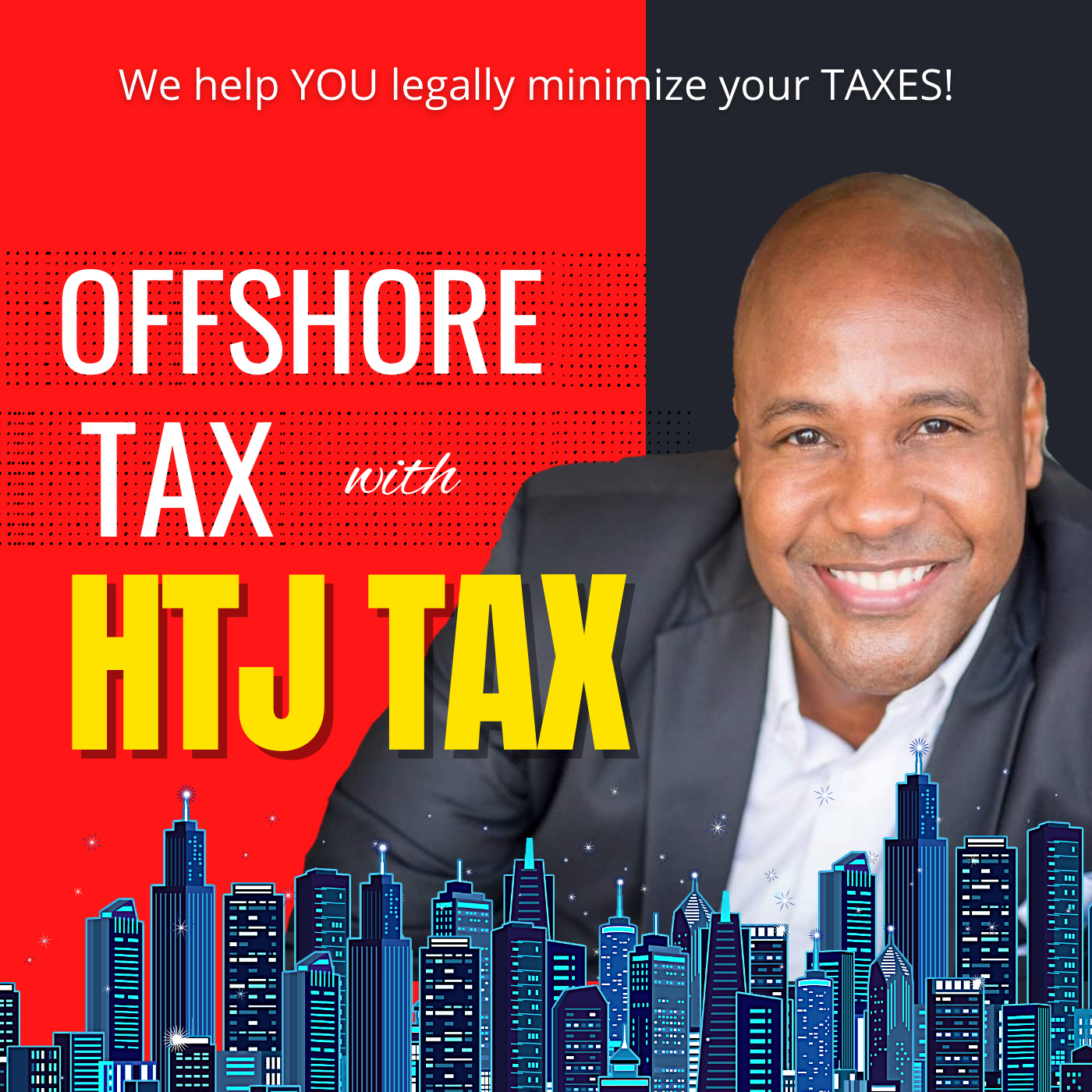
Offshore Tax with HTJ.tax
- Updated daily, we help 6, 7 and 8 figure International Entrepreneurs, Expats, Digital Nomads and Investors legally minimize their global tax burden and protect their wealth.- Join Amazon best selling author, Derren Joseph, in exploring the offshore financial world. Visit www.htj.tax
Author
htjtax
Category
Podcast website
Latest episode
Jul 11, 2026
Where to listen?
Podcasts in the app Replaio Radio Coming soonPodcasts are coming to the app soon. Install now and be the first to see a whole new take on podcasts
 Install for free
Android 5M+ downloads · 4.8 rating
iOS soon
Install for free
Android 5M+ downloads · 4.8 rating
iOS soon
Episodes
Is It Illegal to Avoid FATCA? 01.10.2025 5:16
Owning foreign accounts or assets isn’t illegal, and it’s not inherently unlawful to fall outside FATCA’s scope. The real issue is knowing what counts as a reportable asset and making sure you’re not failing to disclose something that is covered. FATCA is primarily an information-reporting regime. For individuals, this means filing Form 8938 (Statement of Specified Foreign Financial Assets) if the...
What Is an Expanded Affiliated Group (EAG) in FATCA 30.09.2025 5:20
An Expanded Affiliated Group (EAG) is defined under Code section 1504(a) and Treas. Reg. §1.1471-5(i). It generally means one or more chains of entities connected through ownership by a common parent. Normally, the parent must directly own more than 50% of another member’s stock or equity interests. In FATCA, the EAG rules are designed to prevent avoidance of reporting obligations. The “one bad ap...
CRS vs FATCA: Open Loopholes 29.09.2025 4:53
Between 2017 and 2019, the OECD published FAQs and addendums to CRS to close loopholes—such as residence by investment, broad-based retirement plans, nil-value reporting on settlors, and the treatment of cash. FATCA, however, never addressed these loopholes. Eventually, the OECD abandoned the “whack-a-mole” approach and instead introduced Mandatory Disclosure Rules (MDR). But MDR was largely ineff...
Non-Participating Financial Institutions - FATCA vs CRS 28.09.2025 3:23
CRS and FATCA treat non-participating institutions very differently. Under CRS, non-participating Investment Entities are classified as Passive NFEs, meaning the paying agent must look through to the controlling persons. FATCA, on the other hand, penalizes non-participating FFIs that fail to register for a GIIN by imposing a 30% withholding tax on U.S.-sourced payments like dividends, interest, or...
The Major Flaw in CRS and FATCA 27.09.2025 3:23
Financial institutions do not report on account holders that are themselves financial institutions. This enables chains of entities, with each level classified as a financial institution. The weakness of AEoI arises when the top-level entity is a non-participating financial institution. FATCA and CRS only weakly address this vulnerability, leaving opportunities to establish structures that remain...
UAE Foundations 26.09.2025 1:03
The UAE has become a leading hub for Foundations, especially in DIFC, ADGM, and RAK ICC. These structures blend trust-like asset protection with company-style governance, making them ideal for families and businesses. A Foundation is a distinct legal entity with no shareholders, governed by a Council through its Charter and private By-laws. Assets are contributed by a Founder, with an optional Gua...
UK Trust Structures - Privacy and Asset Protection 25.09.2025 0:56
UK trust structures offer unique privacy and asset protection benefits. Unlike the FATF model, the UK relies on the Person of Significant Control (PSC) framework, often recording trustees as controllers instead of settlors or beneficiaries. Non-UK and UK non-resident trusts usually avoid registration with HMRC or the Trust Registration Service, except in limited cases. When layered with tools like...
The Legal Test for a Sham Trust 24.09.2025 3:51
A sham trust occurs when a trust exists on paper but is not intended to operate genuinely. Key indicators include the settlor retaining excessive control, treating trust assets as personal property, lack of trustee independence, and abuse of fiduciary duties. A landmark example is the New Zealand case Clayton v Clayton , where the Supreme Court emphasized that proving a sham trust is challenging b...
Offshore Financial Centers - 4 Take-aways 23.09.2025 8:11
Offshore jurisdictions remain an important part of global finance, offering tax efficiency, privacy, and asset protection. But evaluating them requires more than just looking at low taxes. Four key factors stand out: Reputation: The strongest jurisdictions avoid blacklists and align with international standards, like Singapore, Hong Kong, and New Zealand. Banking: A stable, globally connected bank...
Ranking Offshore Jurisdictions: Criteria and Realities 22.09.2025 14:12
Offshore jurisdictions are often associated with secrecy and tax advantages—but the reality is more nuanced. These countries and territories provide favorable regulations, low or zero taxes, and enhanced privacy for non-residents. They can deliver clear benefits such as reduced tax burdens, asset protection, regulatory flexibility, and streamlined business structures. Common examples include the B...
The Global Financial Centres Index (GFCI) 21.09.2025 7:44
The Global Financial Centres Index (GFCI) is one of the most influential benchmarks for evaluating financial hubs worldwide. GFCI 37 ranked 119 centres, drawing on 140 instrumental factors from institutions like the World Bank, OECD, and United Nations—alongside over 31,000 assessments from nearly 5,000 respondents. Produced by the China Development Institute (Shenzhen) and Z/Yen Partners (London)...
Comparing the New Zealand Foreign Tax Exempt Trust 20.09.2025 10:57
New Zealand’s tax system treats trusts according to the residence of the settlor. Under section CW 54 of the Income Tax Act 2007, resident trustees can access an exemption for foreign-sourced income if they meet the criteria in section HC 26. Following the 2016 Government Inquiry into Foreign Trust Disclosure Rules, New Zealand introduced stricter requirements—formal registration, greater disclosu...
Getting a Madagascar Residence Permit? - Avoid Shortcuts in Legal Processes 19.09.2025 1:36
When applying for a residence permit in Madagascar, avoid shortcuts that could cost you time and money. Always start with official government sources for accurate forms and requirements. If you need assistance, hire a licensed immigration lawyer rather than unregulated agents, and always verify their credentials. Above all, be completely truthful in your application. Disclosing everything—good and...
Banking in Madagascar Overview 18.09.2025 1:20
Madagascar’s banking sector is small but highly concentrated. Of the 13 commercial banks, 11 are subsidiaries of foreign institutions, with four banks accounting for 86% of loans as of January 2025. Key players include AccessBanque, Bank of Africa Madagascar, BMOI, BNI Madagascar, MCB Madagascar, and Société Générale Madagasikara. Many maintain correspondent relationships with U.S. banks like Citi...
Madagascar – Social Charges 17.09.2025 2:35
In Madagascar, the Caisse Nationale de Prévoyance Sociale (CNaPS) oversees social security contributions for both private and public sector employees. Contributions are based on a percentage of gross salary, shared by employer and employee, and subject to a monthly ceiling. These funds support four key areas: family benefits, pensions, occupational risks, and health insurance.
Personal Income Tax in Madagascar 16.09.2025 2:47
Madagascar does not use a progressive income tax system like many Western countries. Instead, it relies on withholding and presumptive taxes. Employees are taxed through IRSA (withholding on salaries), while self-employed individuals and small businesses often fall under a presumptive regime. Investment income is subject to flat withholding rates—10% on dividends and 15% on interest. Capital gains...
VAT in Madagascar Explained 15.09.2025 1:52
Episode Description: VAT—known locally as Taxe sur la Valeur Ajoutée (TVA)—is one of the most important indirect taxes in Madagascar. In this episode, we break down how VAT works, who needs to register, and what businesses need to know to stay compliant. What You’ll Learn in This Episode: 💡 Standard VAT Rate & Principles Rate: 20% on most goods and services. Scope: Applies to supplies of good...
Corporate Income Tax in Madagascar 14.09.2025 1:51
Understanding Madagascar’s corporate tax framework is essential for both local entrepreneurs and international investors. In this episode, we break down the corporate income tax (CIT) rules, the synthetic tax regime (IS), and how compliance works in practice—so you can plan, operate, and grow with clarity. What You’ll Learn in This Episode: 💼 General Corporate Income Tax (CIT) Standard Rate: 20%...
Compliance Rules for SA Entities in Madagascar 13.09.2025 1:47
Operating a Société Anonyme (SA) in Madagascar comes with a comprehensive compliance framework. In this episode, we break down the legal, financial, and administrative obligations that SA companies must meet—covering audits, tax reporting, and governance requirements—to help business owners stay compliant and avoid costly penalties. What You’ll Learn in This Episode: 📊 Audit and Financial Reporti...
SA vs. SARL in Madagascar: Key Differences 12.09.2025 1:54
Choosing the right business structure in Madagascar can make a huge difference for growth, liability, and compliance. In this episode, we compare SARL (Limited Liability Company) and SA (Public Limited Company) , breaking down their key differences, advantages, and when each is most suitable. What You’ll Learn in This Episode: 📌 SARL (Société à Responsabilité Limitée – Limited Liability Company)...
SARL, SA, and Civil Companies in Madagascar 11.09.2025 2:38
Starting a business in Madagascar begins with choosing the right legal structure. In this episode, we break down the three most common company types— SARL, SA, and SCI —highlighting their advantages, requirements, and compliance obligations so you can make an informed decision. What You’ll Learn in This Episode: 📌 SARL (Société à Responsabilité Limitée – Limited Liability Company) Ideal for small...
Investor Visa Madagascar: Key Tips from an Accountant 10.09.2025 2:29
Applying for Madagascar’s investor visa is just the first step—staying compliant with local regulations is where many expats face their biggest challenges. In this episode, we highlight the critical risks of going it alone and why working with qualified accountants and advisors is essential for protecting your investment. What You’ll Learn in This Episode: 💰 Financial Risks How non-compliance can...
Helping Foreigners Do Business in Madagascar 09.09.2025 1:03
Doing business in Madagascar as a foreigner comes with unique financial, tax, and compliance challenges. In this episode, we explore the critical role accountants play in guiding international companies—ensuring compliance, maintaining transparency, and supporting strategic growth. What You’ll Learn in This Episode: 📊 Financial Reporting How accountants prepare statements under Madagascar’s PCG 2...
Owning Property in Madagascar as a Foreigner 08.09.2025 3:19
What You’ll Learn in This Episode: 🏠 Ownership Restrictions Foreigners cannot own land outright (freehold) in Madagascar. Why property ownership remains politically and legally sensitive. 📜 Option 1: 99-Year Emphyteutic Lease The most common solution for foreign investors. How this long-term, renewable lease offers security similar to ownership. 🏢 Option 2: Local Company Ownership Setting up a...
Exploring Madagascar: Where to Begin 07.09.2025 5:44
Madagascar is unlike anywhere else on Earth—home to unique wildlife, otherworldly landscapes, and rich cultural experiences. In this episode, we highlight the must-see destinations for anyone planning their first journey across the island, from lush rainforests to sun-soaked beaches. What You’ll Discover in This Episode: 🌿 National Parks Andasibe-Mantadia : Famous for its lemurs, including the ic...
Similar podcasts







Listen to the Offshore Tax with HTJ.tax podcast in Replaio
Radio and podcasts in one app - free, with no sign-up. Install today and do not miss the launch
Replaio is not a podcast publisher; show names, artwork and audio belong to their authors and are distributed through public RSS feeds.