
Yehuda Geberer
Jewish History Soundbites
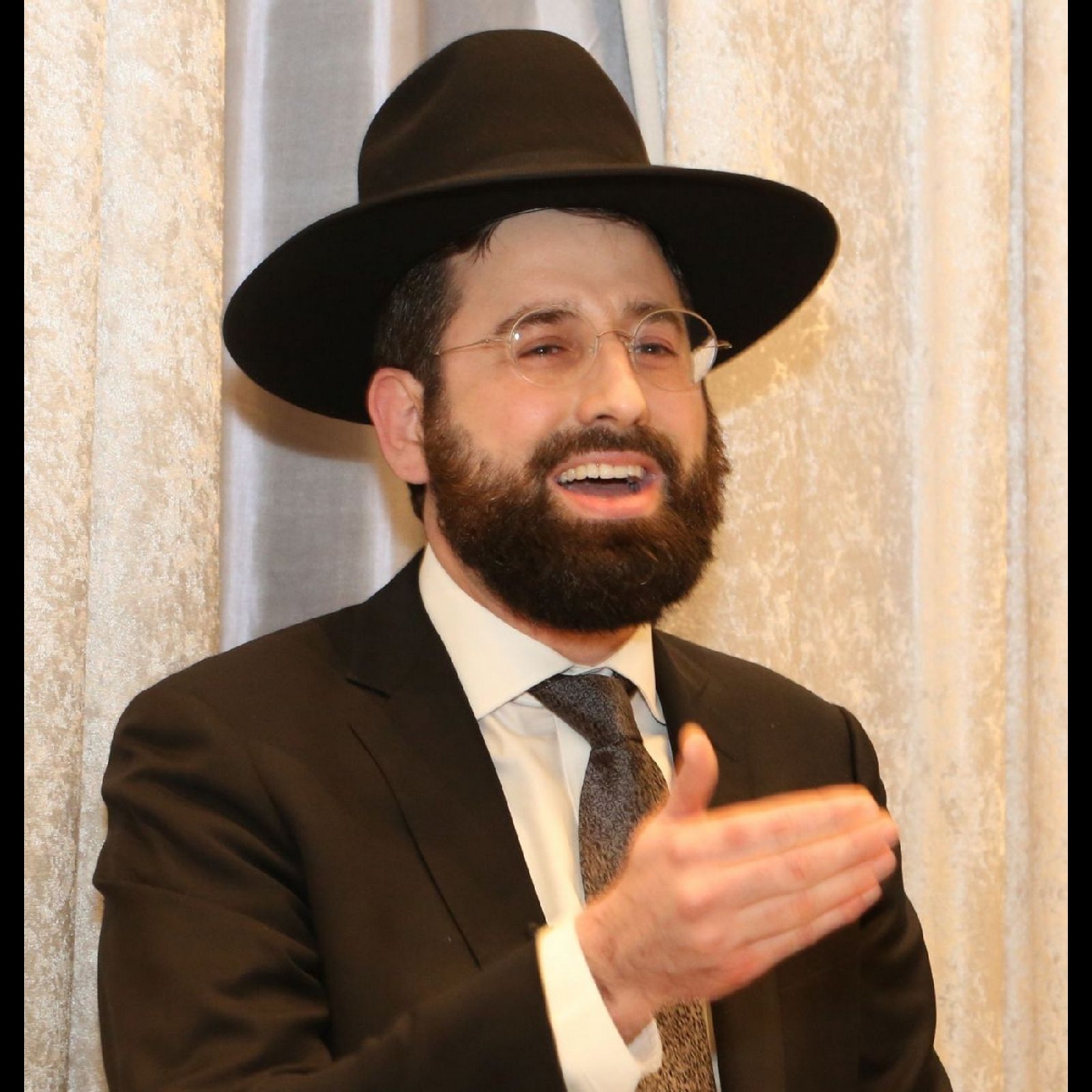
Listen to noted Tour Guide, Lecturer and Yad Vashem Researcher of Jewish History Yehuda Geberer bring the world of pre-war Eastern Europe alive. Join in to meet the great personages, institutions and episodes of a riveting past. For speaking engagements or tours in Israel or Eastern Europe Yehuda@YehudaGeberer.com
Author
Yehuda Geberer
Category
Podcast website
Latest episode
Jul 7, 2026
Where to listen?
Podcasts in the app Replaio Radio Coming soonPodcasts are coming to the app soon. Install now and be the first to see a whole new take on podcasts
 Install for free
Android 5M+ downloads · 4.8 rating
iOS soon
Install for free
Android 5M+ downloads · 4.8 rating
iOS soon
Episodes
The Tzadik of Shtefanesht 29.07.2024 51:00
Rav Avraham Matisyahu Friedman of Shtefanesht (1849-1933) was a grandson of Rav Yisrael Friedman of Ruzhin, leader of the Shtefanesht Chassidic dynasty for 65 years, and one of the most important rabbinical figures in Romanian Jewry during his lifetime. Though mysterious in his silent ways, he held sway over thousands who sought his advice and blessing, influencing the wider community well beyond...
Haskala in 19th Century Imperial Russia Part II 16.07.2024 43:15
The Jewish enlightenment movement – known as the Haskala, endeavored to implement changes within the Jewish communal structure in the modern era. Though the haskala in its many manifestations existed in many countries in the modern era, this episode will focus on the haskala in 19th century Czarist Russia. Throughout the 19th century, the haskala grew into somewhat of a movement, and promulgated i...
Haskala in 19th Century Imperial Russia Part I 14.07.2024 43:33
The Jewish enlightenment movement – known as the Haskala, endeavored to implement changes within the Jewish communal structure in the modern era. Though the haskala in its many manifestations existed in many countries in the modern era, this episode will focus on the haskala in 19th century Czarist Russia. Throughout the 19th century, the haskala grew into somewhat of a movement, and promulgated i...
Karaite Jews in Czarist Russia 03.07.2024 41:04
Though never large in number, the Karaite communities of Russia are an interesting side chapter in Russian Jewish history. Residing primarily in the Crimean Peninsula, with communities in Ukraine, Poland and Lithuania, the Czarist government recognized the Karaites as distinct from Rabbinic Jews. Due to this recognition and intense lobbying efforts, the Karaite community was gradually absolved fro...
Tourbites: The Life & World of the Shach - Rav Shabsai Hakohen 15.06.2024 33:53
Rav Shabsai Hakohen (1621-1663) was the author of one of the most important halachic works ever written, the Shach (Sifsei Kohen). His last rabbinical position and burial place in Holesov, Czechia, is a popular stop on Jewish history tours of Europe, along with the well preserved 16th century shul which served that community for centuries. On this episode of Jewish History Tourbites-Soundbites, we...
Tribute Episode: Rav Meir Wunder 13.06.2024 42:36
The recent passing of Rav Meir Wunder (1934-2024) is an opportunity to pay tribute to this great man and his vast accomplishments as a historian, scholar and pioneer tour guide to Europe. Having attended Ponovezh Yeshiva in its early years, and gained a closeness with the Chazon Ish and many other Torah leaders of his time, he embarked on a career as a librarian. He eventually served as a libraria...
Non-Ashkenazi Jews in Czarist Russia 18.05.2024 46:22
Far from the Pale of Settlement, the Jews of Georgia, Bukhara, the Caucasus (Mountain) Jews, and other Jewish communities of Central Asia, found themselves under the jurisdiction of the Russian Empire over the course of the 19th century. These ancient Jewish communities had been under the influence of their Muslim surroundings for centuries, when through a series of conquests, they now found thems...
The Machine Matzah Controversy 21.04.2024 47:43
The Industrial Revolution brought the mechanization of manual labor, and this reached the matzah baking industry in the mid-19th century. Although it was initially accepted in Western Europe, when it arrived in Galicia in 1857, it sparked a controversy between leading rabbinical authorities regarding the permissibility of its use. Tracing the development of the stages of this dispute leads one to...
Beyond the Pale: Russian Jewry outside the Pale of Settlement 14.04.2024 50:20
The Russian Czarist government restricted Russian Jewry to the western provinces of the empire through a series of legislative acts, which came to be known as the Pale of Settlement. Starting in the 1850’s, provisions were enacted which enabled certain types of Jews to reside outside the Pale. Wealthy merchants, those with academic degrees, certain kinds of military veterans and craftsman, were gr...
The Yeshiva Elite in 19th Century Lithuania 28.03.2024 47:44
A dominant feature of religious life of the 20th century has been the centrality of the Yeshiva institution for intensive Torah study. The modern yeshiva is a direct byproduct of its antecedents in the Russian Empire of the 19th century. The old oligarchy which controlled Jewish communal life in Eastern Europe for centuries, was a combination of the rabbinical and financial elite. The personality...
Censorship in Czarist Russia 09.03.2024 43:47
The Czarist government implemented a policy of censorship of all published material in the empire, whether it was imported or printed locally. Though this was a general policy, there were unique particularities regarding the censorship of Jewish works. In the early years following the partitions of Poland, there wasn’t an effective mechanism of censoring in place, and it was only in 1826 when cens...
Cantonists & The Czarist Military (+ Recap of a Trip to Ashkenaz/Germany) Featuring Dovi Safier 03.03.2024 1:12:30
In 1827 Czar Nicholas I implemented the military draft on the Jewish community of Russia as a means of integrating Jews into Russian society. The Jewish kahal was required to supply the young recruits, who then generally served for 25 years in the Czar’s army. The most infamous element of the draft was the cantonists. These were a select group of future draftees who were taken at a younger age to...
The Chassidic Movement in the Russian Empire 20.02.2024 50:32
The cradle of the Chassidic movement was in the areas of the Polish Kingdom which were soon annexed to the Russian Empire during the partitions of Poland in the last quarter of the 18th century. This took place just as the nascent movement was spreading rapidly throughout these areas and beyond. Chabad in White Russia, the various branches of the Chernobyl and Ruzhyn dynasties in Ukraine, Karlin,...
Russian Jewry under the Czars 1881-1914 12.02.2024 44:36
The aftermath of the assassination of Czar Alexander II in 1881 was a watershed time period in Russian Jewish history. A reactionary phase led to the passing of the infamous May Laws which restricted Jewish life, and reversed many of the previous reforms. A series of violent pogroms broke out primarily in Ukraine and southern Russia in 1881-1884. There was a mass expulsion of Jews from Moscow and...
Russian Jewry under the Czars 1772-1881 03.02.2024 44:58
From the time of the first partition of Poland in 1772, until the Russian Revolution in 1917, the Czarist Russian Empire was host to the largest Jewish population in the world. The generally antisemitic Romanov dynasty early on formulated solutions to what they referred to as the ‘Jewish question’. Based on the twin themes of subjugating the Jewish populace with a series of discriminatory and rest...
Galician Greatness: Rav Shlomo Kluger 27.01.2024 30:25
World renowned posek of the 19th century, prolific author and courageous leader, Rav Shlomo Kluger (1785-1869) achieved immortality in the Torah world through his nearly half century tenure as Magid and Av Beis Din in the prominent Galicia town of Brody. As political and economic changes swept through the Habsburg Empire over the course of the 19th century, traditional norms changed, technological...
The Legacy & Impact of Rabbi Samson Raphael Hirsch 18.01.2024 45:56
As the architect of Orthodoxy in the modern era, Rabbi Samson Raphael Hirsch (1808-1888) has an outsized impact on the Torah world until this very day. In his own lifetime his leadership of German Jewry overall and in particular his own community of Frankfurt stemmed the tide towards secularization, and created a framework for a flourishing Torah community within modern life. His seminal works of...
The Life & Legacy of the Aruch Hashulchan 11.01.2024 46:12
One of the leading halachic authorities of the 19th century, Rav Yechiel Michel Epstein (1829-1908) achieved immortality through his indispensable magnum opus Aruch Hashulchan. He grew up in Bobruisk in the Russian Pale of Settlement, and served for a decade as rabbi of Novozybkov, before assuming the helm of the prestigious Novardok community, where he’d serve as rabbi for the remaining 34 years...
A Dream to Rebuild: The Early Years of Ponovezh Yeshiva 02.01.2024 45:42
After losing his family, community and yeshiva in Ponovezh, Lithuania during the Holocaust, Rav Yosef Shlomo Kahaneman (1886-1969), the Ponovezh Rav, endeavored to rebuild what was lost in the Land of Israel. He was a dreamer who carried out his vision with a zeal and energy which seemed superhuman. His crowning achievement was rebuilding the beloved yeshiva he lost in his hometown, by establishin...
The Machal Fighters of 1948 23.12.2023 46:31
A special place in Jewish history is reserved for the Machal fighters of 1948. These were primarily World War II veterans, who volunteered to fight for Israel during its War of Independence, and their participation served a key role in Israel’s victory. Comprised mostly of Jews, but included non-Jews as well, they formed the nucleus of Israel’s nascent air force, navy, and filled many specialized...
The Great Shanghai Escape Part X 16.12.2023 47:30
In this final installment of ‘The Great Shanghai Escape’ series, we explore the story of the refugees stay in Shanghai during the war years. While integrating with the local Jewish community in Shanghai, the refugees remained there for the duration of the Japanese occupation until and even beyond the end of the war. Educational, religious and social institutions flourished, and the Mir Yeshiva set...
The Great Shanghai Escape Part IX 09.12.2023 44:32
The refugees stay in Japan lasted much longer than their brief transit visas had initially allowed for, with the imperial government allowing them to remain for several months. Though some refugees made it to the United States or other countries, most had nowhere to go. With the Japanese government commencing the operational planning for Pearl Harbor, they wished to rid the country of all foreign...
The Great Shanghai Escape Part VIII Featuring Dovi Safier 02.12.2023 1:00:32
As part of our ongoing series about the Great Shanghai Escape, I had a conversation with my friend and collaborator Dovi Safier, who is a known expert on this topic, as well as having done some original research highlighting new angles of the narrative. Prior to getting to the topic at hand, our conversation covered recent history discoveries related to the family of the Slabodka Yeshiva, bearing...
The Great Shanghai Escape Part VII 28.11.2023 41:55
The Soviets charged the refugees exorbitant fees for the exit visas and travel expenses. The Joint and the Vaad Hatzalah provided funds for these costs, with Rav Avraham Kalmanowitz investing herculean efforts to ensure the Mir contingent were able to fund their escape. Many refugees sold their personal belongings. They then embarked on a 10-12 day train journey on the Trans-Siberian Railroad acro...
The Great Shanghai Escape Part VI 19.11.2023 44:47
Once one was in possession of a destination visa, came the most challenging phase of the escape – applying for a Soviet exit visa. Applying for an exit visa from the ‘communist paradise’ was potentially requesting for a one way ticket to Siberia. Despite the risks involved, thousands of refugees applied, and miraculously received a visa. The entire process had to be funded, and refugees received f...
Similar podcasts






Listen to the Jewish History Soundbites podcast in Replaio
Radio and podcasts in one app - free, with no sign-up. Install today and do not miss the launch
Replaio is not a podcast publisher; show names, artwork and audio belong to their authors and are distributed through public RSS feeds.
