Immediate
HistoryExtra podcast
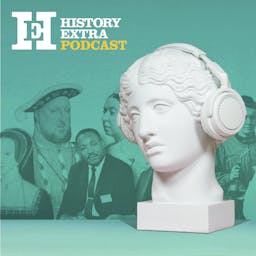
The HistoryExtra podcast brings you gripping stories from the past and fascinating historical conversations with the world's leading historical experts. HistoryExtra is a free history podcast, with episodes released six times a week. Subscribe now for the real stories behind your favourite films, TV shows and period dramas, as well as compelling insights into lesser-known aspects of the past. We delve into global history stories spanning the ancient world right up to the modern day. You’ll hear deep dives into the lives of famous historical figures like Cleopatra, Anne Boleyn and Winston Ch...
Where to listen?
Podcasts in the app Replaio Radio Coming soonPodcasts are coming to the app soon. Install now and be the first to see a whole new take on podcasts
 Install for free
Android 5M+ downloads · 4.8 rating
iOS soon
Install for free
Android 5M+ downloads · 4.8 rating
iOS soon
Episodes
Measurement: an unexpected history 09.08.2022 49:09
From weight and distance, to calorie-counting and calculating the depths of space, throughout history, humans have loved to measure things. Speaking to Elinor Evans, James Vincent – author of Beyond Measure – uncovers some fascinating and unexpected stories from the history of measurement. (Ad) James Vincent is the author of Beyond Measure: The Hidden History of Measurement (Faber & Faber, 2022)....
15 minutes of fame: Alice Kinloch, Pan-African activist 08.08.2022 19:19
It’s the HistoryExtra podcast’s 15th birthday! To celebrate, we’ve asked 15 historians to nominate a figure from history they think deserves their ‘15 minutes of fame’. In this episode, Professor Hakim Adi nominates Alice Kinloch. Speaking with Rhiannon Davies, he describes how this impassioned South African political campaigner travelled around Britain, and was determined to reveal the brutality...
First World War poets: everything you wanted to know 07.08.2022 41:50
How much has our view of the First World War – one of mud, trenches and futility – been shaped by the work of a handful of poets? How did the British public respond to poems criticising the war effort? And why have some war poets been remembered, while others have been forgotten? In our latest ‘Everything you wanted to know’ episode, the University of Exeter’s Professor Catriona Pennell answers li...
Stalingrad: a soldier’s testimony 05.08.2022 53:20
Author Iain MacGregor reveals how the unpublished memoirs of a German officer shed fascinating new light on the battle of Stalingrad. Speaking with Rob Attar, Iain explains how Fritz Roske’s accounts add to our knowledge of this key turning point in the Second World War. (Ad) Iain MacGregor is the author of The Lighthouse of Stalingrad: The Hidden Truth at the Centre of WWII's Greatest Battle (Con...
Medieval monks: a day in the life 04.08.2022 40:52
Danièle Cybulskie charts a day in the life of a medieval monk, from morning rituals and mealtime misbehaviour to daily chores and worldly reflection. Speaking with Emily Briffett, she explores what such an austere and structured lifestyle might be able to teach us today – and how monastic priorities about health and wellbeing weren’t too different from our own. (Ad) Danièle Cybulskie is the author...
Gone with the Wind: how a 1936 novel explains modern America 03.08.2022 47:30
Professor Sarah Churchwell discusses her new book The Wrath to Come, which re-examines the controversial legacy of Margaret Mitchell’s immensely popular 1936 novel Gone With The Wind. Speaking with Rachel Dinning, she considers what it can tell us about American history and culture today, from the mythmaking that sprung up following the Civil War to the origins of modern debates over racism and th...
Treason: from Anne Boleyn to Lord Haw Haw 02.08.2022 45:58
Professor Mark Cornwell charts the history of treason in Britain. He tells Kev Lochun how a handful of high profile cases – from Anne Boleyn and the gunpowder plotters to Lord Haw Haw – can shed light on the evolving nature of individual rights versus the power of the state. Hosted on Acast. See acast.com/privacy for more information. Learn more about your ad choices. Visit podcastchoices.com/adch...
15 minutes of fame: St Wilfrid, quarrelsome church reformer 01.08.2022 24:01
It’s the HistoryExtra podcast’s 15th birthday! To celebrate, we’ve asked 15 historians to nominate a figure from history they think deserves their ‘15 minutes of fame’. In this episode, Dr Marc Morris nominates St Wilfrid. Speaking with Emily Briffett, he reveals the extraordinary life of the early medieval saint and religious reformer. Hosted on Acast. See acast.com/privacy for more information....
Gold rushes: everything you wanted to know 31.07.2022 53:46
Stephen Tuffnell answers listener questions on the series of gold rushes that captivated the imaginations of hordes of prospectors in the 19th century. Speaking to Ellie Cawthorne, he explores what drew people to remote gold fields, what life was like in mining camps, and how gold rushes transformed economic, ecological and social landscapes. Hosted on Acast. See acast.com/privacy for more informa...
Reconstructing black lives in the Antebellum South 29.07.2022 30:16
As part of our series of conversations with winners of the 2022 Dan David Prize, Dr Kimberly Welch talks to Helen Carr about her research using legal records to reconstruct the lives of free and enslaved black people in the Antebellum South. The Dan David Prize is the world's largest history prize, which recognizes outstanding historical scholarship. Find out more at dandavidprize.org. Hosted on A...
The end of Roman Britain | 8. ends and beginnings 28.07.2022 32:56
In the final episode of the series, David Musgrove wraps up what we’ve learnt from our experts about how Britain moved out of the orbit of the Roman empire in the 5th century. He also considers how some modern parallels might help us get a handle on what life was like for those living at the time, and looks forward to some exciting possibilities for future research. Hosted on Acast. See acast.com/...
Hannibal: Rome’s greatest nightmare 27.07.2022 34:32
Philip Freeman shares the story of how the brilliant Carthaginian general Hannibal led his elephants over the Alps and into Rome’s nightmares, making his name a byword for terror for centuries. Speaking to Spencer Mizen, he reveals how Hannibal outfoxed his mortal enemy, only to throw it all away. (Ad) Philip Freeman is the author of Hannibal: Rome’s Greatest Enemy (Pegasus, 2022). Buy it now from...
Stalin’s library: inside the mind of a dictator 26.07.2022 41:53
Historian Geoffrey Roberts explores the life and career of Josef Stalin through his vast book collection. In conversation with Rob Attar, Professor Roberts highlights some of the unexpected items on the Soviet dictator's shelves and explains the influence that reading had on his brutal regime. (Ad) Geoffrey Roberts is the author of Stalin's Library: A Dictator and his Books (Yale University Press,...
15 minutes of fame: Queen Tiye, overshadowed ancient Egyptian royal 25.07.2022 17:35
It’s the HistoryExtra podcast’s 15th birthday! To celebrate, we’ve asked 15 historians to nominate a figure from history they think deserves their ‘15 minutes of fame’. In this episode, Professor Joyce Tyldesley nominates the ancient Egyptian Queen Tiye. Speaking with Ellie Cawthorne, she considers how the queen consort and queen mother has previously been overlooked, despite playing an important...
The partition of India: everything you wanted to know 24.07.2022 34:36
For the latest in our everything you want to know series, historian Dr Anwesha Roy revisits the 1947 partition of India, which divided British-ruled India into two independent countries. In conversation with Rob Attar she explains how India came to be divided and considers why the process was accompanied by such terrible violence and suffering. Hosted on Acast. See acast.com/privacy for more infor...
The BBC at 100: scandals break 22.07.2022 52:15
In the penultimate episode of our series marking the centenary of the BBC, David Hendy looks back at some of the scandals surrounding the corporation across the past two decades – both new and historical – and what they tell us about its relationship with politics and the public. Hosted on Acast. See acast.com/privacy for more information. Learn more about your ad choices. Visit podcastchoices.com...
The end of Roman Britain | 7. bones, diet and migrants 21.07.2022 44:34
In this episode, we talk to Dr Sam Leggett, an expert in archaeological bone analysis, about the latest fascinating research with stable isotopes, to find out what the bones of burials from the 5th century can tell us about how much people were moving around and what they were eating in post-roman Britain Hosted on Acast. See acast.com/privacy for more information. Learn more about your ad choices...
The first Vietnam War 20.07.2022 44:27
Historian Christopher Goscha explores the decade-long conflict between the French empire and Ho Chi Minh’s communist Vietnamese forces that followed the Second World War. Speaking to Rob Attar, he argues that the Vietnamese triumph was unlike any other anti-colonial struggle of the era. (Ad) Christopher Goscha is the author of The Road to Dien Bien Phu: A History of the First War for Vietnam (Prin...
Powerful pages: the beguiling history of books 19.07.2022 34:38
For centuries, humanity has had a love affair with books. But these volumes are far more than just receptacles for stories. They have been tools to spread religion and empire, and have contained dangerous politics and talismanic protections. Emma Smith tells Rhiannon Davies about our complex relationship with the printed word. (Ad) Emma Smith is the author of Portable Magic: A History of Books and...
15 minutes of fame: Marie Tharp, ground-breaking cartographer 18.07.2022 22:35
It’s the HistoryExtra podcast’s 15th birthday! To celebrate, we’ve asked 15 historians to nominate a figure from history they think deserves their ‘15 minutes of fame’. In this episode, Professor Jerry Brotton nominates Marie Tharp. Speaking with Dave Musgrove, he dives into the life of the pioneering geologist and ocean cartographer and explores her remarkable legacy. Hosted on Acast. See acast.c...
The Inca empire: everything you wanted to know 17.07.2022 58:08
What did an ordinary day in the Inca empire look like? How did the Inca count using knots? And why were stones so sacred to the civilization? In conversation with Emily Briffett, Bill Sillar answers listener questions on the mighty empire which dominated swathes of land in South America. Hosted on Acast. See acast.com/privacy for more information. Learn more about your ad choices. Visit podcastcho...
The vanishing inventor 15.07.2022 43:18
On 16 September 1890, inventor Louis Le Prince boarded a train to Paris and vanished without a trace. In his book The Man Who Invented Motion Pictures, Paul Fischer explores his life and disappearance. Speaking to Ellie Cawthorne, he delves into the many theories about what may have happened Le Prince – from an accident or mugging, to murder by his rival Thomas Edison in order to steal his latest...
The end of Roman Britain | 6. cultures lost and found 14.07.2022 42:47
In episode six of our podcast series on the end of Roman Britain, Professor Robin Fleming speaks to David Musgrove about how far the archaeological evidence and the documentary sources agree – or disagree – about what happened as Britain moved away from the influence of the Roman empire. Hosted on Acast. See acast.com/privacy for more information. Learn more about your ad choices. Visit podcastcho...
Britain’s century of political nightmares 13.07.2022 39:53
From the First World War to the financial crash of 2008, Phil Tinline tells Spencer Mizen how politicians have reacted to the many crises that have beset Britain in the era since the rise of mass democracy. (Ad) Phil Tinline is the author of The Death of Consensus: 100 Years of British Political Nightmares (Hurst, 2022). Buy it now from Amazon: https://www.amazon.co.uk/Death-Consensus-British-Poli...
Royal rivals? Medieval England and France’s tempestuous relationship 12.07.2022 42:42
Catherine Hanley chronicles the greatest conflicts and alliances between England and France from 1100-1300, through the stories of the men, women and children involved. She explains to Emily Briffett how, in a time of personal monarchy, unexpected events, familial ties and personalities forged the fate of the two intertwined kingdoms. (Ad) Catherine Hanley is the author of Two Houses, Two Kingdoms...
Similar podcasts





Listen to the HistoryExtra podcast podcast in Replaio
Radio and podcasts in one app - free, with no sign-up. Install today and do not miss the launch
Replaio is not a podcast publisher; show names, artwork and audio belong to their authors and are distributed through public RSS feeds.