Pulse Crops Working Group
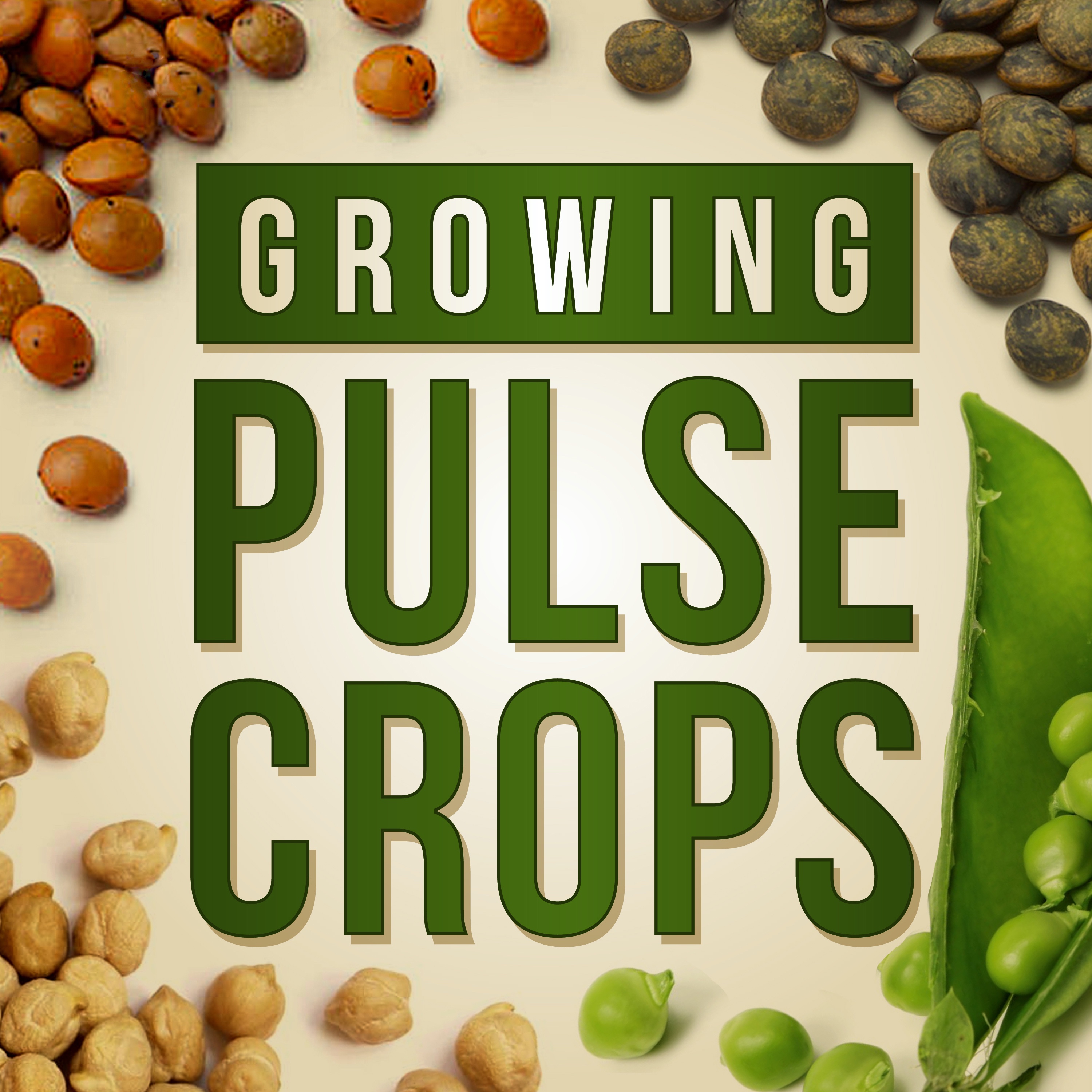
Growing Pulse Crops
This show features the latest in research, agronomy, and economics of pulse crops (peas, chickpeas, lentils, etc.). Demand for these nutrient-dense, high-protein foods continues to grow. There is also interest from farmers to include more pulses into diverse rotations for benefits like nitrogen fixation and soil health. But the industry continues to face challenges, and we are eager to address these head on. So if you’re a pulse grower or in any way interested in these important crops, hit subscribe and stay tuned for future episodes. We’ll be back with plenty of information about challenges p...
Be sure to visit the podcast's website and support the creator: growingpulsecrops.com
Author
Pulse Crops Working Group
Category
Podcast website
Latest episode
Sep 22, 2026
Where to listen?
Podcasts in the app Replaio Radio Coming soonPodcasts are coming to the app soon. Install now and be the first to see a whole new take on podcasts
 Install for free
Android almost 10M downloads · 4.8 rating
iOS soon
Install for free
Android almost 10M downloads · 4.8 rating
iOS soon
Episodes
Pulse Quality and an Update on MRLs with Todd Scholz 21.07.2021 23:43
On today’s episode we talk pulse crop quality standards and how residues and MRLs play a role in perceived quality from buyers and consumers around the world. Todd Scholz, vice president for research and member services at the USA Dry Pea and Lentil Council , joins us to discuss some of the nuances of MRLs (maximum residue limits) and what growers need to know to deal with the complex standards th...
Disease Detection Tools with Syama Chatterton, Ph.D. 30.06.2021 26:00
Dr. Syama Chatterton is a research scientist with Agriculture and AgriFood Canada in Lethbridge, Alberta. For the past 10 years, Dr. Chatterton’s work has focused on soilborne diseases and root rot pathogens of pulses. Today’s episode focuses on the tools Dr. Chatterton and her colleagues are developing to more accurately and efficiently test for disease presence in soils for pathogens like aphano...
Coordinated Research Efforts to Fight Pulse Pathogens with Dr. Jenny Davidson 10.06.2021 23:04
In this episode we meet Dr. Jenny Davidson, a pulse pathologist at South Australian Research Institute , or SARDI, in Adelaide, South Australia. Dr. Davidson works on diseases of lentils, chickpeas, field peas, and fava beans. She leads a team of a number of scientists and technicians working to keep pulse diseases under control in Australia. In 25 years of doing this work with pulse crops, she ha...
Organic Lentils and Building Timeless Seeds with Dave Oien 25.05.2021 31:08
Dave Oien is the Founding Farmer and President of Timeless Seeds . In this episode he reflects on decades of organic pulse crop production, breeding, handling, and marketing. He helped to pioneer the US market for growing pulses as an organic cash crop, then began selling seed to other farmers, and ultimately has grown a business of selling lentils, chickpeas, and other crops to consumers around t...
Curating Pulse Crop Genetics with Clare Coyne, Ph.D. 12.05.2021 23:03
In this episode, Dr. Clare Coyne , curator of the USDA cool season food legume collection in Pullman, Washington gives us a really fascinating look into this extensive collection. You’ll hear how the collection is curated, preserved and utilized to continue to provide high quality seed to researchers, and ultimately to farmers. The seeds are stored under refrigeration and controlled humidity as pa...
Including Pulses in a Rotation to Build Soil Health with Tony Wagner 29.04.2021 22:45
For the past 15 years, Tony Wagner has been on a journey to improve the soil health of his farmland, which runs the gamut from sandy to high clay. He’s located about 100 miles west of Fargo, so farther east than a lot of the North Dakota pulse growers, but he says they’ve worked well in his rotation. Tony shares how he got into pulses, why he’s stuck with them, how they fit into building soil heal...
Testing for Soil Pathogens and Rhizobia With Alan McKay, Ph.D. 13.04.2021 20:47
Dr. Alan McKay joins us all the way from Australia, to talk about some exciting work they are doing to measure various soil microbes including pathogens and beneficial rhizobia. Dr McKay is the Leader of the Soil Biology and Molecular Diagnostics group at the South Australian Research and Development Institute (SARDI). He is committed to not only studying soil-borne diseases and other aspect...
International Demand for Pulses 30.03.2021 31:38
We have a great discussion for you featuring Jeff Rumney , Vice President of Marketing at the USA Dry Pea and Lentil Council , Johanna Stobbs , who works to promote U.S. pulses in the European market, and Raul Caballero who represents U.S. pulses in Mexico and throughout Latin America. US Pulses are widely recognized and preferred in the global marketplace with lots of opportunity for growth...
Integrated Weed Management with Dr. Tim Seipel 17.03.2021 24:39
Dr. Tim Seipel joins us to talk about integrated weed management. Tim is a Cropland Weed Extension Specialist at Montana State University. In this episode, he’ll talk about the threat of weed resistance, how to think about weed management strategies, and some of the tactics they are working on to combat some of the most threatening weeds to pulse crops. “Integrated weed management is an appr...
Crop Insurance Considerations for Pulse Crops 02.03.2021 13:52
March 15th is the last day to complete enrollment for 2021 agriculture risk coverage and price loss coverage programs. Considering that day is coming up in less than two weeks from when this episode publishes, we thought we’d bring you a little bit of timely information about crop insurance in pulses. Steve Junghans is a risk management specialist at the USDA risk management agency regional...
Farm Planning and Budgeting Tools 16.02.2021 25:18
Today we consider the economic opportunities of adding pulse crops into your operations. Dan Folske is an extension agent in Burke County, North Dakota, which is in the northwest part of the state. He’s been there in that position for over 30 years, and a big part of what he does is work with farmers to establish budgets and utilize tools for business decisions. Dan’s going to share what he’s seei...
[Bonus] Panel on Pulse Grading 14.01.2021 35:28
Don’t forget to register today for the Northern Pulse Growers Association Annual Convention happening January 19th - 21st. You can get all the information over at www. NorthernPulse.com . In this panel we explore the advantages and challenges associated with the grading of pulse crops. While many producers grow frustrated by more criteria or hoops to jump through, our experts suggest that wi...
[Bonus] Equipment Considerations for Growing Pulses 12.01.2021 45:10
Paul Kanning led our panel on “Making Your Farm Equipment Work for you.” Paul is the MPCC Vice Chair as well as a producer from Flaxville, Montana. He was joined by Lowell Harris, a service manager at Torgerson’s LLC, Phil Moodie, a store manager for Front Line Ag, James Neumon, a service manager from Hoven Equipment Company and Mike Kjos, a store manager for C & B Operations. Needless to say,...
[Bonus] Intercropping Panel 08.01.2021 37:12
Dr. Mike Ostlie hosts a panel discussing the potential and process for intercropping with pulse crops. Dr. Ostlie is a research agronomist at NDSU Carrington REC. He leads us through a discussion with Justin Jacobs a Research Specialist at NDSU Williston REC, Dr. Chengci Chen a Cropping Systems Agronomist and Superintendent of the Montana State University Eastern Ag Research Center and Karl Mavenc...
[Bonus] Domestic & International Pulse Markets with Tim McGreevy 05.01.2021 12:31
**Register for the Northern Pulse Growers Association Annual Convention happening virtually January 19-21: https://www.northernpulse.com/events/conventions/ Today's episode was recorded live at the NPGA Montana Pulse Day Virtual Event in November. USA Dry Pea and Lentil Council CEO Tim McGreevy gave a presentation on domestic and international pulse markets, then opened the floor for some Q&A...
Fall Weed Control with Dr. Joe Ikley 06.10.2020 26:52
Please help provide feedback for the Growing Pulse Crops Podcast by completing our survey! Click the link here! We look forward to hearing from you! Dr. Joe Ikley is an Extension Weed Specialist at North Dakota State University and joins us to explain why fall weed control is crucial to best crop management. His extension responsibilities there include weed control on all row crops except for suga...
Postharvest in Chickpeas 23.09.2020 21:26
Can you tell the difference between a garbanzo bean and a chickpea? Neither can I. The bean is referred to as both so pick your favorite. Phil Hinrichs joins us from Hinrichs Trading Company to share his experiences with growing chickpeas and watching the industry grow. Initially chickpeas were mainly grown for export but in the last ten years have developed a domestic market that has really been...
Bringing Fall Sown Peas to Eastern Washington 08.09.2020 22:46
Not all crops are created equal. Sometimes, crops have the ability to contribute far more than their yield to an operation. Today we meet with Howard Nelson, a recently retired agronomist at Highline Grain Growers and Mark Sheffels a farmer who lives in Eastern Washington, the territory Howard once covered. During his career, Howard focused his efforts on finding another crop to work into a wheat...
Harvest Episode - Desiccation and an Update on Pulse Crop Markets 25.08.2020 26:27
Today in episode ten, we explore harvest aids with Dr. Drew Lyon from Washington State University. We also get an update on current pulse markets from Kevin Buxa of Halo Commodity Company based in Fargo, ND. If you’re new to pulse crops, they include crops such as field peas, chickpeas and lentils. This show follows some pulse crop farmers through the growing season and dives into the resear...
Pea Aphids and Pea Leaf Weevil 11.08.2020 24:27
Pulses require unique rotations, harvesting and inputs. To continue with this theme, they also have unique pest challenges. Today we are joined by Lance Lindbloom the Lead Agronomist for 406 Agronomy and Dr. Sean Prager an Assistant Professor at the University of Saskatchewan College of Agriculture and Bioresources Plant Science Department. “Our chickpeas are ones that are most bulletproof when it...
Intercropping 21.07.2020 24:11
Can intercropping pulses with other crops help with problems like disease pressure? That's what we explore on this episode. Farmer driven research at the Southeast Research Farm in Saskatchewan is a non-profit gift to farmers. Lana Shaw is the Research Manager there and has become the resident expert on intercropping specifically with flax and chickpeas. “Adding a small amount of flax to chickpeas...
Canadian Pulses and Foliar Disease Management 07.07.2020 24:26
Canada has long been a leader in pulse crop production. A lot of what we know and use in the United States comes from their experiences and research. We are joined today by Dale Risula. Dale is the Provincial Specialist for pulse crops and other specialty crops with the Ministry of Agriculture based in Saskatchewan and he echoes the significance of crop rotation in pulses. “If you grow any o...
Seed Treatments & Root Rots 23.06.2020 25:24
Farmer Lavern Johnson returns once again to share his insight with pulse crops. After 20 years of pulse crop farming, Lavern explained in episode 4 how root rot affected his ability to plant pulse crops for the next season. “As far as the root rot, the only management practice that I think I have going forwards is lengthening out the rotation.” - Lavern Johnson Research out of Canada suggests that...
Pulse Market Update & Understanding Rhizobia 09.06.2020 28:39
Pulse crops offer some great benefits to the farmers that pursue them. Today we will talk about the market opportunities pulse crops offer especially during current uncertain times in regards to the Covid Pandemic. We also discuss the benefits offered by the nitrogen fixing bacteria to the soil associated with these crops. Dr. Anton Bekkerman joins us from Montana State University to explain...
Resistance and In-Crop Herbicides in Pulses 27.05.2020 22:57
“It is difficult to find a chemistry that is safe on the crop, controls multiple weeds, is fairly easy to make, (and is) relatively inexpensive to make.” - Dr. Brian Jenks Creating, trialing and gaining an EPA approved label for herbicides with new mechanisms of action is an expensive, difficult process. It is unlikely we will see any new chemistries in the next year or two. Pulse growers are alre...
Similar podcasts







Listen to the Growing Pulse Crops podcast in Replaio
Radio and podcasts in one app - free, with no sign-up. Install today and do not miss the launch
Replaio is not a podcast publisher; show names, artwork and audio belong to their authors and are distributed through public RSS feeds.