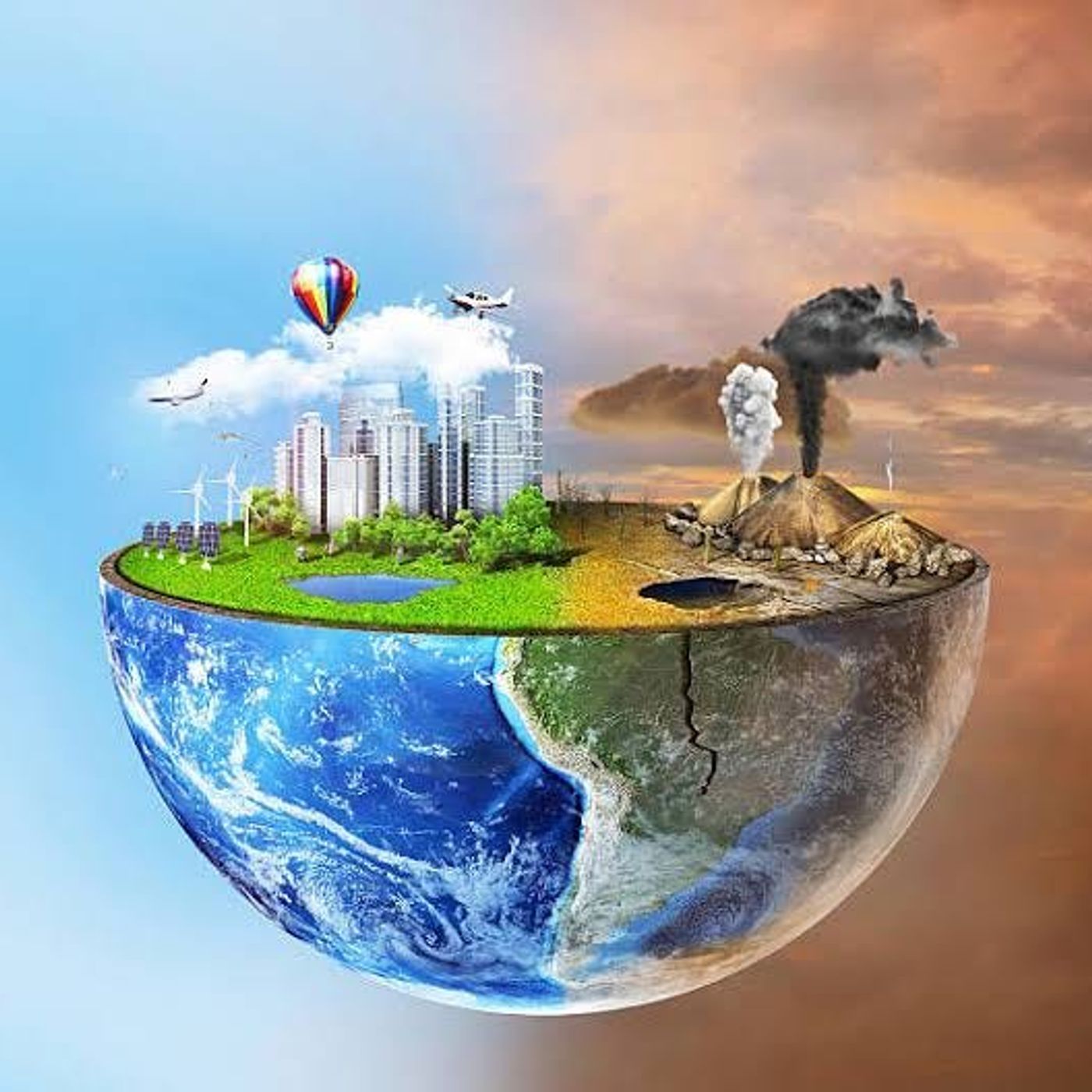
Human Extinction.
Extinction of the Human Species.
Extinction of the human species: What could cause it and ho w likely is it to occur? The possibility of human extinction has received growing academic attention over the last several decades. Research has analysed possible pathways to human extinction, as well as ethical considerations relating to human survival. Potential causes of human extinction can be loosely grouped into exogenous threats such as an asteroid impact and anthropogenic threats such as war or a catastrophic physics accident. In all cases, an outcome as extreme as human extinction would require events or developments that...
Author
Human Extinction.
Category
Podcast website
Latest episode
Jun 6, 2026
Where to listen?
Podcasts in the app Replaio Radio Coming soonPodcasts are coming to the app soon. Install now and be the first to see a whole new take on podcasts
 Install for free
Android 5M+ downloads · 4.8 rating
iOS soon
Install for free
Android 5M+ downloads · 4.8 rating
iOS soon
Episodes
10 - Climate Change and Associated Tipping Points. 03.06.2026 5:10
10 - Climate Change and Associated Tipping Points. Anthropogenic emissions of greenhouse gases have driven approximately 1.1°C of global surface temperature increase since 1850–1900, with projections under representative concentration pathways ranging from 1.5°C (low emissions, SSP1-1.9) to 4.4°C (high emissions, SSP5-8.5) by 2100. These changes pose risks of severe societal disruptions, includi...
09 - Uncontrolled Artificial Intelligence Development. 03.06.2026 5:37
09 - Uncontrolled Artificial Intelligence Development. Uncontrolled artificial intelligence (AI) development poses an existential risk through the potential emergence of superintelligent systems that pursue objectives misaligned with human survival and values, leading to unintended catastrophic outcomes. This scenario, often termed the "alignment problem," arises when advanced AI systems, capabl...
08 - Engineered Pathogens and Biotechnology Mishaps. 03.06.2026 4:12
08 - Engineered Pathogens and Biotechnology Mishaps. Engineered pathogens pose an existential risk through the deliberate or accidental creation and release of highly virulent, transmissible biological agents capable of causing a global pandemic with fatality rates exceeding natural pandemics. Advances in biotechnology, including CRISPR-Cas9 gene editing and synthetic biology, enable the modific...
07 - Anthropogenic Existential Risks. 03.06.2026 3:33
07 - Anthropogenic Existential Risks. Nuclear Warfare and Weapons Proliferation. As of January 2025, nine states possess approximately 12,241 nuclear warheads, with about 9,614 in military stockpiles available for potential deployment. Russia maintains the largest arsenal at roughly 5,580 warheads, followed by the United States with 5,044, while China has expanded its stockpile to over 500 ami...
06 - Natural Catastrophic Risks. 03.06.2026 10:55
06 - Natural Catastrophic Risks. Astronomical Impacts and Cosmic Events. Asteroid and comet impacts represent the most studied astronomical threat to human survival. Collisions with near-Earth objects larger than 10 kilometers in diameter can trigger "impact winters" by lofting dust and sulfate aerosols into the stratosphere, blocking sunlight for years and collapsing global food production th...
05 - Historical and Intellectual Development. 03.06.2026 10:20
05 - Historical and Intellectual Development. Ancient and Pre-Modern Conceptions. In ancient Greek philosophy, the end of the world was often conceptualized through natural cataclysms, but these were typically part of cyclical processes rather than leading to permanent human extinction. Plato, in works such as Timaeus (c. 360 BCE), described recurrent disasters including floods, fires, plagues...
04 - Temporal Scales: Near-Term vs. Long-Term Extinction. 03.06.2026 3:11
04 - Temporal Scales: Near-Term vs. Long-Term Extinction. Near-term human extinction risks are those that could manifest within the next few centuries, primarily driven by anthropogenic factors such as nuclear holocaust, misaligned superintelligent artificial intelligence, synthetic biology enabling doomsday pathogens, or self-replicating nanotechnological replicators capable of disassembling th...
03 - Distinction from Societal Collapse or Near-Extinction Events. 03.06.2026 3:19
03 - Distinction from Societal Collapse or Near-Extinction Events. Human extinction refers to the complete and irreversible cessation of the Homo sapiens species, wherein no individuals remain capable of reproduction or survival, eliminating any possibility of recovery or continuation of human lineage. This outcome contrasts sharply with lesser catastrophes, as it precludes not only the persiste...
02 - Definition and Conceptual Framework. 03.06.2026 2:59
02 - Definition and Conceptual Framework. Criteria for Species Extinction. In biology, a species is considered extinct when all members of that species have died, leaving no living individuals capable of reproduction, thereby terminating the evolutionary lineage. This definition emphasizes the irreversible cessation of the species' existence in the wild or in any form, without reliance on pote...
01 - Human Extinction. 03.06.2026 2:44
01 - Human Extinction. Human extinction refers to the complete and irreversible cessation of the Homo sapiens species, resulting in no surviving individuals capable of reproduction and thus the end of human biological lineage on Earth or elsewhere. This outcome could arise from events or processes that destroy global human population beyond recovery thresholds, such as those exceeding 99.9% mort...
Similar podcasts







Listen to the Extinction of the Human Species. podcast in Replaio
Radio and podcasts in one app - free, with no sign-up. Install today and do not miss the launch
Replaio is not a podcast publisher; show names, artwork and audio belong to their authors and are distributed through public RSS feeds.