Rasajna Dasa
Essence of Bhagavad Gita
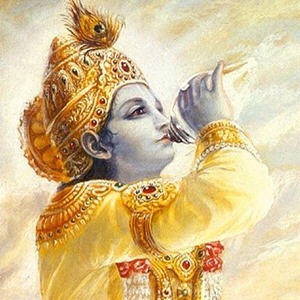
The Bhagavad-gita is universally renowned as the jewel of India's spiritual wisdom. Spoken by Lord Krishna, the Supreme Personality of Godhead to His intimate disciple Arjuna, the Gita's seven hundred concise verses provide a definitive guide to the science of self realization. No other philosophical or religious work reveals, in such a lucid and profound way, the nature of consciousness, the self, the universe and the Supreme. His Divine Grace A.C. Bhaktivedanta Swami Prabhupada is uniquely qualified to present this English translation and commentary on Bhagavad-gita. He is the world's foremo...
Where to listen?
Podcasts in the app Replaio Radio Coming soonPodcasts are coming to the app soon. Install now and be the first to see a whole new take on podcasts
 Install for free
Android 5M+ downloads · 4.8 rating
iOS soon
Install for free
Android 5M+ downloads · 4.8 rating
iOS soon
Episodes
36_Bhagavad Gita: Chapter 3, Verse 35 to 40 22.03.2021 1:28:57
One should therefore discharge his prescribed duties in full Krsna consciousness rather than those prescribed for others. Prescribed duties complement one's psychophysical condition, under the spell of the modes of material nature. Spiritual duties are as ordered by the spiritual master, for the transcendental service of Krsna. But both materially or spiritually, one should stick to his prescribed...
35_Bhagavad Gita: Chapter 3, Verse 30 to 34 22.03.2021 1:33:56
This verse clearly indicates the purpose of the Bhagavad-gita. The Lord instructs that one has to become fully Krsna conscious to discharge duties, as if in military discipline. Such an injunction may make things a little difficult; nevertheless duties must be carried out, with dependence on Krsna, because that is the constitutional position of the living entity. The living entity cann...
34_Bhagavad Gita: Chapter 3, Verse 26 to 29 10.02.2021 1:26:42
Join Secrets of Success on Telegram: https://t.me/rasajnadas Join LIVE session on SAVAJI ONLINE YouTube Channel every Sunday at 11am (IST) Vedais ca sarvair aham eva vedyah: that is the end of all Vedic rituals. All rituals, all performances of sacrifices, and everything that is put into the Vedas , including all directions for material activities, are meant for understanding Krsna, wh...
33_Bhagavad Gita: Chapter 3, Verse 22 to 25 30.01.2021 1:24:49
Join Secrets of Success on Telegram: https://t.me/rasajnadas Join LIVE session on SAVAJI ONLINE YouTube Channel every Sunday at 11am (IST) The Supreme Personality of Godhead is described in the Vedic literatures as follows: tam isvaranam paramam mahesvaram tam devatanam paramam ca daivatam patim patinam paramam parastad vidama devam bhuvanesam idyam na tasya karyam karanam ca vidyate na tat-samas...
Practical Spirituality: How To Prepare Prasadam 07.01.2021 1:44:40
Join ‘Secrets of Success’ group on Telegram: https://t.me/rasajnadas Join LIVE session on SAVAJI ONLINE YouTube Channel every Sunday at 11am (IST) Also Check Secrets Of Success channel on CASTBOX . ____________________________________________ The literal meaning of the Sanskrit word “prasadam” is mercy. So when we say “Krishna prasadam” we are referring to Krishna’s mercy. To understand what prasa...
32_Bhagavad Gita: Chapter 3, Verse 18 to 21 28.12.2020 1:10:52
Join Secrets of Success on Telegram: https://t.me/rasajnadas Join LIVE session on SAVAJI ONLINE YouTube Channel every Sunday at 11am (IST) A self-realized man is no longer obliged to perform any prescribed duty, save and except activities in Krsna consciousness. Krsna consciousness is not inactivity either, as will be explained in the following verses. A Krsna conscious man does not take shelter o...
31_Bhagavad Gita: Chapter 3, Verse 14 to 17 21.12.2020 1:26:50
Join Telegram group to stay connected: https://t.me/rasajnadas Srila Baladeva Vidyabhusana, a great commentator on the Bhagavad-gita, writes as follows: ye indrady-anga-tayavasthitam yajnam sarvesvaram visnum abhyarccya tacchesam asnanti tena taddeha-yantram sampadayanti te santah sarvesvarasya bhaktah sarva-kilvisair anadi-kala-vivrddhair atmanubhava- pratibandhakair nikhilaih p...
30_Bhagavad Gita: Chapter 3, Verse 11 to 13 21.12.2020 1:08:41
Join Telegram group to stay connected: https://t.me/rasajnadas The demigods are empowered administrators of material affairs. The supply of air, light, water and all other benedictions for maintaining the body and soul of every living entity are entrusted to the demigods, who are innumerable assistants in different parts of the body of the Supreme Personality of Godhead. Their pleasures and disple...
29_Bhagavad Gita: Chapter 3, Verse 8 to 10 07.12.2020 1:08:41
Join 'Secrets of Success' group on Telegram: https://t.me/rasajnadas There are many pseudo-meditators who misrepresent themselves as belonging to high parentage, and great professional men who falsely pose that they have sacrificed everything for the sake of advancement in spiritual life. Lord Krsna did not want Arjuna to become a pretender, but that he perform his prescribed duties as set forth f...
28_Bhagavad Gita: Chapter 3, Verse 3 to 7 29.11.2020 1:35:41
Connect with me on Telegram: https://t.me/rasajnadas In the Second Chapter, verse 39, the Lord explained two kinds of procedures—namely sankhya-yoga and karma-yoga, or buddhi-yoga. In this verse, the Lord explains the same more clearly. Sankhya-yoga, or the analytical study of the nature of spirit and matter, is the subject matter for persons who are...
27_Bhagavad Gita: Chapter 3, Verse 1 to 2 24.11.2020 1:37:39
Join Secrets of Success on Telegram: https://t.me/rasajnadas The Supreme Personality of Godhead Sri Krsna has very elaborately described the constitution of the soul in the previous chapter, with a view to deliver His intimate friend Arjuna from the ocean of material grief. And the path of realization has been recommended: buddhi-yoga, or Krsna consciousness. Sometimes Krsna consciousn...
26_Sri Damodar Lila 17.11.2020 48:17
Deepotsava or Deepotsavam is also known as the festival of lights, is celebrated in the month of Kartika (October – November) every year. It is a month-long festival commemorating Damodara-lila, the sweet pastime of baby Krishna stealing butter and consequently being tied to a mortar by His dear mother Yashoda. In Sanskrit, “ dama ” means rope and “ udara ” means belly. Damodara refers to Kri...
25_Bhagavad Gita: Chapter 2, Verse 69 to 72 09.11.2020 1:26:22
Join Secrets of Success on Telegram: https://t.me/rasajnadas There are two classes of intelligent men. The one is intelligent in material activities for sense gratification, and the other is introspective and awake to the cultivation of self-realization. Activities of the introspective sage, or thoughtful man, are night for persons materially absorbed. Materialistic persons remain asleep in such a...
24_Bhagavad Gita: Chapter 2, Verse 65 to 68 02.11.2020 1:18:09
Join Telegram Group: https://t.me/rasajnadas Unless one is in Krsna consciousness, there is no possibility of peace. So it is confirmed in the Fifth Chapter (5.29) that when one understands that Krsna is the only enjoyer of all the good results of sacrifice and penance, and that He is the proprietor of all universal manifestations, that He is the real friend of all living entities, then only can o...
23_Bhagavad Gita: Chapter 2, Verse 62 to 64 27.10.2020 1:33:41
Join me on Telegram: https://t.me/rasajnadas One who is not Krsna conscious is subjected to material desires while contemplating the objects of senses. The senses require real engagements, and if they are not engaged in the transcendental loving service of the Lord, they will certainly seek engagement in the service of materialism. In the material world everyone, including Lord Siva and Lord Brahm...
22_Bhagavad Gita: Chapter 2, Verse 58 to 61 19.10.2020 1:39:19
The test of a yogi , devotee, or self-realized soul is that he is able to control the senses according to his plan. Most people, however, are servants of the senses and are thus directed by the dictation of the senses. That is the answer to the question as to how the yogi is situated. The senses are compared to venomous serpents. They want to act very loosely and without restrict...
21_Bhagavad Gita: Chapter 2, Verse 54 to 57 12.10.2020 1:28:41
As there are symptoms for each and every man, in terms of his particular situation, similarly one who is Krsna conscious has his particular nature—talking, walking, thinking, feeling, etc. As a rich man has his symptoms by which he is known as a rich man, as a diseased man has his symptoms, by which he is known as diseased, or as a learned man has his symptoms, so a man in transcendental conscious...
20_Bhagavad Gita: Chapter 2, Verse 49 to 53 04.10.2020 1:36:23
One who has actually come to understand one's constitutional position as the eternal servitor of the Lord gives up all engagements save working in Krsna consciousness. As already explained, buddhi-yoga means transcendental loving service to the Lord. Such devotional service is the right course of action for the living entity. Only misers desire to enjoy the fruit of their own work just...
19_Bhagavad Gita: Chapter 2, Verse 45 to 48 04.10.2020 1:21:18
All material activities involve actions and reactions in the three modes of material nature. They are meant for fruitive results, which cause bondage in the material world. The Vedas deal mostly with fruitive activities to gradually elevate the general public from the field of sense gratification to a position on the transcendental plane. Arjuna, as a student and friend of Lord Krsna,...
18_Bhagavad Gita: Chapter 2, Verse 39 to 44 04.10.2020 1:34:06
According to the Nirukti, or the Vedic dictionary, sankhya means that which describes phenomena in detail, and sankhya refers to that philosophy which describes the real nature of the soul. And yoga involves controlling the senses. Arjuna's proposal not to fight was based on sense gratification. Forgetting his prime duty, he wanted to cease fighting...
17_Bhagavad Gita: Chapter 2, Verse 32 to 38 14.09.2020 1:31:46
As supreme teacher of the world, Lord Krsna condemns the attitude of Arjuna who said, "I do not find any good in this fighting. It will cause perpetual habitation in hell." Such statements by Arjuna were due to ignorance only. He wanted to become nonviolent in the discharge of his specific duty. For a ksatriya to be in the battlefield and to become nonviolent is the philosophy of fools...
15_Bhagavad Gita: Chapter 2, Verse 21 to 25 07.09.2020 1:32:16
Everything has its proper utility, and a man who is situated in complete knowledge knows how and where to apply a thing for its proper utility. Similarly, violence also has its utility, and how to apply violence rests with the person in knowledge. Although the justice of the peace awards capital punishment to a person condemned for murder, the justice of the peace cannot be blamed because he order...
16_Bhagavad Gita: Chapter 2, Verse 26 to 31 07.09.2020 1:31:49
There is always a class of philosophers, almost akin to the Buddhists, who do not believe in the separate existence of the soul beyond the body. When Lord Krsna spoke the Bhagavad-gita, it appears that such philosophers existed, and they were known as the Lokayatikas and Vaibhasikas. These philosophers maintained that life symptoms, or soul, takes place at a cer...
14_Bhagavad Gita: Chapter 2, Verse 17 to 20 27.08.2020 1:37:04
This verse more clearly explains the real nature of the soul, which is spread all over the body. Anyone can understand what is spread all over the body: it is consciousness. Everyone is conscious of the pains and pleasures of the body in part or as a whole. This spreading of consciousness is limited within one's own body. The pains and pleasures of one body are unknown to another. Therefore, each...
10_Bhagavad Gita: Chapter 2, Verse 1 to 5 20.07.2020 1:23:14
Material compassion, lamentation and tears are all signs of ignorance of the real self. Compassion for the eternal soul is self-realization. The word "Madhusudana" is significant in this verse. Lord Krsna killed the demon Madhu, and now Arjuna wanted Krsna to kill the demon of misunderstanding that had overtaken him in the discharge of his duty. No one knows where compassion should be applied. Com...
Similar podcasts







Listen to the Essence of Bhagavad Gita podcast in Replaio
Radio and podcasts in one app - free, with no sign-up. Install today and do not miss the launch
Replaio is not a podcast publisher; show names, artwork and audio belong to their authors and are distributed through public RSS feeds.