
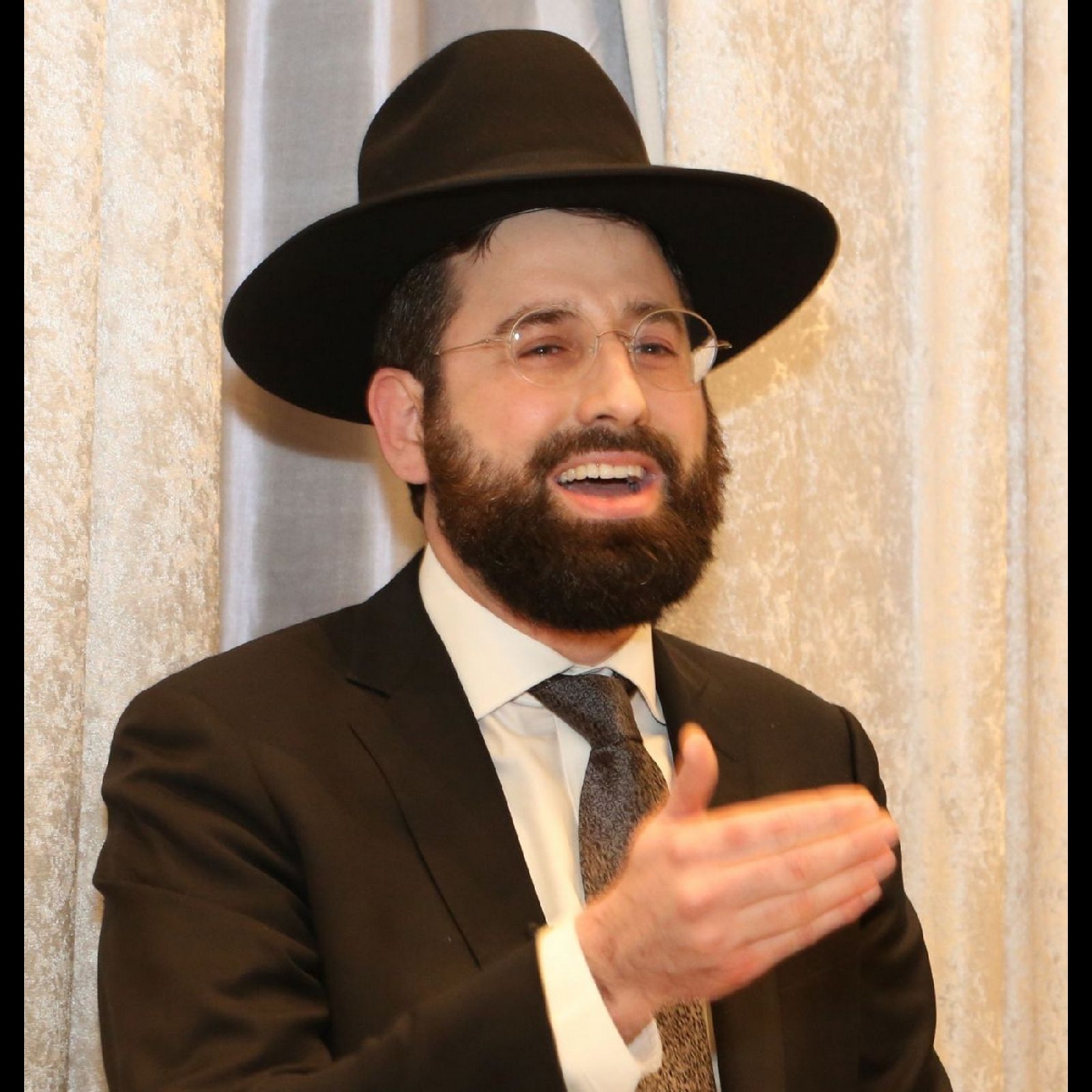
Moshe Zeidman
Dirshu Mishnah Berurah
A page a day (amud yomi) of Mishnah Berurah explained and clarified following (roughly) the cycle of the Dirshu program for mastery of the laws of daily Jewish living. Master the text in under 30 minutes a day. For individual application of the laws you should consult with your local Orthodox Rabbi. Please subscribe to this podcast - you will be notified when each new session is uploaded and you will maximise your daily learning. For feedback or questions you can reach me on mztorahlearning@gmail.com.
Author
Moshe Zeidman
Category
Podcast website
Latest episode
May 4, 2026
Where to listen?
Podcasts in the app Replaio Radio Coming soonPodcasts are coming to the app soon. Install now and be the first to see a whole new take on podcasts
 Install for free
Android 5M+ downloads · 4.8 rating
iOS soon
Install for free
Android 5M+ downloads · 4.8 rating
iOS soon
Episodes
MB 107.1 - 107.2 To Repeat or Not to Repeat -In doubt Whether you Said the Amidah 10.03.2023 23:18
We introduce the concept of obligatory Amidah prayer, and a voluntary Amidah. This can be used in cases of doubt whether we fulfilled our obligation or not.
MB 106.2 The Exemption from Praying if One's Torah Learning is at the Level of R' Shimon Bar Yochai 09.03.2023 16:25
Where a person is so all consumed in their learning that they would not interrupt for any reason other than complete bodily necessities, they are exempt from prayer. Even in the time of the Shulchan Aruch it was not considered that such people existed and so for us, we must interrupt Torah study for saying the Amidah.
MB 105 - 106.1 Those Who Are Exempt from Praying the Amidah 08.03.2023 18:32
We discuss the concept of exemption from a second mitzvah (praying the Amidah) if you are already occupied in a mitzvah. We also see the argument between the Rambam and Ramban in the nature of the obligation for prayer - whether biblical or rabbinic, and the implications for womens' prayer.
MB 104.5b - 108 Interruptions to Amidah Continued 07.03.2023 25:44
It is not allowed to interrupt the amidah by speaking in almost all cases. Even to answer kaddish and kedusha is not allowed - rather a person should be silent and listen to the. words of the chazan and it is as if one has answered.
MB 104.2 - 104.5a Interruptions of Prayer Forced Upon You 05.03.2023 27:10
There are certain circumstances when interrupting one's prayer and moving to another location is necessary and is not called an interruption. Speech should be avoided under most circumstances. If there is a large interruption, the Halacha discusses where we should restart our davenning following the interruption.
MB 102 - 103.1 Someone Who Needs to Release Gas During Prayer 02.03.2023 19:57
The Halacha discusses what a person should do if they feel a great need to pass wind during the Amidah.
MB 102 Avoiding Disturbing Someone Praying Through Sitting and Passing By 02.03.2023 29:17
This siman discusses the care we must take not to disturb someone who is praying by sitting next to him/her or passing in front of them.
MB 101.3 - 101.4 Praying in Any Language 28.02.2023 23:12
Whilst Hebrew is the language of choice for all of our prayers and has special qualities that transcend other languages, it is permitted to pray in any language that one understands as long as this does not become a permanent feature of synagogue life and Jewish practice.
MB 100 - 101.2 Obligation of Kavanah for The Amidah and Raising Your Voice During Prayer 27.02.2023 32:02
The essential requirement is to be focussed and concentrate on every word of the Amidah. Minimally, we need to have concentration for the first brocho of Avot. Without this minimum level of concentration we haven't truly fulfilled our obligation of saying the Amidah.
MB 99 Praying When Drunk 26.02.2023 29:39
The basic Halacha is that a person should not pray if they have drunk a reviit (86ml) of wine or more but should rather wait and let the effects of the wine wear off. This is qualified in today's discussion where we learn about different levels of intoxication and abilities to concentrate during the amidah, Shema, and other brochos such as birchat hamozon.
MB 98.1n 98.5 Essential Mindset (Kavannah) During Prayer 23.02.2023 28:14
Kabbalistic methods for expelling extraneous thoughts, approaching Hashem in prayer, and expectations following successful prayer.
MB 97.2b - 98.1a Conducting oneself During Prayer and Essential Mindset (Kavannah) During Prayer 22.02.2023 30:30
We learn further about under what conditions it is permissible to spit during prayer (something that is very uncommon today) and we also learn about the essential act of prayer and what (mindset) intentions we need to have.
MB 96.1 - 97.2a Avoiding Holding Objects that Detract from Concentration during Prayer 21.02.2023 29:21
The Halacha requires us to only hold those items needed for a mitzvah purpose such as a siddur and lulav (at the right time) during prayer so that we not disturb our concentration.
MB 94.9b - 95 Praying in The Presence of Idols and How we Should Stand During Prayers 20.02.2023 30:10
Praying in The Presence of Idols and How we Should Stand During Prayers - we do everything we can that helps our concentration. We stand in awe and trepidation with our eyes looking down and our hearts in the Holy Temple as we talk to HaShem.
MB 94.4 - 94.9a Praying When Travelling 19.02.2023 29:07
The preference is to stand unsupported whilst davenning. If this is not possible then it is acceptable to pray seated or even laying down when sick.
MB 94.2 - 94.3 Facing Israel When We Pray 17.02.2023 16:48
The Halacha teaches us the direction we should face to pray and the ideal positioning of the Aron Kodesh in shul. Some face directly East towards Israel, and some South East if they are North Easterly to it.
MB 92.9 - 94.1 The Right State of Mind for Prayer, Giving Charity, and Facing Jerusalem 16.02.2023 28:09
The Shulchan Aruch requires us to pause for a few seconds before we pray to consider before Whom we are praying. Doing this will change the very nature of our prayers.
MB 92.4b - 92.8 Cleanliness in Prayer 15.02.2023 28:23
There is a mitzvah to ensure that our hands are clean for prayer as well ideally for saying Shema, learning Torah, and making brochos. Water is the preferred medium for cleanliness but in the absence of water, other abrasive materials can be used.
MB 92.1 - 92.4a The Need to Use the Bathroom During Prayers 14.02.2023 31:32
The Halacha places great importance on ensuring a clean body prior to prayer and even if that means missing davvening in an minyan - this would take precedence. Events are sometimes beyond ones control and we are instructed how to handle those eventualities.
MB 91 Proper Dress code for Prayer 13.02.2023 30:03
There are objective and subjective standards we need to consider when preparing ourselves to stand before Hashem in prayer.
MB 90.24 - 90.27 Praying Behind, Next to, or In Front of The Rov 12.02.2023 23:43
We continue our discussion of where one should daven in shul and potential problems of praying very close to one's Rov.
MB 90.19 - 90.23 Establishing a Fixed Place in Shul to Daven 11.02.2023 26:37
It is important to establish the right environment in which to daven. The Shulchan Aruch mentions finding a fixed place, ideally close to the wall, and without interruptions of large objects or people between you and the wall. These are not mandatory but create a higher quality of environment for prayer.
MB 90.13 - 90.18 Travelling to Join a Minyan 09.02.2023 32:02
The Halacha discusses how far one must journey forwards or backwards to find a minyan to pray in.
MB 90.9b - 90.13 Praying the Amidah at the Same Time as the Minyan Even When not With Them in Shul 08.02.2023 26:51
We learn that there is a special quality with praying at exactly the same time as the community prays in shul, even if you cannot be with them physically at the same time. When in a minyan you should not pray the Amidah before the community unless feeling very unwell.
MB 90.8 - 90.9 The Wonderful Quality of Praying with a Minyan 07.02.2023 27:57
Today we learn of the importance of praying with a minyan and the extra qualities that are achieved over and above praying by oneself.
Similar podcasts







Listen to the Dirshu Mishnah Berurah podcast in Replaio
Radio and podcasts in one app - free, with no sign-up. Install today and do not miss the launch
Replaio is not a podcast publisher; show names, artwork and audio belong to their authors and are distributed through public RSS feeds.
