BBC Radio 4
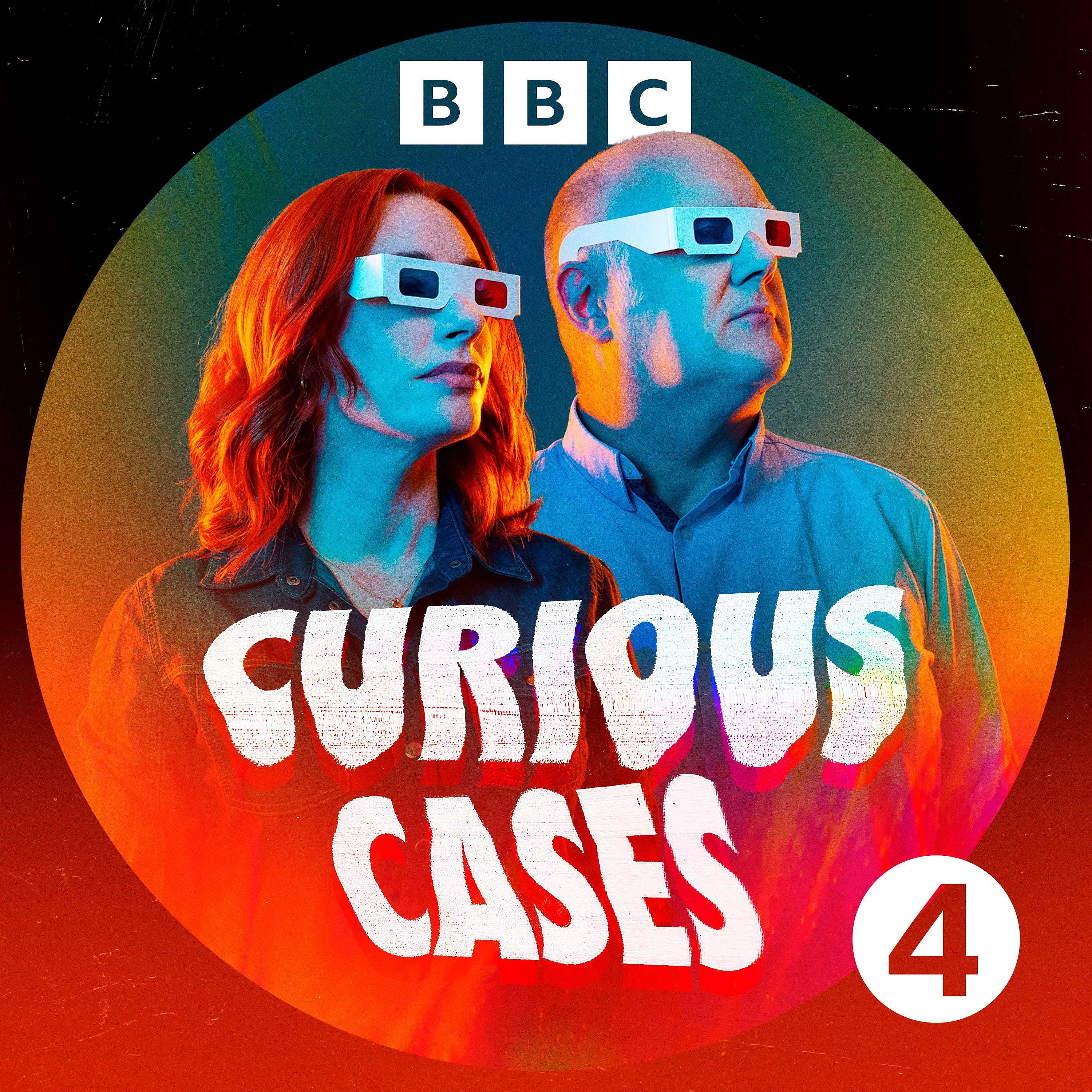
Curious Cases
Hannah Fry and Dara Ó Briain tackle listeners' conundrums with the power of science!
Be sure to visit the podcast's website and support the creator: www.bbc.co.uk
Where to listen?
Podcasts in the app Replaio Radio Coming soonPodcasts are coming to the app soon. Install now and be the first to see a whole new take on podcasts
 Install for free
Android almost 10M downloads · 4.8 rating
iOS soon
Install for free
Android almost 10M downloads · 4.8 rating
iOS soon
Episodes
A Frytful Scare, Part 1 25.10.2019 31:28
It was a dark and stormy night around the time of Halloween. A secret message arrived addressed to Rutherford & Fry from a mysterious woman called Heidi Daugh, who demanded to know: "Why do people like to be scared? For example, going on scary amusement park rides and watching horror movies that make you jump.” What followed was an investigation over two chapters, which would test our intrepid...
Jurassic Squawk 03.05.2019 37:14
"Is there is any way of knowing what noises, if any, dinosaurs would have made?" asks Freddie Quinn, aged 8 from Cambridge in New Zealand. From Jurassic Park to Walking with Dinosaurs, the roars of gigantic dinosaurs like T.Rex are designed to evoke fear and terror. But did dinosaurs actually roar? And how do paleontologists investigate what noises these extinct animals may have produced? Hannah a...
The Lunar Land, Part 2 26.04.2019 29:07
In the second installment of our double episode on the Moon we ask what life would be like if we had more than one Moon. From the tides to the seasons, the Moon shapes our world in ways that often go unnoticed. And, as we'll find out, it played a vital role in the creation of life itself. This week we celebrate the many ways the Moon and the Earth are linked. If one Moon is so great, why not have...
The Lunar Land, Part 1 19.04.2019 30:28
A double episode to mark the 50th anniversary of Apollo 11, and the first humans to walk on the Moon in 1969. Harley Day emailed curiouscases@bbc.co.uk to ask “Why do we only have one Moon and what would life on Earth be like if we had more? I'll be over the moon if you can help me solve this mystery.” In this first episode, Hannah and Adam look at how the Moon was formed and why we only have one....
An Instrumental Case 12.04.2019 39:14
“We play many musical instruments in our family. Lots of them produce the same pitch of notes, but the instruments all sound different. Why is this?” asks Natasha Cook aged 11, and her Dad Jeremy from Guelph in Ontario, Canada. For this instrumental case Hannah and Adam are joined by the Curious Cases band - Matt Chandler and Wayne Urquhart - to play with today's question. Bringing the science we...
The Periodic Problem 05.04.2019 28:29
"Will the periodic table ever be complete?" asks Philip Craven on Twitter. In 2016 four new chemical elements were given the official stamp of approval - nihonium, moscovium, tennessine, and oganesson. And 2019 was named by the UN as the International Year of the Periodic Table. In this episode, Hannah and Adam dive into the test tubes of history to hear why the first element was discovered in boi...
The Mesmerist 29.03.2019 35:27
“Is hypnosis real, and if so how does it work? Does it have any practical uses and which of Hannah and Adam is most susceptible?” This question came from two Curios, Peter Jordan aged 24 from Manchester and Arran Kinnear aged 13 from Bristol. Arch sceptics Hannah and Adam visit stage hypnotist Ben Dali to find out if they are susceptible to the power of suggestion. One of them will be successfully...
The Horrible Hangover 21.12.2018 31:05
"My name is Ava and I've never had a hangover," writes Ava Karuso. "I'm a 25 year-old Australian and I enjoy going out for drinks. However, the next day when everyone else sleeps in and licks their wounds, I get up early and get right back to my normal routine.” Drs Rutherford and Fry investigate the ancient origins of alcohol, from Sumerians drinking beer through straws, to Aristotle's teachings...
The Good Bad Food 14.12.2018 26:12
“Why does bad food taste so good?” asks Alan Fouracre from Tauranga, New Zealand. "And by ‘bad’ food, I mean the things we are told to hold back on like sausage, chips and chocolate." From sugar to salt and fat, we investigate why our body derives pleasure from the very foods we're often told to avoid. Adam discovers why retronasal smelling makes bacon taste delicious on a trip to the BBC canteen...
Two Infinities and Beyond, Part 2 07.12.2018 31:08
In the second part of our eternal quest to investigate infinity, inspired by this question from father and son duo Sorley and Tom Watson from Edinburgh: “Is anything in the Universe truly infinite, or is infinity something that only exists in mathematics?” Hannah and Adam try and find something that is truly infinite, from the infinitely small particles that live in the subatomic world to the infi...
Two Infinities and Beyond, Part 1 30.11.2018 32:19
“Is anything in the Universe truly infinite, or is infinity something that only exists in mathematics?” This momentous question came from father and son duo from Edinburgh Sorley aged 10 and Tom, aged adult. It's a subject so big, that we've devoted two episodes to our never-ending quest to investigate infinity. The first installment is a story of mathematics, music and murder. We'll find out why...
The Stressful Scone 23.11.2018 33:20
"How do accents start and where did they come from?” asks Sachin Bahal from Toronto in Canada. Hannah is schooled in speaking Geordie by top accent coach Marina Tyndall. And Adam talks to author and acoustics expert Trevor Cox about how accents evolved and why they persist. We meet Debie who has Foreign Accent Syndrome - an extremely rare condition in which your accent can change overnight. After...
The Viking Code 16.11.2018 26:07
"Is it true all British people can trace their ancestry to Vikings and how do ancestry DNA tests work?" asks Chloe Mann from Worthing. Genetic ancestry tests promise to reveal your ancestral origins and map your global heritage, but do they? Rutherford and Fry are here to bust some myths. Adam takes a trip through Norse history with Viking historian Janina Ramirez, whilst flying over the Medieval...
A World of Pain 07.09.2018 33:58
"Why do people experience pain differently when they go through the same event?" asks Claire Jenkins from Cwmbran in Wales. Professor of Pain Research, Irene Tracey, welcomes Adam in to the room she calls her 'Torture Chamber'. Burning, electrocuting, lasering and piercing are all on the menu, but which will hurt the most? Hannah speaks to Steve Pete from Washington who has a rare genetic conditio...
The Random Request 31.08.2018 26:07
Two random questions in this episode. "Is anything truly random, or is everything predetermined?" asks Darren Spalding from Market Harborough. Hannah and Adam go in search of random events, from dice throws to lava lamps. Can we predict the outcome of any event? And "how do computers manage to pick random numbers?", asks Jim Rennie from Mackinaw in Illinois. Joining them are a random selection of...
The Running Joke 24.08.2018 38:08
"How fast can a human run and would we be faster as quadrapeds?" This question flew in via Twitter from historian Greg Jenner. Is there a limit to human sprinting performance? In this episode we investigate the biomechanics of running, statistical trends in human performance and which kind of monkey runs the fastest. But first, an experiment. Due to some spurious and possibly fictional injuries, n...
The Alien Enterprise, Part 2 17.08.2018 24:35
Do alien civilisations exist? When will ET phone home? In the second part of our alien double bill, Hannah and Adam boldly go in search of intelligence. They may be some time. What will aliens look like? Where should we look for them? And what are the chances of finding complex life in the cosmos? Featuring astronomer Seth Shostak from the SETI Institute in California, exoplanet hunter Sara Rughei...
The Alien Enterprise, Part 1 10.08.2018 25:32
Mike Holcombe from Largs in Scotland asks, "How do we look for alien life and what are we expecting to find?" In the first of two episodes on the search for ET, Hannah and Adam look for life inside the Solar System. How do we define life and why we obsessed with finding it on Mars? Or should we be looking for space squid on Europa instead? Features interviews with planetary scientist Monica Grady...
The Dawn Chorus 01.06.2018 27:23
"Winter is finally over and the birds are all singing their hearts out at dawn. What's all the noise about? And why are some songs so elaborate?" asks Tony Fulford from Ely in Cambridgeshire. We find out how birds produce multiple notes at once, which one has the widest repertoire of songs, and why males like to show off quite so much. Plus, we talk to researcher Lauryn Benedict about the project...
The Lucky Number 25.05.2018 25:29
"My boss insists that if you choose the same numbers in the lottery each time your probability of winning will increase. Is this true?" asks Vince Scott from Edinburgh. National lotteries are played in more than 80 countries worldwide, but can you increase your chances of winning? Hannah consults statistician Jen Rogers to discover the best way to select your lucky numbers. Adam talks chance and l...
The Déjà Vu 18.05.2018 25:58
"Do we know what causes déjà vu?" asks Floyd Kitchen from Queenstown in New Zealand. Drs Rutherford and Fry investigate this familiar feeling by speaking to world-leading reseacher Chris Moulin from the University of Grenoble in France and memory expert Catherine Loveday from Westminster University. Plus, they find out why early investigations classed déjà vu as a type of paranormal phenomenon. Fo...
The Human Instrument 11.05.2018 27:44
"What happens to the human voice as we age? If I hear a voice on the radio, I can guess roughly how old they are. But singer's voices seem to stay relatively unchanged as they age. Why is this?" All these questions were sent to curiouscases@bbc.co.uk by Jonathan Crain from Long Island in New York. The Doctors discover how the human voice is produced and listen to how our voice sounds when it emerg...
The Fifth Dimension 04.05.2018 27:07
"What is the fifth dimension?" asks Lena Komaier-Peeters from East Sussex. Proving the existence of extra dimensions, beyond our 3D universe, is one of the most exciting and controversial areas in modern physics. Hannah and Adam head to CERN, the scientific cathedral for quantum weirdness, to try and find them. Theoretical physicist Rakhi Mahbubani explains why we think that dimensions beyond our...
The Cosmic Egg 02.03.2018 30:55
"How do we measure the age of the Universe?" asks Simon Whitehead. A hundred years ago this wouldn't even have been considered a valid question, because we didn't think the Universe had a beginning at all. Even Einstein thought that space was eternal and unchanging. This is the tale of how we discovered that the Universe had a beginning, and why calculating its age has been one of the greatest cha...
The Atomic Blade 28.02.2018 23:54
"What makes things sharp? Why are thinner knives sharper? What happens on the molecular level when you cut something?" All these questions came from Joshua Schwartz in New York City. The ability to create sharp tools allowed us to fashion clothing, make shelters and hunt for food, all essential for the development of human civilisation, according to materials scientist Mark Miodownik. We hear from...
Similar podcasts








Listen to the Curious Cases podcast in Replaio
Radio and podcasts in one app - free, with no sign-up. Install today and do not miss the launch
Replaio is not a podcast publisher; show names, artwork and audio belong to their authors and are distributed through public RSS feeds.