Drisha Institute
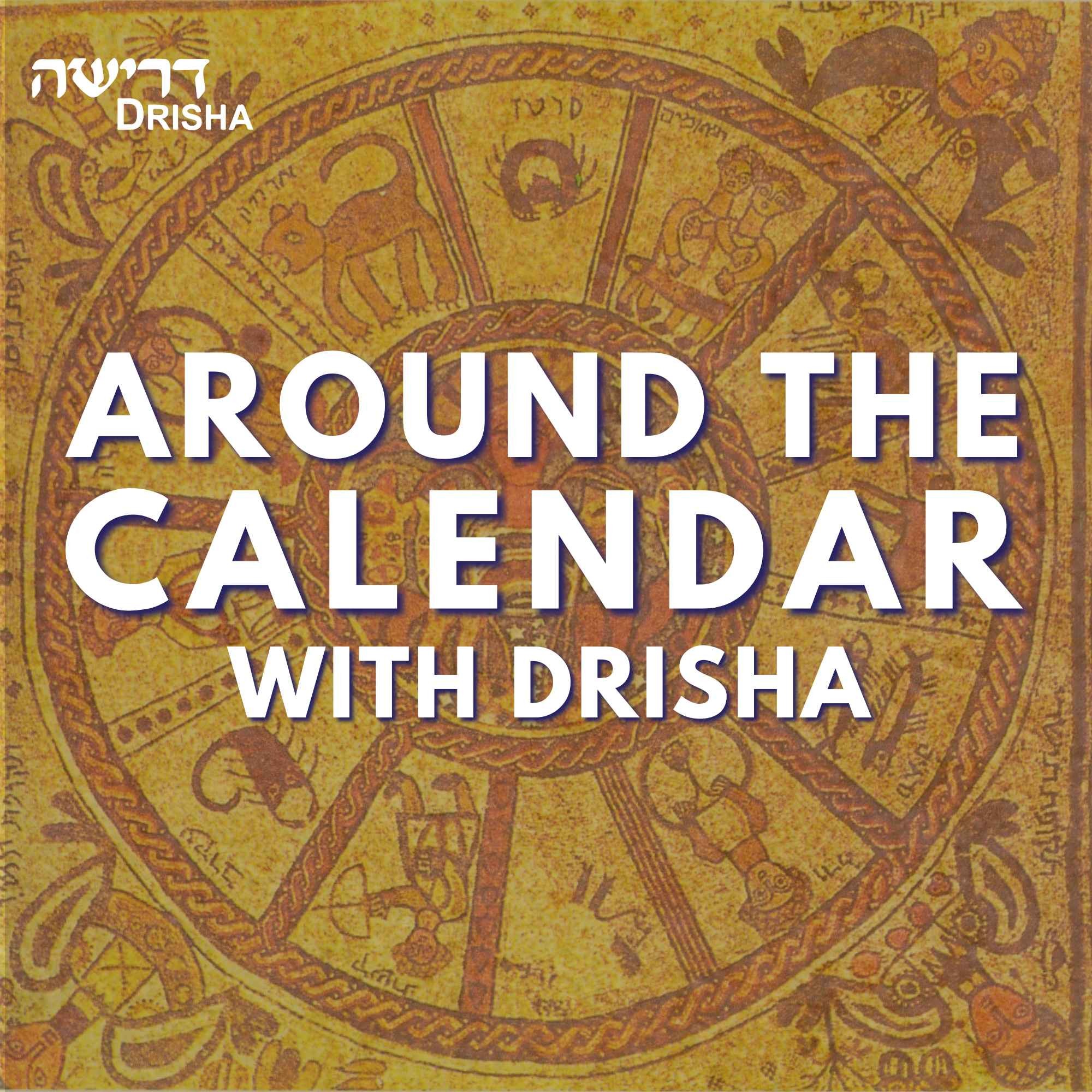
Around the Calendar with Drisha
Over the years, Drisha has offered Torah classes on the many observances that mark out the timeline of the Jewish yearly cycle. Around the Calendar brings you all our holiday- and observance-focused classes, from our back catalog of recordings and continuing through our contemporary shiurim and lectures.
Be sure to visit the podcast's website and support the creator: 5784.drisha.org
Author
Drisha Institute
Category
Podcast website
Latest episode
May 19, 2025
Where to listen?
Podcasts in the app Replaio Radio Coming soonPodcasts are coming to the app soon. Install now and be the first to see a whole new take on podcasts
 Install for free
Android almost 10M downloads · 4.8 rating
iOS soon
Install for free
Android almost 10M downloads · 4.8 rating
iOS soon
Episodes
Shavuot 5781: ”Poetry, Pedagogy, and Prayer: An Introduction to the Azharot” with Yitz Landes 15.12.2023 59:07
The holiday of Shavuot features many unique prayers, the majority of which touch upon themes relating to the giving of the Torah. In this class, we will take a close look at the history and development of the Azharot, a specific form of Piyyut (Hebrew Liturgical poetry) recited on the festival that enumerates the 613 commandments. We will begin with a brief historical introduction to Piyyut and it...
Shavuot 5781: ”Prelude to Sinai: The Enduring Appeal of Akdamut Millin” with Dr. Laura S. Lieber 15.12.2023 1:04:19
n this session, we will examine the liturgical poem “Akdamut Millin” (“The Introduction of Words”), written by Rabbi Meir b. Isaac of Worms (died ca. 1095), with an eye toward understanding its origins and its enduring appeal. Why would Rabbi Meir compose such a lengthy (ninety line) poem in Aramaic, long after Aramaic ceased to be the vernacular of the Jewish community? And what meaning can such...
Shavuot 5781: ”A Talmudist Writes Poetry: On Yatziv Pitgam and its World” with Dr. Tzvi Novick 15.12.2023 1:02:35
The poem Yatziv Pitgam, recited on the second day of Shavuot in connection with the haftarah, is an obscure but beautiful window into the religious world of medieval Ashkenaz, written by the great Tosafist, Rabbenu Tam. In this class we will read and unpack the poem in order to reflect on what it teaches about Shavuot, and on the intellectually rich but also tragic period in which it was written.
Pesach 5781: ”Seder Telling” with Rabbanit Leah Sarna, Rabbi David Silber, Dr. Tammy Jacobowitz, Darshanit Dr. Miriam Udel, and Rabbi David Ingber 15.12.2023 1:27:55
Today our seder nights are guided by the liturgical prompts of the Haggadah, but it wasn’t always this way. Our tradition records that in the times of the Mishnah, Rabbis gathered in Lod and Bnai Brak on the Seder night to tell the story of the Exodus. Unscripted, in their own words. Join us and listen in as a gathering of scholars and rabbis re-enact this seder, at our event: Seder Telling. Prese...
Pesach 5781: ”Adoption or Resistance: The Structure of the Seder and the Greco-Roman Symposium” with Dr. Yair Furstenberg 15.12.2023 57:08
While both Jewish and Christian authors in Antiquity openly confronted Greek and Roman practices of dining and celebration, the rabbis shaped the most important meal of the year in disturbing similarity to the Greco-Roman symposium. What is the cultural significance of this choice? While scholars hotly debated this question, I suggest a new perspective to this issue through a close analysis of the...
Pesach 5781: ”Remembering the Korban Pesach in Masechet Pesachim and in Ancient Jewish Sources” with Dr. Yedidah Koren 15.12.2023 51:14
Pesach is a holiday of remembrance. In this class we will think about the ways in which the Seder night is intended at remembering - and reenacting - the Korban Pesach, and the ways in which the Korban Pesach itself was intended to reenact the first Pesach offering that was celebrated in Egypt. Alongside sources from Masechet Pesachim, we will study additional ancient Jewish sources that reminisce...
Purim 5781: ”Ayeka: Searching for God in Megillat Esther” with Rabbi David Silber 15.12.2023 1:14:48
Megillat Esther, more than any book of the Bible, lends itself to multiple readings. The session will suggest two readings of the Megilla, in contrast to the reading of the “hidden God.” In one reading God is wholly absent, in the other fully present. We will reflect upon the ethical and theological implications of each.
Purim 5781: ”The Hand in the Hiddenness” with Rabbanit Leah Sarna 15.12.2023 57:15
The Talmud finds Esther in the Torah through a play on words in the curses of Sefer Devarim, “and I will hide, haster astir My countenance on that day.” Elsewhere the Talmud teaches in the name of Rav that to be a Jew one must experience God's hiddenness. Why is that, and what does it mean to experience God's hiddenness? And once we experience it, what are we to do? Join us in an exploration of th...
Thanksgiving 5781: ”Mapping Gratitude” with Adina Polen and Rabbi Ariel Evan Mayse 15.12.2023 1:13:07
Adina Polen and Ariel Mayse of Atiq: Jewish Maker Institute ran this interactive Jewish learning and arts workshop. We used simple materials to help locate ourselves within our own lives and reflect back to us all that we have to be grateful for! This workshop was designed to be fun and accessible for all ages. Learn more about Atiq at www.atiqmakers.org!
Simchat Torah 5781: ”Simchat Torah: Concluding with Blessings and Starting Anew” with Rabbi David Silber 15.12.2023 1:11:02
Shemini Atzeret/Simchat Torah is the conclusion of a series of Festivals and observances. It is the time that we complete a cycle of Torah reading and start anew. An analysis of the Torah readings will afford us a glimpse as to the place of this holiday within the cycle of holidays and its import for our daily living.
High Holidays 5781: ”Intention and the Mitzvot of Tishrei” (3/3) with Dr. Shana Strauch Schick 15.12.2023 1:00:35
In the third class, we will probe different aspects of intentionality: whether sinful thoughts are treated with the same weight as sinful deeds, and what defines a sin as intentional or unintentional. We will see marked differences in how various sages approached these questions.
Yom Kippur 5781: ”The Kapparah of Yom Kippur” (5/5) with Rabbi Dr Shlomo Zuckier 15.12.2023 1:01:51
This final shiur in the series will draw together the material we have studied throughout this series and draw some conclusions about the source of atonement on Yom Kippur. Does it stem primarily from people or from God? And does the answer to that question change over history?
High Holidays 5781: ”Ritual Re-enactments: Becoming Moshe, a Mother, and a High Priest in the Yamim Noraim Tefillah” (3/3) with Rabbanit Leah Sarna 15.12.2023 1:11:09
This series will focus on core pieces of the Selichot, Rosh Hashana and Yom Kippur liturgies. Specifically, we will explore the roles that our liturgy asks us to step into on these days and at these key moments. This class aims to enrich participants' experiences of these special tefillot, particularly in a year where many will be praying at home or in truncated synagogue services. In this final s...
High Holidays 5781: ”Intention and the Mitzvot of Tishrei” (2/3) with Dr. Shana Strauch Schick 15.12.2023 59:32
If, after a long day in shul on Rosh Hashana, my mind is wandering during shofar blowing, do I have to hear it again? Can the pergola in my backyard be my sukkah? In this three part lecture series, we will explore how intenton factors into the mitzvot central to Rosh Hashana, Yom Kippur, and Sukkot. In this class we turn to Sukkot and the debate regarding whether the construction of the sukkah it...
High Holidays 5781: ”Ritual Re-enactments: Becoming Moshe, a Mother, and a High Priest in the Yamim Noraim Tefillah” (2/3) with Rabbanit Leah Sarna 15.12.2023 1:01:42
Session 2 we will turn to Talmudic and liturgical texts about the Shofar's cries. As both the criers and the ones who knows cries the best, mothers will be the focus of this session, as we contemplate how Rosh Hashana liturgy asks us to enact motherhood.
High Holidays 5781: ”Structure and Meaning in High Holiday Liturgy” (4/4) with Rabbi David Silber 15.12.2023 1:00:48
This series delves into the core motifs and themes in the liturgy of Rosh Hashana and Yom Kippur. Two sessions are devoted to the core texts of Rosh Hashana - Malchiyot, Zichronot and Shofarot - and two sessions will focus on the Kol Nidre service and the confessions of Yom Kippur.
Yom Kippur 5781: ”The Kapparah of Yom Kippur” (3/5) with Rabbi Dr Shlomo Zuckier 15.12.2023 1:00:35
Shiur 3 will address the teaching, found at Yoma 86a, of the “four categories of atonement” – one of which is Yom Kippur – and consider how it impacts these discussions. It will also consider cases of those who reject Yom Kippur in various ways and whether that affects one’s capacity to achieve atonement on the day.
Rosh HaShanah 5781: ”How to Blow the Shofar, A ”Toot”orial” (2/2) with Rabbi Moshe Silver 15.12.2023 59:41
Blowing the Shofar is simple – but not easy. Rabbi Silver will go over the basic concepts of proper lip position, posture, and breath control. Unless you are a trumpet player, the technique may seem unnatural at first. The real secret to mastering the Shofar is – that there’s no secret. It takes hours of dedicated practice. Rabbi Silver shares his own story of his road from utter failure to relati...
High Holidays 5781: ”Intention and the Mitzvot of Tishrei” (1/3) with Dr. Shana Strauch Schick 15.12.2023 1:00:00
Handout: https://drisha.org/wp-content/uploads/2020/09/Handout_Intention-in-the-Performance-of-Mizvot_Part1.pdf If, after a long day in shul on Rosh Hashana, my mind is wandering during shofar blowing, do I have to hear it again? Can the pergola in my backyard be my sukkah? In this three part lecture series, we will explore how intention factors into the mitzvot central to Rosh Hashana, Yom Kippur...
High Holidays 5781: ”Ritual Re-enactments: Becoming Moshe, a Mother, and a High Priest in the Yamim Noraim Tefillah” (1/2) with Rabbanit Leah Sarna 15.12.2023 1:07:16
Handout: https://drisha.org/wp-content/uploads/2020/09/Handout_Sarna_RitualReenactment1_Selichot_-Becoming-Moshe.pdf This series will focus on core pieces of the Selichot, Rosh Hashana and Yom Kippur liturgies. Specifically, we will explore the roles that our liturgy asks us to step into on these days and at these key moments. This class aims to enrich participants' experiences of these special te...
High Holidays 5781: ”Structure and Meaning in High Holiday Liturgy” (3/4) with Rabbi David Silber 15.12.2023 1:01:44
In this 4 part series, this session and next will focus on the Kol Nidre service and the confessions of Yom Kippur.
High Holidays 5781: ”The Emotions of Repentance: Rav Soloveitchik, Rav Kook and the Lubavitcher Rebbe” (3/3) with Rabbi Dr. Yosef Bronstein 15.12.2023 57:00
Handout: https://drisha.org/wp-content/uploads/2020/09/Handout_Bronstein_Emotions-of-teshuva_Part3-RavKook.pdf In addition to delineating the technical process of repentance, Jewish literature has also explored the emotions that are supposed to accompany this process. In this class we will trace The Emotions of Repentance from the medieval authorities (Rambam and Rabbeinu Yonah) through the great...
Yom Kippur 5781: ”The Kapparah of Yom Kippur” (2/5) with Rabbi Dr. Shlomo Zuckier 15.12.2023 59:25
Handout: https://drisha.org/wp-content/uploads/2020/09/Handout_AtonementYK_Zuckier_Part2.pdf Yom Kippur is literally "the Day of Atonement." But how does that atonement come about: Is it dependent on the bringing of Korbanot? Does Yom Kippur still atone today? Need one observe the day of Yom Kippur in order to achieve atonement? What does this process of atonement tell us about the holiest day of...
Rosh HaShanah 5781: ”How to Blow the Shofar, A ”Toot”orial” (1/2) with Rabbi Moshe Silver 15.12.2023 1:06:05
Blowing the Shofar is simple – but not easy. Rabbi Silver will go over the basic concepts of proper lip position, posture, and breath control. Unless you are a trumpet player, the technique may seem unnatural at first. The real secret to mastering the Shofar is – that there’s no secret. It takes hours of dedicated practice. Rabbi Silver shares his own story of his road from utter failure to relati...
Similar podcasts







Listen to the Around the Calendar with Drisha podcast in Replaio
Radio and podcasts in one app - free, with no sign-up. Install today and do not miss the launch
Replaio is not a podcast publisher; show names, artwork and audio belong to their authors and are distributed through public RSS feeds.