Audible
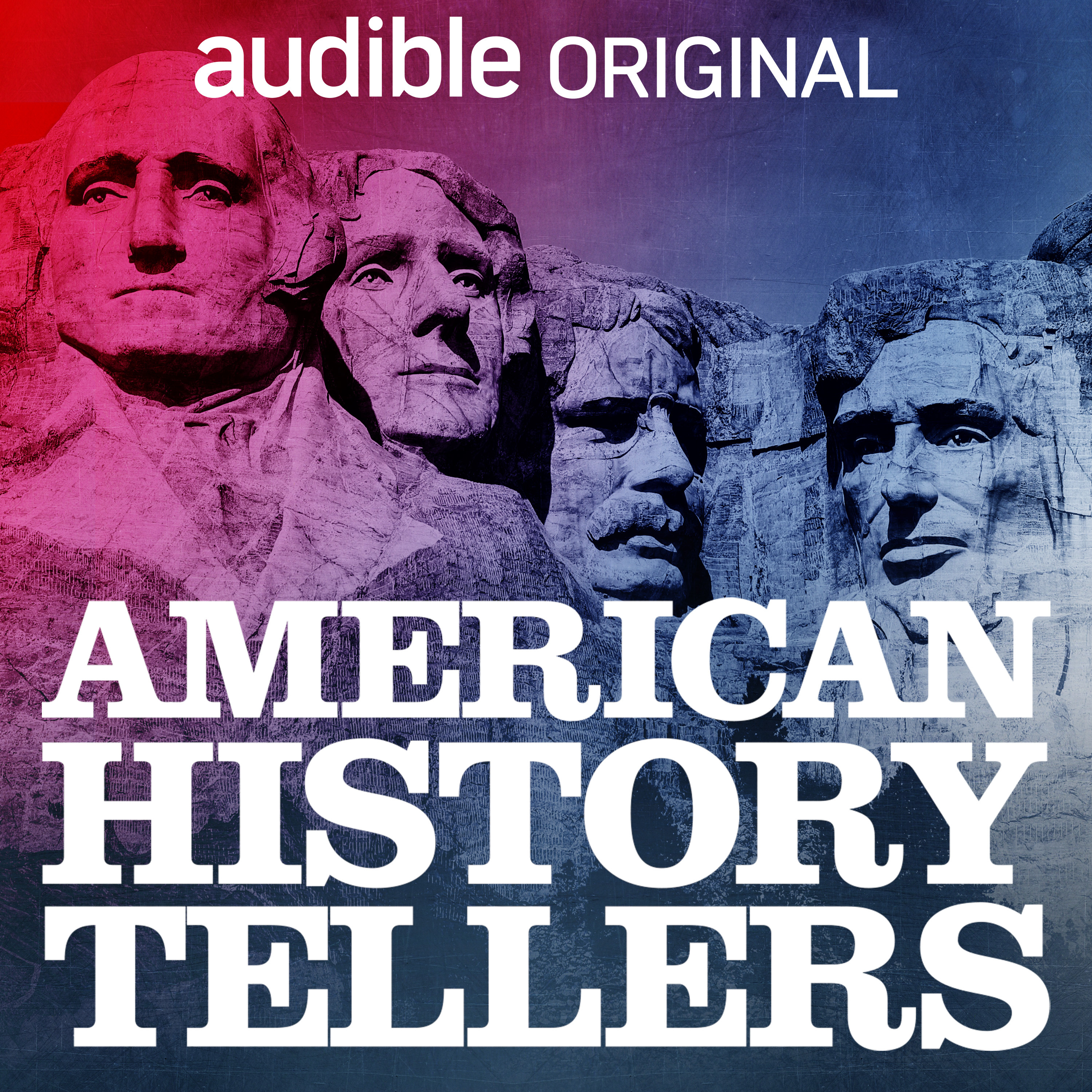
American History Tellers
The Cold War, Prohibition, the Gold Rush, the Space Race. Every part of your life - the words you speak, the ideas you share - can be traced to our history, but how well do you really know the stories that made America? We'll take you to the events, the times and the people that shaped our nation. And we'll show you how our history affected them, their families and affects you today. Hosted by Lindsay Graham (not the Senator). From Wondery, the network behind American Scandal, Tides of History, American Innovations and more. Audible subscribers can listen to all episodes of American History Te...
Be sure to visit the podcast's website and support the creator: wondery.com
Where to listen?
Podcasts in the app Replaio Radio Coming soonPodcasts are coming to the app soon. Install now and be the first to see a whole new take on podcasts
 Install for free
Android almost 10M downloads · 4.8 rating
iOS soon
Install for free
Android almost 10M downloads · 4.8 rating
iOS soon
Episodes
The Triangle Shirtwaist Factory Fire - In America They Don’t Let You Burn | 4 13.11.2019 41:20
In the wake of the biggest workplace catastrophe in the city of New York, the survivors of the Triangle fire and the families of the victims could only watch from the sidelines as the case against the Triangle bosses went to trial. The 146 deaths resulting from the fire had been sifted through the state’s legal machine and condensed into a single woman: a 24-year-old sewing machine operator named...
The Triangle Shirtwaist Factory Fire - Sixteen Minutes | 3 06.11.2019 37:43
Two years after the labor strikes that shook the city of New York, the workers of Triangle factory returned to better wages and lower hours. But when a fire broke out near closing time on a Saturday afternoon, these same workers found themselves swept up in a catastrophe. Some would escape, but many would not. In the weeks that followed, a city mourned and began to wrestle with questions of...
The Triangle Shirtwaist Factory Fire - Revolt of the Girls | 2 30.10.2019 39:22
Inspired by the labor strikes at Triangle and other factories in Lower Manhattan, more than 30,000 garment workers took to the streets of New York in protest in late 1909. For the first time, an industry of women sought not to just halt production at one factory — they wanted to put the brakes on an entire trade. With over four hundred garment factories shut down, factory owners banded toget...
The Triangle Shirtwaist Factory Fire - Wildcat | 1 23.10.2019 39:56
On March 25, 1911, a fire broke out at the Triangle Shirtwaist Factory in Manhattan, claiming the lives of 146 garment workers — mostly women and girls. It was one of the deadliest workplace disasters in American history. Caused by a combination of carelessness and poor safety measures, the fire eventually set off a wave of workplace reforms that changed industry in America and sent New York party...
Dutch Manhattan - The Dutch Influence Today | 7 16.10.2019 50:16
New York City was founded on the Dutch principles of tolerance and capitalism, both of which were new ideas at the time. But much of the city's early history was lost until the 1970s, when a renewed interest in the Dutch period led to the founding of the New Netherland Center. Here, thousands of previously untranslated records shed new light on this crucial moment in Gotham’s history. Our gue...
Dutch Manhattan - New York | 6 09.10.2019 37:42
In the years after Adrian Van der Donck won a municipal charter for New Amsterdam, and under Peter Stuyvesant's stern but capable rule, the city flourished. Even English residents of New England and Virginia sent their goods to Europe via the future New York Harbor, because the Dutch were so good at the business of shipping. Dutch features that would become part of American culture — from cookies...
Dutch Manhattan - The One-Legged Soldier | 5 02.10.2019 36:13
Peter Stuyvesant was fresh from losing a leg in battle against the Spanish when he arrived in Manhattan in 1647. He was a tough soldier who was ready to take charge of the unruly population of New Amsterdam. He soon clashed with Adrian Van der Donck, the leader of the opposition, who was secretly crafting a formal legal complaint that would compel the Dutch government to give the colony a form of...
Dutch Manhattan - The Sheriff Comes to Town | 4 25.09.2019 37:32
Just as it was becoming a New World success story, disaster came to New Amsterdam. Willem Kieft, the Dutch leader appointed by the West India Trading Company, declared war on local tribes, sending soldiers to slaughter them in their villages. The tribes responded with waves of death and destruction that would set the European settlers back decades in their development. A new colonist named A...
Dutch Manhattan - Pirates and Prostitutes | 3 18.09.2019 35:43
New Amsterdam was a desperate place. For the first decade of its existence, the Dutch city on the tip of Manhattan Island served as a haven for pirates, prostitutes and smugglers. That was because the West India Company, which ran New Amsterdam, insisted on controlling all trade — something it simply couldn't manage effectively. Finally, in 1640, the Company gave up its monopoly, and what had been...
Dutch Manhattan - Buying Manhattan | 2 11.09.2019 35:39
Twelve years after Henry Hudson's 1609 trip charting the Hudson River, the Dutch used his voyage as the basis for a new colony, which would be wedged between the English colonies in New England and Virginia. New Netherland began with tiny numbers of people from different backgrounds. They settled the entire region that Hudson had traveled, from Delaware to New York to Connecticut. But being spread...
Dutch Manhattan - Henry Hudson’s Big Mistake | 1 04.09.2019 35:13
In 1609, a headstrong English sea captain named Henry Hudson set out on behalf of the Dutch East India Company to find a trade route to Asia — and promptly found himself and his crew stranded in icy waters off the coast of Norway. As supplies dwindled, Hudson announced to his frostbitten crew that the ship would change course. They set off across the Atlantic Ocean in search of an alternative rout...
Remembering Emmett Till | 7 28.08.2019 37:42
The murder of Emmett Till galvanized the nascent civil rights movement. But the full story of what happened in Money, Miss., on August 28, 1955, is significantly different than the narrative that emerged at the time. A new app developed by scholars at Florida State University now seeks to give a fuller picture of Till’s lynching by taking users on a GPS guided tour around the Mississippi Delta and...
The Bastard Brigade - Showdown in the Alps | 6 21.08.2019 39:55
The Alsos mission had a hard-charging leader in Boris Pash and an eccentric band of recruits. But if the so-called Bastard Brigade was going to track down the Nazi atomic bomb, they would also need scientific expertise. For that, they turned to the Dutch-American physicist Samuel Goudsmit. Goudsmit wasn’t the brigade’s first choice—far from it. He was considered weak and timid, and even Goud...
The Bastard Brigade - The Most Wanted Men | 5 14.08.2019 39:56
As the Nazis inched closer to acquiring a nuclear weapon, panic grew among the Allied forces. The Alsos Mission — otherwise known as the Bastard Brigade — was put in charge of gathering intelligence on Hitler’s bomb project, seizing stores of Nazi uranium, and hunting down members of the Uranium Club. The first atomic spy outfit in history was underway. Their mission was led by the American-...
The Bastard Brigade - The Strangest Man | 4 07.08.2019 39:11
By mid-1944, the Allies’ fight to track down and stop the Nazi atomic program had met with failure and disappointment. And so the Manhattan Project took a new tack by recruiting and developing atomic spies — including a backup catcher for the Boston Red Sox named Moe Berg. Although little known today, Berg was one of the most famous athletes of his day, and a certified genius. He could charm...
The Bastard Brigade - The Kennedy Curse | 3 31.07.2019 34:34
In early 1944, the Allies developed a desperate plan to destroy several massive bunkers in Nazi-controlled France—bunkers that reportedly housed atomic missiles. The plan called for filling up airplanes with napalm, flying them over to France via remote control, and ramming them into the bunkers, blowing them sky-high. But the military still needed pilots to get the napalm-filled planes off the gr...
The Bastard Brigade - The Juice | 2 24.07.2019 39:04
The discovery of uranium fission in Nazi Germany in 1938 terrified Allied nuclear scientists—especially since the Nazi atomic bomb project, the dreaded Uranium Club, had a two-year head start on the Manhattan Project. So the Allies decided to strike back. They couldn’t prevent Germany from acquiring uranium, but they could disrupt access to another key ingredient in atomic research—heavy water. On...
The Bastard Brigade - The Accidental A-Bomb | 1 17.07.2019 36:02
The Second World War ended with two black mushroom clouds rising over the scorched remains of Hiroshima and Nagasaki. But most people don’t realize how easily the war could have ended not with an American atomic bomb but a German one, obliterating not a Japanese city but Paris, London, or even New York. As the war began, all the pieces were in place for the Germans to develop an atomic weapon. The...
The Statue of Liberty | 6 03.07.2019 41:16
The Statue of Liberty is one of America’s most iconic monuments to freedom. As we head into the Fourth of July holiday, we’ll look back on the amazing effort it took to get Lady Liberty built. Beckett Graham is co-host of The History Chicks podcast, a show that explores the legacies of women throughout history. Beckett joins us to talk about her approach to telling women’s stories and we’ll also p...
Tulsa Race Massacre - Legacy and Lessons | 5 26.06.2019 34:38
Nearly a century after a white mob leveled the affluent Tulsa district known as Black Wall Street, how is Greenwood faring? Mechelle Brown is the program coordinator for the Greenwood Cultural Center, which seeks to educate people about the rich history of the Greenwood District. She joins us to discuss why a race conflict in Tulsa was inevitable, the city’s ongoing struggle to fully acknowl...
Tulsa Race Massacre - Rebirth | 4 19.06.2019 48:45
On June 2, 1921, thousands of black Tulsans interned at the Tulsa Fairgrounds woke under armed guard. Many had no idea where their loved ones were or if they were still alive; they didn’t know whether their homes were still standing or if they’d been ransacked by the white mob. As Greenwood residents worked to restart lives that had been violently interrupted, sympathy for the survivors exploded a...
Tulsa Race Massacre - The Invasion | 3 12.06.2019 40:48
By midnight on Tuesday, May 31, 1921, some Greenwood residents assumed the riot was calming down. Many families, far away from the action at the courthouse, hadn’t even heard about the violence, and went to bed as usual. But as much of the city slumbered, the white mob was transforming into something even more deadly: a highly organized, strategic force led by volunteer soldiers. That force held i...
Tulsa Race Massacre - The Powder Keg | 2 05.06.2019 39:41
As Dick Rowland sat in a jail cell at the Tulsa courthouse on Tuesday, the news of his arrest and rumors about his alleged rape of Sarah Page flew through town. Egged on by an inflammatory op-ed in the Tulsa Tribune, a white mob bent on a lynching began assembling outside the courthouse. By that evening, the crowd of hundreds had swelled to thousands. Meanwhile in the office of the Tulsa Star news...
Tulsa Race Massacre - The Promised Land | 1 29.05.2019 48:32
Between 1838 and 1890, thousands of African Americans moved to Oklahoma, brought there as Cherokee slaves or drawn there by the promise of free land. Black pioneers established towns where African Americans could govern themselves and thrive in community together, and in time, Oklahoma became known as “The Promised Land” of freedom, dignity, and economic self-sufficiency. Out of this movement, the...
Sponsored | American Epidemics - Dark Days In Dallas | 2 24.05.2019 58:48
This episode is brought to you by Wondery in partnership with National Geographic in anticipation of their new series, The Hot Zone . In 2014, Ebola is tearing through Guinea, Liberia and Sierra Leone, but the deadly disease hasn’t yet made landfall in the United States. Then Thomas Eric Duncan, a Liberian visiting his fiancee and son in Dallas, stumbles into a local hospital with a fever. His eve...
Similar podcasts


Listen to the American History Tellers podcast in Replaio
Radio and podcasts in one app - free, with no sign-up. Install today and do not miss the launch
Replaio is not a podcast publisher; show names, artwork and audio belong to their authors and are distributed through public RSS feeds.