Audible
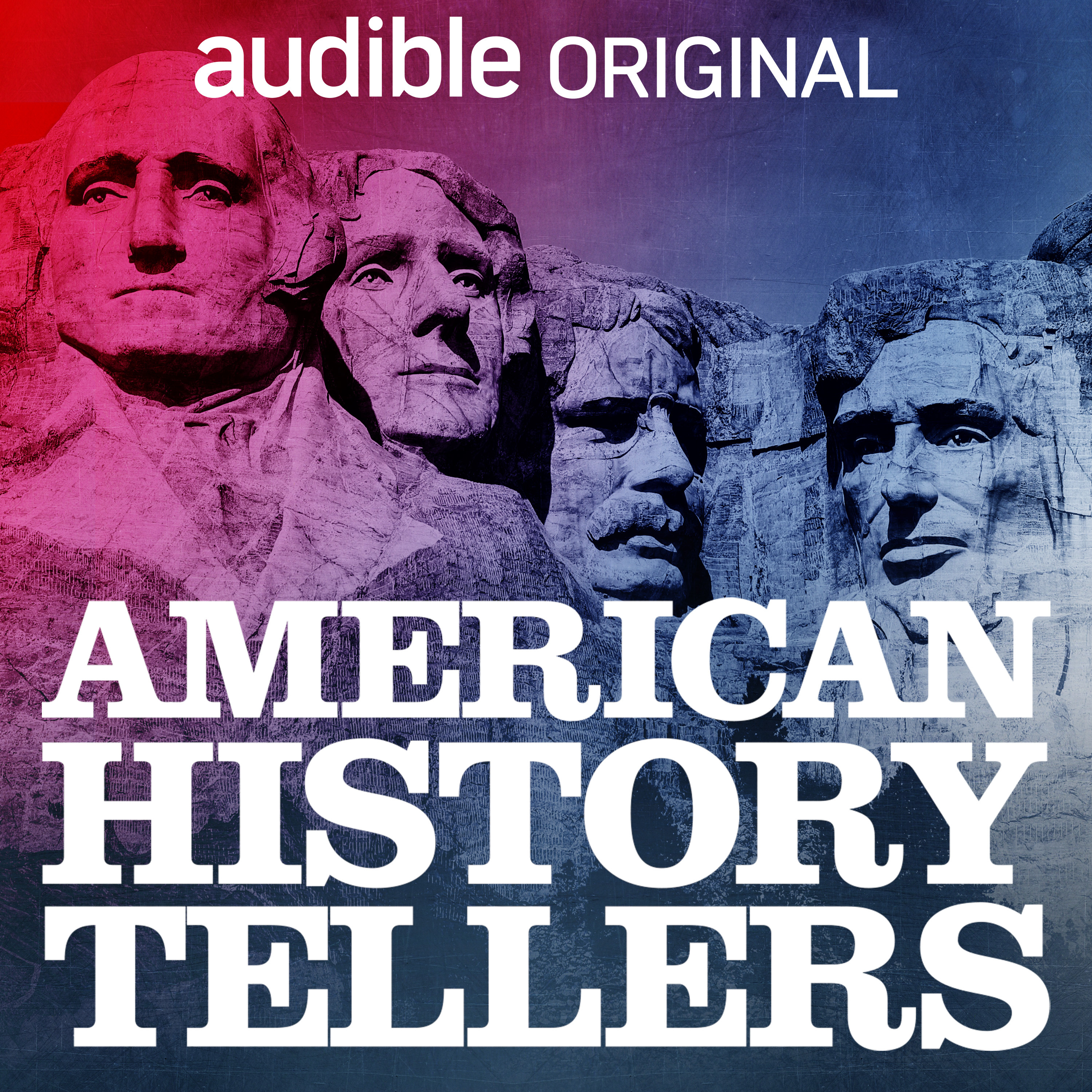
American History Tellers
The Cold War, Prohibition, the Gold Rush, the Space Race. Every part of your life - the words you speak, the ideas you share - can be traced to our history, but how well do you really know the stories that made America? We'll take you to the events, the times and the people that shaped our nation. And we'll show you how our history affected them, their families and affects you today. Hosted by Lindsay Graham (not the Senator). From Wondery, the network behind American Scandal, Tides of History, American Innovations and more. Audible subscribers can listen to all episodes of American History Te...
Be sure to visit the podcast's website and support the creator: wondery.com
Where to listen?
Podcasts in the app Replaio Radio Coming soonPodcasts are coming to the app soon. Install now and be the first to see a whole new take on podcasts
 Install for free
Android almost 10M downloads · 4.8 rating
iOS soon
Install for free
Android almost 10M downloads · 4.8 rating
iOS soon
Episodes
Supreme Court Landmarks | The Outsize Power of the Supreme Court Today | 8 09.12.2020 37:05
Throughout our series, we've seen how social movements and partisan politics helped influence the decisions of landmark U.S. Supreme Court cases, and thus shape America itself. But how did the Supreme Court get so powerful when America's founders imagined a more limited role? Today, the idea of court-packing, first proposed by Roosevelt to push through his New Deal agenda, is back as a way to rein...
Supreme Court Landmarks | Jane Roe | 7 02.12.2020 41:20
In 1970, a 22-year-old woman in Texas named Norma McCorvey tried and failed to get an abortion from her doctor. Abortion was illegal in Texas, just as it was in most states. Women hoping to terminate their pregnancies had few options, and many resorted to risky back-alley procedures. McCorvey was soon introduced to a pair of young lawyers who hoped to go to court to challenge the Texas law banning...
Supreme Court Landmarks | A Recount in Florida | 6 25.11.2020 41:50
The morning of Nov. 8, 2000, Americans woke up to an undecided election. Pollsters had predicted a close race between Vice President Al Gore and Texas Governor George W. Bush, but no one knew just how narrow the margins would be. It all hinged on Florida, where 25 electoral votes were up for grabs. Over the next 36 days, armies of lawyers waged a bitter fight to determine how to count the votes in...
Supreme Court Landmarks | The Warren Court | 5 18.11.2020 40:11
Before the 1950s, the Supreme Court was best known as an institution that adhered to the status quo. It often sought to protect the rights of property owners and businessmen, shying away from cases that took direct aim at controversial social or political issues. But when a popular former California governor became Chief Justice in 1953, all that changed. Earl Warren’s court would take on some of...
Supreme Court Landmarks | Loaded Weapon | 4 11.11.2020 40:18
Through most of 1941, as fighting raged across Europe, the United States held back from entering the war. That all changed in December, when Japanese fighter planes bombed Pearl Harbor and the nation found itself mobilizing for World War II. Suddenly, the frenzy to fight enemies abroad turned to suspicion against those at home. President Roosevelt signed Executive Order 9066, giving the military t...
Supreme Court Landmarks | Separate and Unequal | 3 04.11.2020 35:30
After the Civil War, America began to rebuild a shattered nation. For the first time, the country could create a society without slavery, and a nation where Black people could forge their own path as independent citizens. But by the 1890s, the laws and policies that promised new rights for Black citizens in the South were under assault. In Louisiana, white politicians attempted to turn back the cl...
Supreme Court Landmarks | The Cherokee Cases | 2 28.10.2020 40:23
In the early 1800s, the United States was growing rapidly, seeking land and resources for its expanding population. But the growth threatened Native American communities throughout the East. In the southern Appalachia region, the Cherokee Nation held millions of acres of prime farmland and forests, managed by a centuries-old tradition and a thriving government. But the state of Georgia, and a rele...
Supreme Court Landmarks | The Predicament of John Marshall | 1 21.10.2020 35:38
After the War of Independence, the new American government created the Supreme Court to be have the final word on disputes that the states couldn’t settle. But at first, the Court was anything but Supreme. For nearly a decade, Congress and the President held the real power. In practice the Supreme Court was weak, ineffectual and disorganized – a post so unappealing that many men turned down nomina...
Encore: Political Parties | The Reagan Revolution | 6 14.10.2020 49:52
The year 1968 marked a watershed in American politics. Anti-war protests were roiling the country. Civil rights leader Martin Luther King Jr. was shot dead in Memphis. Democratic President Lyndon Johnson’s approval rating was plummeting. The assassination of Democratic presidential hopeful Robert Kennedy would throw the party into disarray, toppling the New Deal coalition built by Franklin Delano...
Encore: Political Parties | The New Deal Coalition | 5 07.10.2020 45:48
The 1929 stock market crash saw 14 billion dollars vanish in a matter of hours — and with it, the Republican party’s decades-long grip on American politics. As Americans lost their livelihoods, they turned to President Herbert Hoover for relief. But the self-made man who had so successfully reversed his own fortunes seemed unable to do the same for his country. With discontent growing, Hoover turn...
Encore: Political Parties | The Golden Age of the GOP | 4 30.09.2020 47:22
As the Civil War came to a close, the government set its sights once again on the future of the United States. Working closely with a Republican President, the Republican Congress expected a swift and peaceful road to Reconstruction. But then, a mere four weeks into his second term, Lincoln was assassinated, leaving the country in the hands of Andrew Johnson, a Southern Democrat who had personally...
Encore: Political Parties | The Turbulent 1850s | 3 23.09.2020 43:45
The United States won the The Mexican–American War in the 1840s, and with it vast new stretches of western land. But in the 1850s, the question of what to do with this land – and whether to allow slavery in the new territories or not – became a redning issue for politicians of all stripes. While the Whig Party collapsed over the issue, Democrats split into Northern and Southern factions, and a new...
Encore: Political Parties | Jacksonian Democracy | 2 16.09.2020 47:18
Andrew Jackson lost the 1824 presidential election to John Quincy Adams through what some called a “corrupt bargain” in the House of Representatives. The maneuver was masterminded by hot-headed but politically savvy Henry Clay, who with Adams, announced their intent for far-reaching new federal programs. Fierce opposition to these policies united pro-Jackson supporters who formed a new party, the...
Encore: Political Parties | A Tale of Two Parties | 1 09.09.2020 45:51
In the earliest days of the United States, there was no such thing as an organized political party. George Washington, elected twice to the presidency unanimously in the Electoral College, warned the new nation against political factions, writing that organized parties would become, “potent engines, by which cunning, ambitious, and unprincipled men subvert the power of the people.” But immediately...
The Gilded Age | What America Failed to Learn from the Gilded Age | 7 02.09.2020 38:09
Throughout our series, corporate giants and their exploitation of workers was disturbing evidence of capitalism run amok. That greed and disregard for the working class defined the Gilded Age. But the problems of that era haven’t disappeared. The economic disparities that were forged in the Gilded Age are still affecting our country. And monolithic companies like Facebook and Apple continue...
The Gilded Age | Cross of Gold | 6 26.08.2020 41:42
In the spring of 1894, hundreds of unemployed workers trudged through rain and snow on a 400-mile trek from Ohio to the nation’s capital. They joined armies of jobless men from all across the country to march on Washington, fed up with the government’s inaction in the face of the crippling Panic of 1893. The century’s most punishing economic depression unleashed fierce political turmoil. A bitter...
The Gilded Age | Workers Revolt! | 5 19.08.2020 38:48
As the century came to a close, labor unrest reached explosive new heights. Industrial expansion made businessmen and bankers rich. But workers faced low wages, long hours, and dangerous conditions. They sought strength in numbers, fighting for basic rights against the power of big business—and often faced violent pushback. In May 1886, a bomb exploded at a peaceful labor protest in Chicago’s Haym...
The Gilded Age | Exclusion | 4 12.08.2020 43:20
Amid the glamor and growth of the Gilded Age, racism and anti-immigrant hostility swept the nation. With the end of Reconstruction, white communities across the South stripped African Americans of their hard-won political rights and economic gains. But a new generation of activists fought the growing wave of discrimination and violence. Booker T. Washington championed black education, and journali...
The Gilded Age | How the Other Half Lives | 3 05.08.2020 40:18
In the spring of 1883, Mrs. Alva Vanderbilt threw the grandest party New York had ever seen, claiming her spot at the top of the city’s social hierarchy. The Gilded Age drove feverish growth in America’s cities. Populations swelled. Skyscrapers and steel bridges soared above city skylines. And the new economic elite poured their outrageous fortunes into magnificent mansions and lavish balls. But t...
The Gilded Age | Rise of the Robber Barons | 2 29.07.2020 41:34
In the 1870s and 1880s, businessmen clawed their way to the top of the new industrial economy, accumulating staggering fortunes. Oil tycoon John D. Rockefeller ruthlessly eliminated his rivals one by one, seizing control over the nation’s refineries. Steel magnate Andrew Carnegie revolutionized the industry with his relentless drive to cut costs. And banker J. P. Morgan conquered Wall Street, comm...
The Gilded Age | Carnival of Corruption | 1 22.07.2020 38:49
In 1869, America connected its vast, sprawling territory with its most ambitious project to date: the transcontinental railroad. The country had just emerged from the ashes of the Civil War, and the railroad galvanized people from coast to coast, offering opportunity and promise. But corruption soon cast a pall over the nation. Scandal after scandal tainted the presidency of Ulysses S. Grant. A pa...
Stonewall | Eric Marcus Remembers the Voices of Stonewall | 5 15.07.2020 39:21
When the events of Stonewall happened in 1969, Eric Marcus was just a boy away at a New Jersey summer camp. Nearly 20 years later, he would document the voices of revolutionary LGBTQ activists like Marsha P. Johnson, Sylvia Rivera and Frank Kameny for his book, “ Making Gay History: The Half-Century Fight for Lesbian and Gay Equal Rights .” While his work started out as a printed oral histor...
Stonewall | Pride | 4 08.07.2020 46:00
After a late-night police raid on the Stonewall Inn in June 1969, the LGBTQ community fought back in the streets of Greenwich Village. Suddenly, the LGBTQ rights movement found itself catapulted onto the national stage. But questions of how radical an approach to take would pit young activists against the pioneers of the 1950s and 1960s. Even with the formation of new organizations lik...
Stonewall | Why Don’t You Do Something? | 3 01.07.2020 38:44
Resistance at restaurants in San Francisco and Philadelphia showcased the building tension as trans activists challenged long-standing policies of discrimination. But leading gay rights groups continued to stress a calm, non-confrontational approach to reform. That all changed in the early morning hours of June 28, 1969, when police raided the Stonewall Inn. For police, it was just another r...
Stonewall | Turbulence | 2 24.06.2020 43:44
As the 1960s dawned, LGBTQ activists began to voice frustration with the gradual approach to civil rights advocated by groups like the Mattachine Society. If LGBTQ people wanted to make real progress, they concluded, they would need to take direct action — starting with tactics shared with the Black civil rights movement. Through protests and sit-ins in places like New York, Washington DC, a...
Similar podcasts





Listen to the American History Tellers podcast in Replaio
Radio and podcasts in one app - free, with no sign-up. Install today and do not miss the launch
Replaio is not a podcast publisher; show names, artwork and audio belong to their authors and are distributed through public RSS feeds.