
Zenki Christian Dillo
Zen Mind
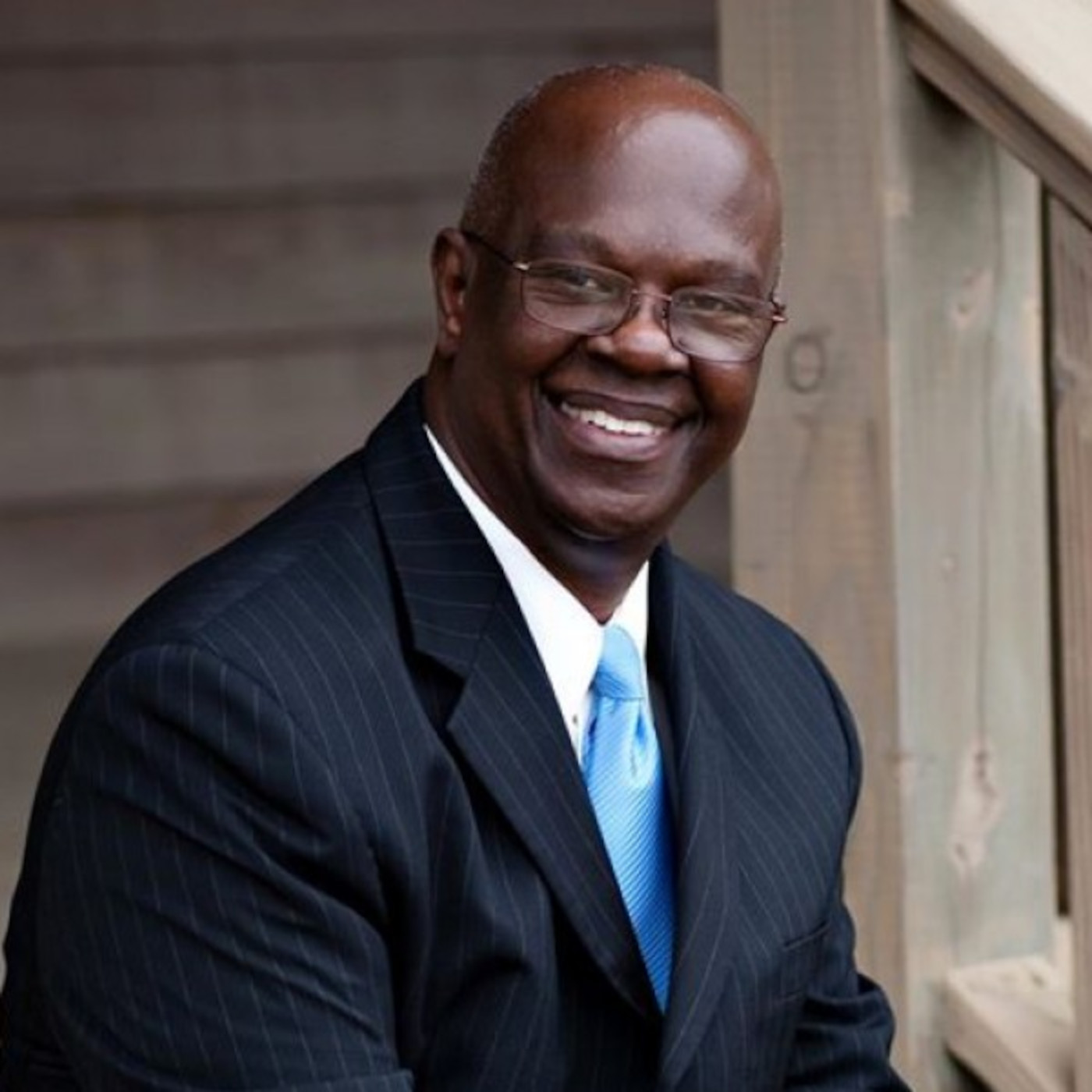
Zenki Christian Dillo Roshi is the Guiding Teacher at the Boulder Zen Center in Colorado, USA. This podcast shares the regular dharma talks given at the Center. Zenki Roshi approaches Zen practice as a craft of transformation, liberation, wisdom, and compassionate action. His interest is to bring Buddhism alive within Western cultural horizons while staying committed to the traditional emphasis on embodied practice.
Μην παραλείψεις να επισκεφτείς τη σελίδα του podcast και να στηρίξεις τον δημιουργό: www.boulderzen.org
Δημιουργός
Zenki Christian Dillo
Κατηγορία
Ιστοσελίδα του podcast
Τελευταίο επεισόδιο
1 Οκτ 2026
Πού να ακούσεις;
Podcast στην εφαρμογή Replaio Radio Έρχεται σύντομαΤα podcast έρχονται σύντομα στην εφαρμογή. Εγκατάστησέ την τώρα και δες πρώτος μια εντελώς νέα προσέγγιση στα podcast
 Δωρεάν εγκατάσταση
Android σχεδόν 10 εκατ. λήψεις · βαθμολογία 4,8
iOS σύντομα
Δωρεάν εγκατάσταση
Android σχεδόν 10 εκατ. λήψεις · βαθμολογία 4,8
iOS σύντομα
Επεισόδια
Modalities of Mind 11.06.2021 45:14
This talk describes five modalities of mind that we can learn to distinguish when we commit to a path of meditation and mindfulness: (1) discursive thinking (2) applied thinking (3) attentional consciousness (4) felt sense (5) awareness We encounter the modality of discursive thinking when we first sit down in meditation. We begin to see that it obscures, blocks, obstructs the other modalities. By...
Daily Zazen 19.05.2021 52:37
This talk is about how to put a regular zazen practice together in one's daily life. It starts out with a look at the two sicknesses of meditation: Treating meditation as a means to an end. Using meditation as a way to escape difficulty. The antidote to the two sicknesses is seeing zazen as the repeated gesture of "opening up around" our experience as it is from moment to moment. By...
A Fresh Look at Discipline 13.05.2021 41:25
Discipline is not a popular word. To most people, it feels like something imposed from the outside, an expectation others have of us or one we have internalized. This talk is about reframing the concept of "discipline" as the ability to hold an intention over time. Intention is most deeply rooted in satisfaction—not in willpower.
The Path of Nourishment 22.01.2021 45:03
This talk looks at "nourishment" as the other side of suffering. When is an experience nourishing-independent of whether it is pleasant or unpleasant? The answer lies In the practice or completing that which appears: allowing our experience to be exactly what It Is at this time and also allowing it to become what it wants to become.
Working with Habits/Karma (Part 4) 14.01.2021 40:13
What is enlightenment? And what is the relationship to habits and karma? This talk examines what the words "enlightenment," "awakening," and "realization" point to. It presents a "practice of enlightenment" based on Dogen's instruction "to be steadily intimate with the field of mind." The practice of enlightenment is not a self-improvement or...
Working with Habits/Karma (Part 3) 25.12.2020 53:41
Using the koan of "Baizhang's Fox" (Case 8 in the Book Serenity), this talk asks about the Middle Way of being simultaneously free from and entangled in the world of karmic patterns. We are free from karma by savoring nirvanic moments and establishing ourselves more and more in the field of mind that non-reactively allows everything to be the way it is. When we relax and stop seeing...
Working with Habits/Karma (Part 2) 10.12.2020 49:28
Transformation through Buddhist practice includes changing our habits/karma. Karma refers to the patterns in our life that emerge from repeated intentional action that, through the repetition, gets automated and subconsciously habituated. This talk examines the structure of habits and how they can be deconstructed. It suggests bringing the practice of Zazen into our daily lives by deliberately bei...
Working with Habits/Karma (Part 1) 24.11.2020 47:06
Transformation through Buddhist practice includes changing our habits/karma. Karma refers to the patterns in our life that emerge from repeated intentional action that, through the repetition, gets automated and subconsciously habituated. This talk examines the structure of habits and how they can be deconstructed. It suggests bringing the practice of Zazen into our daily lives by deliberately bei...
Compassion in Disagreement 07.11.2020 43:12
This talk takes up a question many people ask these days in the face of political polarization and climate change denial. How can we have compassion with those we disagree with? Usually, we try to establish community on the conceptual level—through an agreement about ideas, opinions, and values. A more fundamental connectedness occurs through "resonance," the bodymind's capacity to...
The Precepts and the Three Poisons 17.10.2020 55:41
How can we use the 16 Bodhisattva Precepts to study our own experience and transform it? Buddhism tells us that the root of unwholesomeness (harm, evil) in our own experience is the Three Poisons: greed, hate, and delusion—or more subtly, the moment-to-moment mind-gestures of grasping, resisting, and the delusive replacing of direct experience with conceptual knowledge. Practicing the precepts mea...
Focus and Field 03.10.2020 54:08
This talk is about exploring the basic practice instruction of shifting from the focus of attention to the field of mind and back and forth. The practice, applied in all six sense fields, reveals a basic structure of the mind with far-reaching transformative potential.
Just Sitting 19.09.2020 51:57
The fundamental instruction of our school is "Just Sitting." This "just"—not limited to the sitting posture—means to allow your experiencing to be exactly what it is at this time. Now. Such non-interference invites the mind to shift into awareness, which is without qualities and always already at ease with experience as it is. The spiritual virtues of kindness, wisdom, and resi...
More Real Than Reality 05.09.2020 35:59
How can you be you yourself? "Being you yourself" implies there are ways you can lose yourself. The antidote to losing yourself is mindfulness practice, which reveals a basic structure of immediacy: the contents of mind and the field of mind. Rooted in the mindful presence of your actual experience right now, you can then take the backward step into the field of mind and explore what is...
Homeless Home 29.08.2020 53:26
This talk was given as part of the "Inaugural Weekend Sitting" that marked the transition of the Boulder Zen Center to an urban residential practice center. It uses the feeling of "homelessness" and "displacement" and the truth of impermanence as a starting point for exploring how we can approach feeling at home in the world on a moment to moment basis. The practice s...
Momentariness, Bodyfulness, Kindness 30.07.2020 43:22
This talk starts out discussing "identification" and "personal identity" as a kind of defense against the groundless, momentary, and insubstantial nature of our existence. It then presents a set of practices – momentariness, bodyfulness, and kindness – that can be used not only on the cushion when practicing sitting meditation but also in daily life.
Emotional Freedom 16.07.2020 38:33
The pandemic brings out emotions in us: anxiety, sadness, anger, impatience, worry, etc. This talk discusses the "anatomy of emotions" by distinguishing the sensation level from the interpretation level of emotion. This distinction is in relationship to the more general practice concept of the primary and secondary activity of mind. Realizing emotional freedom requires the skill to atten...
Doing Something About Suffering 02.07.2020 40:07
Suffering = Pain x Resistance. When pleasure and grasping are included, the formula can be rendered as: Suffering = Experiential Intensity x Reactivity. This opens up two pathways to end suffering: remove pain (experiential intensity) or eliminate reactivity. Buddhism is about practicing with reactivity, because that’s the factor we can bring under our control. There is freedom from suffering (bas...
Groundlessness and Vow 25.06.2020 38:54
This talk is about how we use narratives as support for personal and collective identity and how the current societal conditions challenge our stories and can leave us with a feeling of groundlessness. Buddhist transformation is about the embrace of groundlessness and about making use of our situation—whatever it is—in accord with our highest intentions. Vow is intention plus commitment. What woul...
Not Transcending Our Humanness 18.06.2020 36:45
This talk is about the difference between healthy and unhealthy transcendence. Meditation practice and the concept of detachment can create the fantasy that we might be able to transcend our humanness by excluding our emotionality and vulnerability from our beingness. Healthy transcendence in contrast allows us to be dis-identified from our experience while staying connected with it. The talk eluc...
Racism and the Resonant Body 04.06.2020 42:46
This talk, originally given to a Zoom audience of white people, acknowledges the intensity of this moment in American history: a convergence of the COVID-19 pandemic, economic collapse with 40 million unemployed, and now global protests against racism in America. Zenki Christian Dillo, a white immigrant born in Germany, reflects on his personal experience with the collective trauma of the Holocaus...
Noticing Without Thinking About 28.05.2020 33:38
This talk gives Zazen instruction for disentangling attention from thinking. The koan story of Baizhang’s Wild Ducks (Case #40 of the Blue Cliff Records) is brought up to clarify the attentional body that needs to be practiced to stabilize a mind that is able to notice without thinking about. It is through this attentional body that the teachings of “no coming, no going” and “no birth, no death” b...
The 10,000 Things and I Share the Same Body 21.05.2020 41:39
This talk continues the exploration of impermanence, momentariness, and insubstantiality—all aspects of what Buddhism refers to as emptiness—and adds the aspect of interdependence. It highlights the context of Zazen practice, emphasizing that the exploration needs to be experiential not just intellectual. The koan phrase “Heaven, earth, and I have the same root; the 10,000 things and I share the s...
Momentary and Insubstantial 14.05.2020 40:32
This talk articulates impermanence as momentariness and insubstantiality, continuing the discussion of the practice of impermanence from last week. To investigate and enact our experience as both momentary and insubstantial transforms our sense of self and provides new ways of working with our habits.
Practicing Impermanence 10.05.2020 44:33
Related to questions about death and dying that are highlighted by the pandemic, this talk discusses three arenas, in which to practice impermanence: self, phenomena, and attention. What happens when we say to ourselves, “I will die. I am willing to die. I am ready to die.” Beyond the mortality of our own bodymind, Zen emphasizes momentariness. This talk explores the practice of the Four Marks of...
Modalities of Mind (Dealing with the Pandemic) 19.04.2020 51:45
This talk distinguishes two modalities of mind: consciousness and awareness. The job of consciousness is to make the world cognizable, sequential, predictable, and meaningful. Awareness establishes perceptual immediacy before it gets overlaid with concepts, time structures, expectations, and stories. Always standing on the two feet of both consciousness and awareness, what happens when we shift ou...
Παρόμοια podcast







Άκου το podcast Zen Mind στο Replaio
Ραδιόφωνο και podcast σε μία εφαρμογή - δωρεάν, χωρίς εγγραφή. Εγκατάστησέ την σήμερα και μη χάσεις την πρεμιέρα
Το Replaio δεν είναι εκδότης podcast - τα ονόματα των εκπομπών, τα εξώφυλλα και ο ήχος ανήκουν στους δημιουργούς τους και διανέμονται μέσω δημόσιων ροών RSS
