The Quint
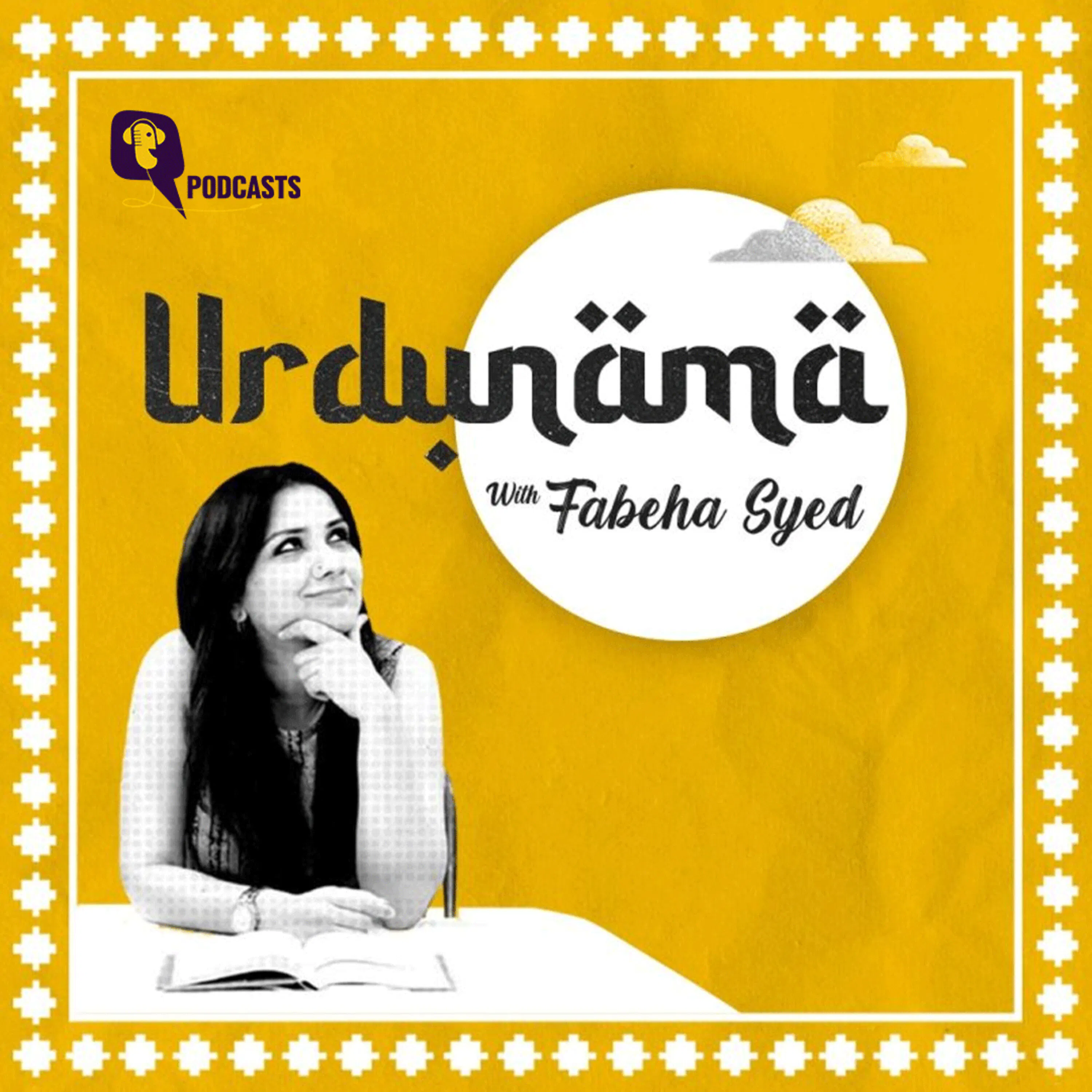
Urdunama
Bollywood songs turn us all into Grammy award-winning bathroom singers! But wait, do you know the meaning of every word you sing? Especially the ones in Urdu? On Urdunama, our host Fabeha Syed takes one word at a time and breaks it down for you. Be it the protest poetry of Faiz, or Sameer's 90s nostalgia, we have it all. If you like Urdu and poetry, this podcast is for you!
Besuch unbedingt die Website des Podcasts und unterstütze die Macher: bingepods.com
Wo hören?
Podcasts in der App Replaio Radio Bald verfügbarPodcasts kommen bald in die App. Installiere sie jetzt und erlebe als Erster einen ganz neuen Blick auf Podcasts
 Kostenlos installieren
Android fast 10 Mio. Downloads · Bewertung 4,8
iOS bald
Folgen
Junoon in Urdu Poetry: Meaning, Madness, and Purpose 24.01.2026 15:29
Junoon is often translated as passion or madness, but in Urdu poetry it carries layered, sometimes conflicting meanings. For poets like Mirza Ghalib, junoon is dangerous if exposed or fully unpacked. It then becomes a force so raw that it can undo the self. If Ghalob's junoon is intense, self-aware, and often destructive, poets like Ahmad Faraz and Ameer Qazalbash later engage with the same intens...
When Hard Work Isn’t Enough: Mehnat in Everyday Life and Poetry 11.01.2026 13:50
In this episode, we sit with the Urdu word 'mehnat' which is usually translated as 'hard work', but carrying far more tiredness, repetition, and lived experience. Moving between everyday life and Urdu poetry, the episode pushes back against the idea that hard work always guarantees success. From the comforting language of motivational culture to the kind of labour that happens quietly, without vis...
Dua as Faith, Action and Inheritance: Reading Ghalib, Munawwar Rana and Kaifi Azmi 04.01.2026 13:44
In Urdu poetry, dua is never just prayer but it is a reflection of how a poet relates to hope, faith, and control. For Ghalib, dua is too uncertain. He chooses action over waiting, offering his entire self instead of trusting outcomes. For Munawwar Rana, dua is absolute assurance, a mother's prayer that walks beside him like protection, unquestioned and complete. And for Kaifi Azmi, dua becomes th...
Reading Ghalib's 'Koi Umeed Bar Nahin Aati': Ego and Self Awareness Without Apology 27.12.2025 15:45
Reading Ghalib's 'Koi Umeed Bar Nahin Aati': Ego and Self Awareness Without ApologyDescription: Mirza Asadullah Beg Khan, known to the world as Mirza Ghalib, remains a towering figure in Urdu poetry for his rare ability to capture complex emotions with striking simplicity. In this episode, we step into Ghalib’s world through one of his most well-known ghazals, 'Koi Umeed Bar Nahin Aati.' The readi...
Falsafa in Life: Understanding Iqbal’s Philosophy of Grief 20.12.2025 17:54
What is Falsafa? It’s the philosophy that pushes us to explore ideas with wisdom, and with a humility in which every certainty melts away. We explore this week's theme, 'falsafa' through Iqbal’s 'Falsafa-e-Gham'. He shows that grief isn’t just pain but it’s the light inside the heart, the silent music and the rouge for the soul that beautifies it. He goes on that loss and sorrow awaken us, polis...
Zehn and Jazbātiyat: Heart vs Mind in Urdu Poetry 13.12.2025 11:23
This week in UIrdunama, we explore poems that live inside our zehn, meaning our mind. But this internal world of the zehn keeps colliding with the one that belongs to the heart and its jazbātiyat (emotion driven clarity) that won’t be silenced. From Barelvi’s guiding light in confusion, to Jazib’s heart triumphing over intellect, to Javed Akhtar’s inner world in flames where only one surviving co...
Kya Sochte Ho? : Exploring 'Soch' Through Urdu Poetry 06.12.2025 18:21
In this week's Urdunama, we speak about 'Soch', meaning a personal lens through which we look at everything. With the intensity of Mohsin Naqvi, the softness of Bashir Badr, the sharp pain of heartbreak from rejectioon in Parveen Shakir's ghazal, and the mature understanding of boundaries in intimacy in Ahmad Faraz's nazm 'bhali si ek shakl thi', Fabeha Syed unpacks how thoughts shape love, loss,...
Dharmendra - Pur Kashish, Shaista Mizaaj Fankar 29.11.2025 12:16
In this week’s Urdunama, we remember Dharmendra not only as Bollywood's "Greek-God" hero but essentially as a man defined by two qualities - Pur-kashish (full of charm) and Shaista-mizaaj (gentle in nature). From humble beginnings in Punjab to a stunning, record 300 plus film-career, he was a man in love with Urdu zabaan. Join us for a brief tribute to a star whose charm and grace remain unforgett...
Tasalli: Where Grief Meets Gentle Healing 21.11.2025 16:49
Tasalli is a feeling of comfort, reassurance, and emotional support. It is what helps the heart feel calm when someone listens without judgment, shares your pain or simply lets you be with your emotions. Urdu poets like Aarzoo Lakhnavi write about tasalli as the space to process grief, letting tears flow and giving the heart time to settle. or, rather the lack of it when the poet is also expecting...
Sannata - The Sound Between Words 02.11.2025 14:07
In poetry, “Sannata” isn’t just silence but the stillness where everything stops. It is the absence of sound, of presence, of movement, yet it carries a strange weight. Poets like Gulzar, Ameer Qazalbash, Abbas Tabish and Manmohan Shukla ‘Talkh’ have turned this silence into a living emotion. For Gulzar, sannata comes sneakily, filled with the fear of losing someone. Ameer Qazalbash writes of a si...
Chain and Bechaini: The Space Between Rest and Restlessness 25.10.2025 13:27
In Urdu, chain means comfort, meaning when the heart finally feels at ease. Bechaini is the opposite. It is the restlessness that keeps you awake, searching for something more, something else. Poets like Faiz Ahmad Faiz, Shaikh Ibrahim Zauq, and Josh Malihabadi wrote from this space between calm and chaos. Maybe that’s what it is. Not choosing between comfort and restlessness, but learning to live...
In the Glow of ‘Roshni’, Every Poem Finds Clarity 18.10.2025 14:37
Roshni, meaning 'light', in Urdu poetry is never alone. It gains meaning only when contrasted with darkness, whether that’s doubt, loneliness, or the moments that challenge our hearts. Poets show us that hope isn’t about perfection; it’s about courage, resilience, and the quiet moments when even a small glimmer can guide us. From Shakeel Badayuni’s faith tested by doubt, to Bashir Badr’s morning b...
Ranj: The Quiet Ache Beneath Every Verse 12.10.2025 13:26
In this episode, we explore Urdu word Ranj, sorrow, grief, and the small heartbreaks that shape our lives. From Sahir to Dagh, Shakeel, and Irfan, each poet has experienced, expressed, and understood Ranj in their own way. Sometimes it becomes empathy, sometimes resilience, and sometimes a quiet irony. We unpack these layers through poetry and reflection, showing how Ranj is not just about pain bu...
‘Haazir’ - More Than Just Being Present 04.10.2025 10:59
In this episode, we explore the word Hazir — a simple word that means “present,” but in Urdu poetry it holds much deeper weight. With verses from Parveen Shakir and Ahmad Faraz, we look at how hazir shifts in its context and scope. the couplets curated in this episode reminds us that being hazir is never just about attendance. It’s about presence with all its complexity — love, loss, surrender, re...
Whispers From the Unseen: The World of 'Ghaib' 29.09.2025 19:29
In this episode, we dive into the idea of ghaib — that mysterious, hidden side of life that we can’t fully see or grasp. We move from the mystical inspiration in Ghalib’s poetry, to the revolutionary energy in Chakbast’s ghazal, and the creative intinacy that echoes in Ahmad Salman’s verses, discovering how poets have drawn from the unseen to fuel creativity, emotion, and reflection. But ghaib isn...
Every Step of Raqs Is a Verse Untold 13.09.2025 15:48
What does it mean to 'dance' in Urdu poetry? In this episode of Urdunama, Fabeha Syed explores Raqs, the movements, the madness, and the magic behind it. It's the kind that moves your heart, your soul, even the world around you. We look at the ashaar of Majrooh Sultanpuri, Saghar Khayyami, and Abbas Tabish, and see how they turn dance into metaphor: the joy of little steps, the madness that takes...
The Gift of 'Fursat' in a World That Never Pauses 06.09.2025 15:14
In this episode of Urdunama, Fabeha Syed explores the word Fursat, those rare moments of time when you can pause, breathe, and just be. What does it mean in Urdu poetry? We look at the ashaar of Ghalib, Faiz, and Sahir, tracing how each poet reflects on these small luxuries: the freedom to imagine, the quiet spaces that let life breathe, and the way even fleeting moments can feel enormous. From da...
Between Silence and Sight, 'Manzar' Lives 30.08.2025 14:13
This week on Urdunama, we talk about manzar, a word that means a view, a scene, a spectacle. In Urdu poetry, though, it’s more than just scenery; it’s like a theatre of the mind where words create pictures and feelings at the same time. With the verses of Gulzar, Nida Fazli, and Bashir Badr, we look at how one simple manzar can open up entire worlds of silence, dreams, and reflection. Learn more a...
Whose Urdu Is It Anyway? Exploring Urdu’s Shared Heritage with Rakhshanda Jalil 23.08.2025 24:16
For centuries, Urdu has been part of a shared cultural space, shaped by people from diverse communities and traditions. Yet this fact is often forgotten or pushed aside. That’s why the new anthology Whose Urdu Is It Anyway? feels so important. Edited and translated into English by writer, literary historian, and translator Dr. Rakhshanda Jalil, the book brings together 16 Urdu short stories writte...
'Shiddat'—When Feeling Knows No Measure 16.08.2025 11:55
Shiddat means intensity, the force of feeling when emotion refuses to stay small. It is love that burns without pause, grief that floods without mercy, joy that shakes the soul to its core. Shiddat is the storm within us, the fire in every longing, the ache in every absence. It does not whisper; it roars. In Urdu poetry, shiddat is the heartbeat of passion and pain alike, where words become flames...
Where 'Khaak' Rests, All Roads Meet 09.08.2025 22:28
Khaak means dust, humble, weightless, and ever-returning to the earth. It is where all journeys end and where every beginning quietly stirs. Khaak carries the memory of everything it has touched, walls once standing, feet once wandering, lives once lived. In Urdu poetry, khaak becomes a reminder of impermanence, of the fragility of glory, and of the beauty in humility. It speaks of both finality a...
The Art of Living with Zakhm 02.08.2025 23:05
Zakhm means wound, but in poetry, it is more than just pain. It is memory stitched into skin, heartbreak carried in silence, and love that once cut deep. A zakhm can be raw or hidden, healing or haunting. In Urdu verse, it becomes a canvas, where sorrow turns into metaphor, and suffering into something almost beautiful. Zakhm isn’t just what breaks us; it’s what shapes us. In this episode of Urdun...
In a World Too Loud, Hassaas Feels Everything 19.07.2025 18:15
Hassaas means sensitive, a word that lives in the pauses, in the glances that linger a little longer, in the hearts that feel too much, too deeply. To be hassaas is to notice what others miss, to carry invisible weight, to be moved by the slightest shift in the air. It is a gift of awareness, but also a quiet ache—a constant hum beneath the noise of the world. In Urdu poetry, hassaas becomes the s...
When ‘Beyhis’ Took Over, Even Tears Forgot Their Way 12.07.2025 16:50
Beyhis means numb—an absence of feeling that grows not from peace, but from exhaustion. It is the quiet void after too much pain, the stillness that follows when even sorrow becomes heavy to carry. Beyhis is not indifference; it is the body and soul’s final defense, a silence that shields, a pause that protects. In Urdu poetry, it becomes a haunting space—where once there was fire, now only cold r...
'Malaal' Sat Where Words Once Lived 28.06.2025 16:46
Malaal means regret, a soft ache that lives in silence, in the pause between what was and what could’ve been. It is not always loud or visible, but it lingers in missed chances, in unsent letters, in goodbyes that never found their words. Malaal doesn’t ask to be resolved; it asks to be remembered. In Urdu poetry, it becomes the quiet thread that ties together loss, longing, and lessons not yet le...
Ähnliche Podcasts







Höre den Podcast Urdunama in Replaio
Radio und Podcasts in einer App - kostenlos und ohne Anmeldung. Installiere sie noch heute und verpasse den Start nicht
Replaio ist kein Herausgeber von Podcasts; die Namen der Sendungen, Cover und Audioinhalte gehören ihren Autoren und werden über öffentliche RSS-Feeds verbreitet