James Edward Mills
The Unhidden Minute
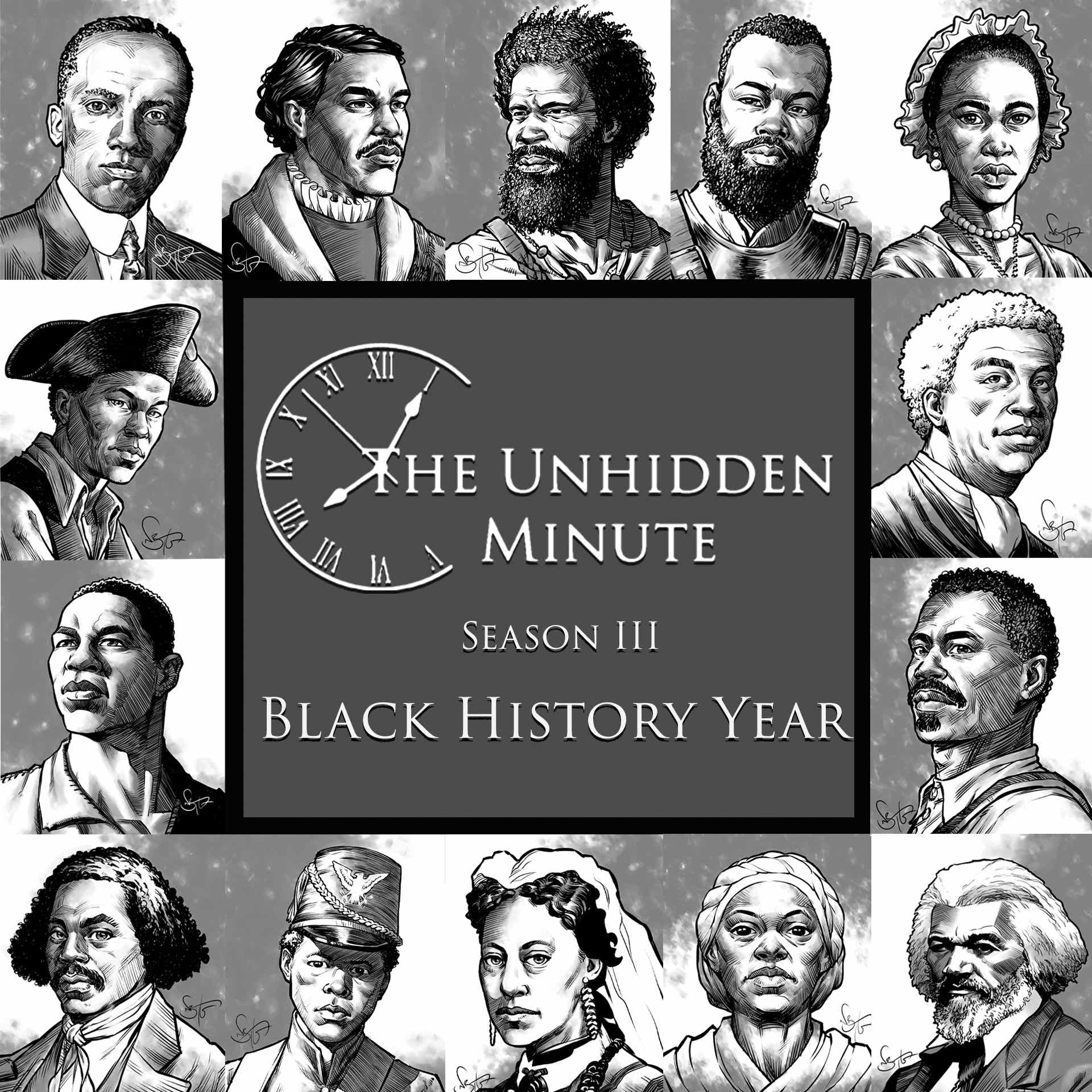
The Unhidden Minute is part of the Unhidden Podcast Project supported through a National Geographic Explorer Grant from the National Geographic Society. This series celebrates the untold stories of Black American history. jamesedwardmills.substack.com
Besuch unbedingt die Website des Podcasts und unterstütze die Macher: jamesedwardmills.substack.com
Autor
James Edward Mills
Kategorie
Podcast-Website
Neueste Folge
27. Okt 2026
Wo hören?
Podcasts in der App Replaio Radio Bald verfügbarPodcasts kommen bald in die App. Installiere sie jetzt und erlebe als Erster einen ganz neuen Blick auf Podcasts
 Kostenlos installieren
Android fast 10 Mio. Downloads · Bewertung 4,8
iOS bald
Folgen
Benjamin 'Pap' Singleton 05.05.2026 1:20
Benjamin ‘Pap’ Singleton was a formerly enslaved man who became a leading voice for Black self-determination in the years after the Civil War. Born into slavery in 1809 in Nashville, Tennessee, Singleton escaped to freedom and later returned to help others do the same through the Underground Railroad. After Reconstruction, as violence and oppression spread across the South, he advocated for Black...
The Exoduster Movement 28.04.2026 1:22
The Exoduster Movement began in 1879 as thousands of formerly enslaved Black Americans fled the violence and oppression of the post-Reconstruction South. Drawn primarily to Kansas, these migrants—known as “Exodusters,” evoking the biblical Exodus—sought land, safety, and the full promise of freedom. Their departure was fueled by the collapse of Reconstruction, the rise of Black Codes, and the grow...
The 14th Amendment of the U.S. Constitution 22.04.2026 1:20
On July 9, 1868, member of Congress ratified t he Fourteenth Amendment to the U.S. Constitution . In the aftermath of the American Civil War, this was a bold redefinition of who could claim their rights under the rule of law. “All persons born or naturalized in the United States, … are citizens of the United States.” This promise of birthright citizenship overturned the Dred Scott v. Sandford deci...
The Fair Housing Act of 1968 14.04.2026 1:20
The Fair Housing Act of 1968 was passed in the wake of the assassination of Martin Luther King Jr., as the nation grappled with unrest and longstanding inequality. Signed into law on April 11, 1968, it prohibited discrimination in the sale, rental, and financing of housing based on race, religion, and national origin. It was later expanded to include sex, disability, and family status. The law sou...
The Final Speech of Martin Luther King Jr. 06.04.2026 1:20
On April 3, 1968, Dr. Martin Luther King Jr. stood before a crowd in Memphis, Tennessee and delivered what would become his final address—I’ve Been to the Mountaintop. Speaking in support of striking sanitation workers, King’s words carried a weight that felt both urgent and prophetic. He spoke of economic justice, of unity, and of the long struggle for dignity. But it was his closing that endures...
Josephine St. Pierre Ruffin 31.03.2026 1:20
Josephine St. Pierre Ruffin (1842–1924) was a pioneering Black American journalist, suffragist, and civil rights leader who helped organize Black women into a national force for social change. Born in Boston to a prominent abolitionist family, Ruffin was educated in the United States and Europe and became deeply involved in the fight for both racial and gender equality. In 1890, she founded The Wo...
The National Association of Colored Women 24.03.2026 1:20
The National Association of Colored Women (NACW) was founded in 1896 to unify Black women’s clubs across the United States in the fight for racial uplift, social reform, and women’s rights. Formed by leaders including Mary Church Terrell , Ida B. Wells , and Josephine St. Pierre Ruffin , the organization adopted the motto “Lifting as We Climb,” reflecting its mission to advance the entire Black co...
Coretta Scott King 17.03.2026 1:20
Coretta Scott King (1927–2006) was a leading Black American activist, author, and global advocate for civil and human rights. Born in Heiberger, Alabama, she studied music and education at Antioch College and the New England Conservatory before marrying Dr. Martin Luther King Jr. in 1953. Far more than the wife of a movement leader, Coretta Scott King was a strategist and organizer in her own righ...
Mary Church Terrell 10.03.2026 1:20
Mary Church Terrell (1863–1954) was a pioneering Black American educator, suffragist, and civil rights activist who dedicated her life to advancing racial and gender equality. Born in Memphis, Tennessee, to formerly enslaved parents who became successful entrepreneurs, Terrell benefited from educational opportunities rare for Black Americans in the 19th century. She earned both a bachelor’s and ma...
Diane Nash 03.03.2026 1:20
Diane Nash is a central figure in the modern Civil Rights Movement and one of its most disciplined strategists of nonviolent direct action. Born in Chicago in 1938, she became radicalized by the everyday reality of segregation while attending Fisk University in Nashville, Tennessee. In 1960, Nash emerged as a leader of the Nashville sit-ins, confronting segregation at lunch counters with remarkabl...
The National Association for the Advancement of Colored People 24.02.2026 1:20
The National Association for the Advancement of Colored People (NAACP) was founded in 1909 in response to escalating racial violence and the rollback of Reconstruction-era rights. Organized by an interracial coalition that included W.E.B. Du Bois , Ida B. Wells , Mary White Ovington, and others, the NAACP sought to secure political, educational, social, and economic equality for Black Americans. F...
The Children's Crusade 17.02.2026 1:20
The Children’s Crusade of 1963 was a pivotal moment in the Birmingham Civil Rights Campaign, when hundreds of Black American schoolchildren took to the streets to challenge segregation. Organized by the Southern Christian Leadership Conference (SCLC) and the Alabama Christian Movement for Human Rights, leaders including Dr. Martin Luther King Jr. and Rev. James Bevel encouraged young people to mar...
Reverend Fred Shuttlesworth 10.02.2026 1:20
Rev. Fred Shuttlesworth (1922–2011) was one of the most fearless leaders of the Civil Rights Movement. A Baptist minister in Birmingham, Alabama, he co-founded the Alabama Christian Movement for Human Rights in 1956 after the state outlawed the NAACP. From that moment, he became a relentless force against segregation in one of the most violently racist cities in the South. His home was bombed on C...
Cathy Williams 03.02.2026 1:20
Cathay Williams (1844–1893) is remembered as the only documented woman to serve as a Buffalo Soldier , disguising herself as a man under the name William Cathay . Born enslaved in Missouri, Williams gained her freedom during the Civil War and later enlisted in 1866 with the U.S. Army’s 38th Infantry, one of the original Black regiments formed after emancipation. For nearly two years, she endured h...
The Battle of Bunker Hill 27.01.2026 1:20
The Battle of Bunker Hill , fought on June 17, 1775, was one of the first major engagements of the American Revolution, and Black American soldiers played a visible and courageous role. Among the most recognized was Peter Salem , a formerly enslaved man from Massachusetts who fought with colonial forces on Breed’s Hill. He is often credited with firing the shot that killed British Major John Pitca...
Prince Estabrook 20.01.2026 1:20
Prince Estabrook was a Black American patriot whose life embodies the contradictions of the American Revolution. Enslaved in Lexington, Massachusetts, Estabrook was among the militiamen who faced British regulars on April 19, 1775 , at the Battle of Lexington Green. When the first shots of the Revolution were fired, he stood in the front ranks and was wounded in the arm , becoming one of the earli...
Claudette Colvin 13.01.2026 1:20
Claudette Colvin was just 15 years old when she made history in Montgomery, Alabama. On March 2, 1955—nine months before Rosa Parks —Colvin refused to give up her seat on a segregated city bus. Inspired by lessons on Black American history and the Constitution, she later said she felt Harriet Tubman and Sojourner Truth “pushing down” on her shoulders, telling her to stay seated. She was arrested,...
Black History Year 06.01.2026 1:21
Did you know that 2026 is the 100th anniversary of Black History Month ? This annual observance is a necessary correction in a nation that too often erased or ignored the full story of Black American life. In 1926, historian Carter G. Woodson launched Negro History Week so the contributions of Black Americans could no longer be dismissed as footnotes. What began as a week became a month. Now, in t...
Jo Ann Allen Boyce 30.12.2025 1:20
At just fourteen years of age, Jo Ann Allen Boyce walked into history. In 1956, two years after the Brown v. Board of Education Supreme Court Decision that ended legal segregation, she became one of the Clinton 12. Boyce was among the first Black Americans to integrate a public high school in the South, when she entered Clinton High School in Tennessee. Her daily walk to class required extraordina...
Barbara Rose Johns 23.12.2025 1:20
Barbara Rose Johns (1935–1991) was a sixteen-year-old Black American student whose courage helped ignite one of the most important legal battles of the twentieth century. In 1951, while attending the segregated Robert Russa Moton High School in Farmville, Virginia, Johns organized and led a student strike to protest overcrowded classrooms, crumbling facilities, and the gross inequities of Jim Crow...
Sarah Rector 16.12.2025 1:20
Sarah Rector (1902–1967) was once known as “the richest Black girl in America.” Born in Indian Territory—now Oklahoma—to formerly enslaved Muscogee (Creek) Nation citizens, she and her family were among thousands of Black tribal members who received land allotments under the Dawes Act of 1887, which aimed to divide Native American land. In 1913, oil was discovered on her 160-acre parcel, and befor...
The Montgomery Bus Boycott 09.12.2025 1:20
The Montgomery Bus Boycott of 1955 was a landmark moment in the struggle for civil rights and a defining example of collective, nonviolent resistance. Sparked by the arrest of Rosa Parks , a Black American seamstress who refused to surrender her seat to a white passenger, the boycott began on December 5, 1955, in Montgomery, Alabama. For 381 days, Black residents refused to ride city buses. In def...
Bill Pickett 25.11.2025 1:20
Bill Pickett (1870–1932) was a pioneering Black cowboy, rodeo performer, and Wild West showman whose innovations left an indelible mark on American ranching culture. Born in Texas to formerly enslaved parents, Pickett developed extraordinary skills in horsemanship and cattle handling. He became famous for inventing “bulldogging,” a daring rodeo technique in which he would leap from his horse, grab...
The Double Victory Campaign 13.11.2025 1:20
The Double Victory Campaign was a powerful movement launched by Black Americans during World War II. This national initiative symbolized the fight for two forms of victory: one over fascism abroad and another over racism at home. Sparked by a 1942 letter to the Pittsburgh Courier , one of the nation’s leading Black newspapers, the campaign gained national momentum as Black citizens demanded that t...
George Meléndez Wright 04.11.2025 1:20
George Meléndez Wright was a pioneering biologist and one of the earliest advocates for the scientific management of wildlife in the U.S. National Park System . Born in San Francisco Wright earned a zoology degree from UC Berkeley and joined the National Park Service in the 1920s. At a time when wildlife policies focused primarily on controlling “nuisance” animals and enhancing visitor experiences...
Ähnliche Podcasts







Höre den Podcast The Unhidden Minute in Replaio
Radio und Podcasts in einer App - kostenlos und ohne Anmeldung. Installiere sie noch heute und verpasse den Start nicht
Replaio ist kein Herausgeber von Podcasts; die Namen der Sendungen, Cover und Audioinhalte gehören ihren Autoren und werden über öffentliche RSS-Feeds verbreitet