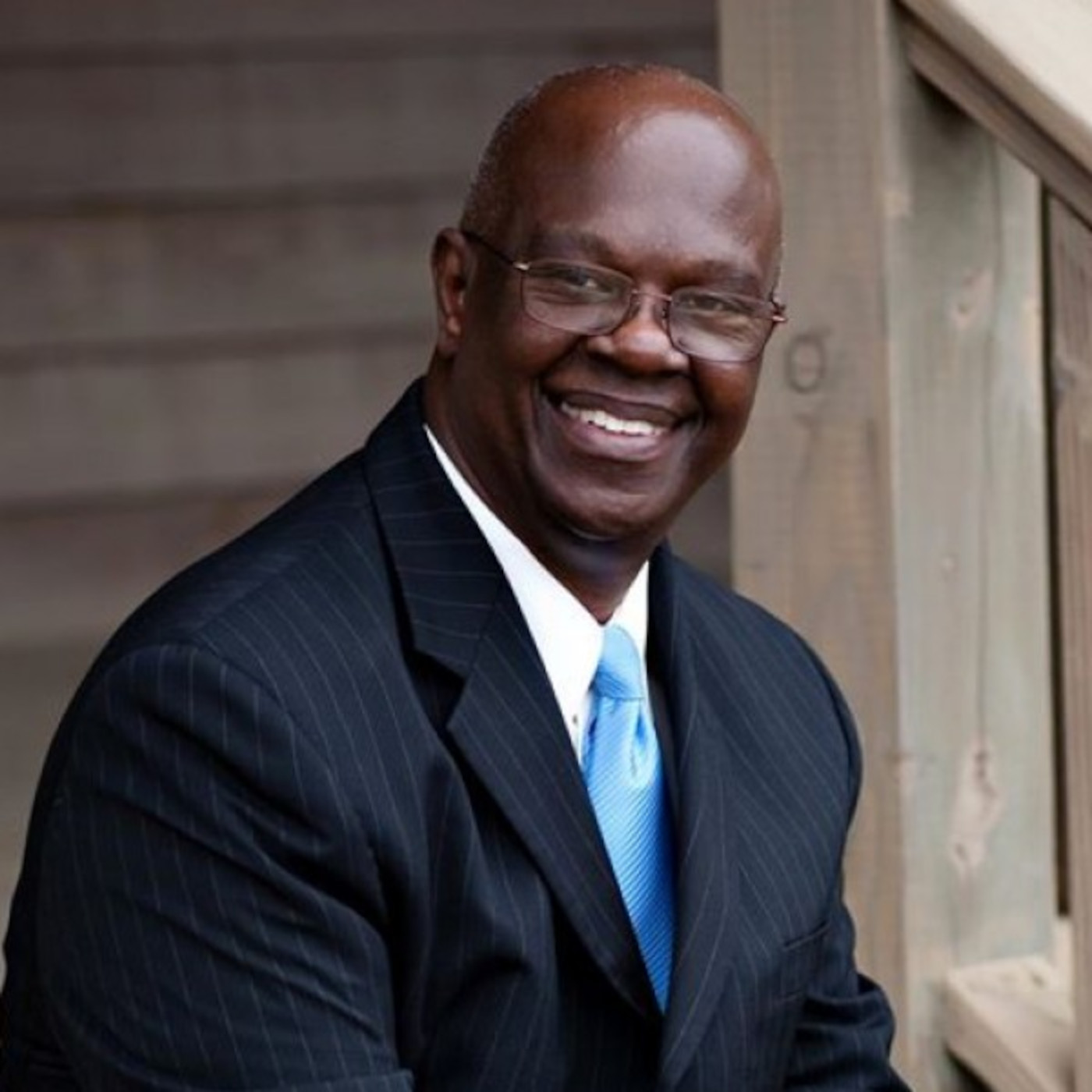
Bhikkhu Cintita
Buddha-Sasana
This podcast is an archive of Dharma talks given by Bhikkhu Cintita of the Sitagu Monastry in Austin, TX. Each talk illuminates aspects of the Buddha's teachings. The purpose is the same that the Buddha had for his teachings, to guide us toward the end of suffering and the attainment of freedom.
Besuch unbedingt die Website des Podcasts und unterstütze die Macher: Buddhasasana.podbean.com
Autor
Bhikkhu Cintita
Kategorie
Podcast-Website
Neueste Folge
2. Sep 2026
Wo hören?
Podcasts in der App Replaio Radio Bald verfügbarPodcasts kommen bald in die App. Installiere sie jetzt und erlebe als Erster einen ganz neuen Blick auf Podcasts
 Kostenlos installieren
Android fast 10 Mio. Downloads · Bewertung 4,8
iOS bald
Kostenlos installieren
Android fast 10 Mio. Downloads · Bewertung 4,8
iOS bald
Folgen
Buddhist self/modern self 21.10.2022 20:09
We discuss Buddhist practices for deconstructing the thing-self, and then how modern Buddhism is interpreted in terms of the modern authentic self. (Buddhism as Self-Help 5, 10/21/2022)
The rise of the authentic self 14.10.2022 19:52
We discuss how the ego-self is produced through appropriating assets as “me” and “mine” in Buddhist thought, and then how the historically evolved self in the west became the authentic self. (Buddhism as Self-Help 4, 10/14/2022)
The history of the self 07.10.2022 19:37
We discuss the thing-self in Buddhist thought, and the evolution of the self in European history. (Buddhism as Self-Help 3, 10/7/2022)
Buddhist self/modern self 30.09.2022 19:42
The Buddha analyzed the self at two levels: the thing-self and the ego-self. We use the ego-self, produced in becoming, to begin the analysis of the evolving western sense of self and its shadow sense of lack. (Buddhism as Self-Help 2, 9/30/2022)
Buddhism as self-help: introduction 23.09.2022 18:55
Has Buddhism become “the hegemonic ideology of global capitalism"? (Self-Help 1, 9/23/2022)
Locating “mindfulness” in the early Buddhist Texts 16.09.2022 20:56
I argue that modern “mindfulness” corresponds pretty closely to ‘samādhi’ in the early Buddhist texts. (9/16/2022)
The history of “mindfulness” 09.09.2022 18:53
How did the meaning of sati evolve from early Buddhist times to give us our modern understanding of “mindfulness”? (9/9/2022)
Sati is not ”mindfulness” 02.09.2022 19:26
‘Mindfulness’ misses the mark as a translation of Pali sati. Preferable is ‘recollection.’ (9/2/2022)
Buddhist terminology, part two 26.08.2022 21:40
More tips for the student confused by Buddhist technical terms. (Buddhist Terminology, talk 2, 8/26/2022)
Buddhist terminology, part one 19.08.2022 20:29
Tips for the student confused by Buddhist technical terms. (Buddhist Terminology, talk 1, 8/19/2022)
Liberation. 12.08.2022 20:33
What can we expect to result from the practice of Satipatthana? (Rethinking Satipatthana, talk 22, 8/12/2022)
Contemplation of the noble truths 05.08.2022 20:08
Inclusion of the for noble truths under phenomena greatly extends the scope of the satipatthana. (Rethinking Satipatthana, talk 21, 8/5/2022)
Internalization of Dharma 29.07.2022 19:08
We discuss how the practice of satipatthana helps us to perceive the world directly in terms of Dharma, to gain knowledge and vision of how things are. (Rethinking Satipatthana, talk 20, 7/29/2022)
Contemplation of the seven factors of awakening. 22.07.2022 21:06
The factors of awakening arise from satipatthana practice to produce concentration. Concentration in turn influences or rather interferes with the process of constructing the world. (Rethinking Satipatthana, talk 19, 7/22/2022)
Dependent Coarising in Satipatthana 15.07.2022 21:56
The key exercises of the contemplation of phenomena are closely connected to the links of dependent coarising. We discuss what we can learn from this critical teaching. (Rethinking Satipatthana, talk 18, 7/15/2022)
Contemplation of the sixfold sphere 08.07.2022 21:48
We discuss the an alternative model of cognition in the Buddha’s teachings that accounts for the arising of the experiential world from the basis of the six senses. (Rethinking Satipatthana, talk 17, 7/8/2022)
Contemplation of the aggregates 01.07.2022 21:50
We discuss the five aggregates of appropriation, a hugely important model of cognition in the Buddha’s teachings that accounts for the internal constructedness of the world. (Rethinking Satipatthana, talk 16, 7/1/2022)
Contemplation of the hindrances 24.06.2022 21:56
We discuss the five sources of distraction in meditative and contempletive practice. (Rethinking Satipatthana, talk 15, 6/24/2022)
Contemplation of phenomena 17.06.2022 19:50
We introduce the fourth broad subject of contemplation, phenomena or experiences as described in the Dharma, a set of six exercises to be discussed in the following weeks. (Rethinking Satipatthana, talk 14, 6/17/2022)
Contemplation of mind 10.06.2022 20:10
We talk about the third broad subject of contemplation, states of mind. (Rethinking Satipatthana, talk 13, 6/10/2022)
Contemplation of feelings 03.06.2022 21:53
We move past the body contemplations to contemplating our likes and dislikes. (Rethinking Satipatthana, talk 12, 6/3/2022)
Charnel ground contemplations 27.05.2022 21:45
We use the analogy of understanding clouds to illustrate the logic of internal analysis, then consider the contemplation of decaying corpses, which are much like clouds. (Rethinking Satipatthana, talk 11, 5/27/2022)
Internal analysis 20.05.2022 20:59
We take a closer look at internal analyis described in the satipatthana refrain, its logic and its function. Find supplementary materials at sitagu.org/shortlinks/satipatthana/ (Rethinking Satipatthana, talk 10, 5/20/2022)
Investigating the elements of the Body 13.05.2022 22:21
We take up contemplation of elements, and consider to what extent we are examining something imagined as opposed to something imagined in the body contemplations. Find supplementary materials at sitagu.org/shortlinks/satipatthana/ (Rethinking Satipatthana, talk 9, 5/13/2022)
Contemplation of bodily organs 06.05.2022 20:04
We take up contemplation of body parts and contemplation of elements. Find supplementary materials at sitagu.org/shortlinks/satipatthana/ (Rethinking Satipatthana, talk 8, 5/6/2022)
Ähnliche Podcasts







Höre den Podcast Buddha-Sasana in Replaio
Radio und Podcasts in einer App - kostenlos und ohne Anmeldung. Installiere sie noch heute und verpasse den Start nicht
Replaio ist kein Herausgeber von Podcasts; die Namen der Sendungen, Cover und Audioinhalte gehören ihren Autoren und werden über öffentliche RSS-Feeds verbreitet