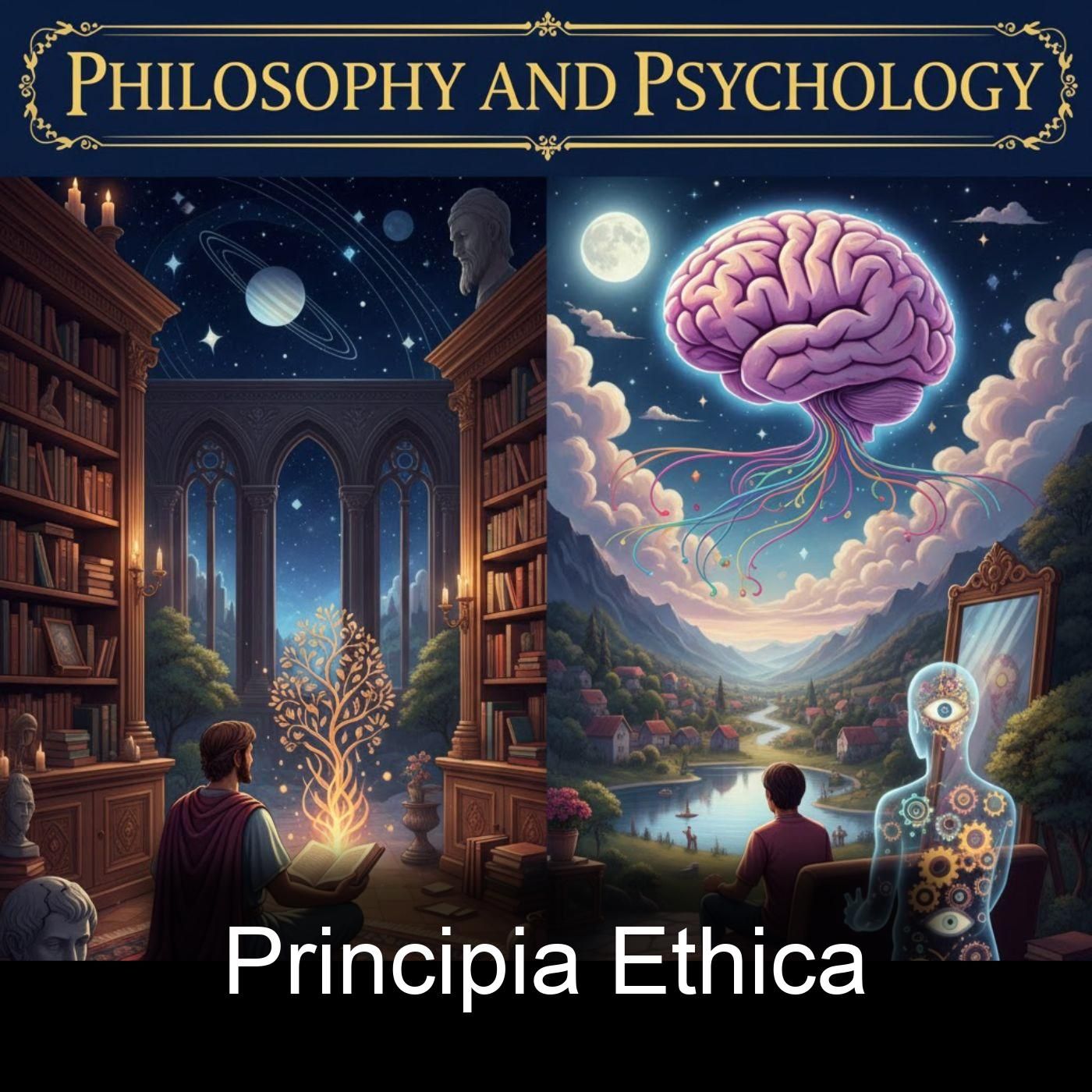
George Edward Moore
Principia Ethica
George Edward Moore, commonly referred to as G. E. Moore, (1873 – 1958) was a prominent and influential English philosopher. Alongside notable figures such as Bertrand Russell, Ludwig Wittgenstein, and the earlier Gottlob Frege, he played a crucial role in establishing the analytic tradition in philosophy, shaping the way we think about ethics and the nature of moral understanding.
Husk at besøge podcastens hjemmeside og støtte skaberen: www.spreaker.com
Forfatter
George Edward Moore
Kategori
Podcastens hjemmeside
Seneste episode
14. nov. 2026
Hvor kan du lytte?
Podcasts i appen Replaio Radio Kommer snartPodcasts kommer snart til appen. Installer nu, og vær den første til at se en helt ny tilgang til podcasts
 Installer gratis
Android 10 mio.+ downloads · 4,7+ i bedømmelse
iOS snart
Episoder
019 - Chapter 6 The Ideal part 2 09.02.2026 27:39
George Edward Moore, commonly referred to as G. E. Moore, (1873 – 1958) was a prominent and influential English philosopher. Alongside notable figures such as Bertrand Russell, Ludwig Wittgenstein, and the earlier Gottlob Frege, he played a crucial role in establishing the analytic tradition in philosophy, shaping the way we think about ethics and the nature of moral understanding.
018 - Chapter 6 The Ideal part 1 09.02.2026 25:01
George Edward Moore, commonly referred to as G. E. Moore, (1873 – 1958) was a prominent and influential English philosopher. Alongside notable figures such as Bertrand Russell, Ludwig Wittgenstein, and the earlier Gottlob Frege, he played a crucial role in establishing the analytic tradition in philosophy, shaping the way we think about ethics and the nature of moral understanding.
017 - Chapter 5 Ethics in Relation to Conduct part 4 09.02.2026 29:21
George Edward Moore, commonly referred to as G. E. Moore, (1873 – 1958) was a prominent and influential English philosopher. Alongside notable figures such as Bertrand Russell, Ludwig Wittgenstein, and the earlier Gottlob Frege, he played a crucial role in establishing the analytic tradition in philosophy, shaping the way we think about ethics and the nature of moral understanding.
016 - Chapter 5 Ethics in Relation to Conduct part 3 09.02.2026 26:01
George Edward Moore, commonly referred to as G. E. Moore, (1873 – 1958) was a prominent and influential English philosopher. Alongside notable figures such as Bertrand Russell, Ludwig Wittgenstein, and the earlier Gottlob Frege, he played a crucial role in establishing the analytic tradition in philosophy, shaping the way we think about ethics and the nature of moral understanding.
015 - Chapter 5 Ethics in Relation to Conduct part 2 09.02.2026 27:58
George Edward Moore, commonly referred to as G. E. Moore, (1873 – 1958) was a prominent and influential English philosopher. Alongside notable figures such as Bertrand Russell, Ludwig Wittgenstein, and the earlier Gottlob Frege, he played a crucial role in establishing the analytic tradition in philosophy, shaping the way we think about ethics and the nature of moral understanding.
014 - Chapter 5 Ethics in Relation to Conduct part 1 09.02.2026 26:51
George Edward Moore, commonly referred to as G. E. Moore, (1873 – 1958) was a prominent and influential English philosopher. Alongside notable figures such as Bertrand Russell, Ludwig Wittgenstein, and the earlier Gottlob Frege, he played a crucial role in establishing the analytic tradition in philosophy, shaping the way we think about ethics and the nature of moral understanding.
013 - Chapter 4 Metaphysical Ethics part 3 09.02.2026 27:20
George Edward Moore, commonly referred to as G. E. Moore, (1873 – 1958) was a prominent and influential English philosopher. Alongside notable figures such as Bertrand Russell, Ludwig Wittgenstein, and the earlier Gottlob Frege, he played a crucial role in establishing the analytic tradition in philosophy, shaping the way we think about ethics and the nature of moral understanding.
012 - Chapter 4 Metaphysical Ethics part 2 09.02.2026 29:06
George Edward Moore, commonly referred to as G. E. Moore, (1873 – 1958) was a prominent and influential English philosopher. Alongside notable figures such as Bertrand Russell, Ludwig Wittgenstein, and the earlier Gottlob Frege, he played a crucial role in establishing the analytic tradition in philosophy, shaping the way we think about ethics and the nature of moral understanding.
011 - Chapter 4 Metaphysical Ethics part 1 09.02.2026 28:20
George Edward Moore, commonly referred to as G. E. Moore, (1873 – 1958) was a prominent and influential English philosopher. Alongside notable figures such as Bertrand Russell, Ludwig Wittgenstein, and the earlier Gottlob Frege, he played a crucial role in establishing the analytic tradition in philosophy, shaping the way we think about ethics and the nature of moral understanding.
010 - Chapter 3 Hedonism part 4 09.02.2026 34:10
George Edward Moore, commonly referred to as G. E. Moore, (1873 – 1958) was a prominent and influential English philosopher. Alongside notable figures such as Bertrand Russell, Ludwig Wittgenstein, and the earlier Gottlob Frege, he played a crucial role in establishing the analytic tradition in philosophy, shaping the way we think about ethics and the nature of moral understanding.
009 - Chapter 3 Hedonism part 3 09.02.2026 30:45
George Edward Moore, commonly referred to as G. E. Moore, (1873 – 1958) was a prominent and influential English philosopher. Alongside notable figures such as Bertrand Russell, Ludwig Wittgenstein, and the earlier Gottlob Frege, he played a crucial role in establishing the analytic tradition in philosophy, shaping the way we think about ethics and the nature of moral understanding.
008 - Chapter 3 Hedonism part 2 09.02.2026 36:23
George Edward Moore, commonly referred to as G. E. Moore, (1873 – 1958) was a prominent and influential English philosopher. Alongside notable figures such as Bertrand Russell, Ludwig Wittgenstein, and the earlier Gottlob Frege, he played a crucial role in establishing the analytic tradition in philosophy, shaping the way we think about ethics and the nature of moral understanding.
007 - Chapter 3 Hedonism part 1 09.02.2026 31:57
George Edward Moore, commonly referred to as G. E. Moore, (1873 – 1958) was a prominent and influential English philosopher. Alongside notable figures such as Bertrand Russell, Ludwig Wittgenstein, and the earlier Gottlob Frege, he played a crucial role in establishing the analytic tradition in philosophy, shaping the way we think about ethics and the nature of moral understanding.
006 - Chapter 2 Naturalistic Ethics part 2 09.02.2026 27:35
George Edward Moore, commonly referred to as G. E. Moore, (1873 – 1958) was a prominent and influential English philosopher. Alongside notable figures such as Bertrand Russell, Ludwig Wittgenstein, and the earlier Gottlob Frege, he played a crucial role in establishing the analytic tradition in philosophy, shaping the way we think about ethics and the nature of moral understanding.
005 - Chapter 2 Naturalistic Ethics part 1 09.02.2026 29:27
George Edward Moore, commonly referred to as G. E. Moore, (1873 – 1958) was a prominent and influential English philosopher. Alongside notable figures such as Bertrand Russell, Ludwig Wittgenstein, and the earlier Gottlob Frege, he played a crucial role in establishing the analytic tradition in philosophy, shaping the way we think about ethics and the nature of moral understanding.
004 - Chapter 1 The Subject Matter of Ethics part 3 09.02.2026 34:33
George Edward Moore, commonly referred to as G. E. Moore, (1873 – 1958) was a prominent and influential English philosopher. Alongside notable figures such as Bertrand Russell, Ludwig Wittgenstein, and the earlier Gottlob Frege, he played a crucial role in establishing the analytic tradition in philosophy, shaping the way we think about ethics and the nature of moral understanding.
003 - Chapter 1 The Subject Matter of Ethics part 2 09.02.2026 29:06
George Edward Moore, commonly referred to as G. E. Moore, (1873 – 1958) was a prominent and influential English philosopher. Alongside notable figures such as Bertrand Russell, Ludwig Wittgenstein, and the earlier Gottlob Frege, he played a crucial role in establishing the analytic tradition in philosophy, shaping the way we think about ethics and the nature of moral understanding.
002 - Chapter 1 The Subject Matter of Ethics part 1 09.02.2026 29:13
George Edward Moore, commonly referred to as G. E. Moore, (1873 – 1958) was a prominent and influential English philosopher. Alongside notable figures such as Bertrand Russell, Ludwig Wittgenstein, and the earlier Gottlob Frege, he played a crucial role in establishing the analytic tradition in philosophy, shaping the way we think about ethics and the nature of moral understanding.
001 - Preface 09.02.2026 9:48
George Edward Moore, commonly referred to as G. E. Moore, (1873 – 1958) was a prominent and influential English philosopher. Alongside notable figures such as Bertrand Russell, Ludwig Wittgenstein, and the earlier Gottlob Frege, he played a crucial role in establishing the analytic tradition in philosophy, shaping the way we think about ethics and the nature of moral understanding.
Lignende podcasts







Lyt til podcasten Principia Ethica i Replaio
Radio og podcasts i én app - gratis og uden tilmelding. Installer i dag, og gå ikke glip af lanceringen
Replaio er ikke podcastudgiver; programmernes navne, coverbilleder og lyd tilhører deres ophavsmænd og distribueres via offentlige RSS-feeds.